Song on Chakrabja mandala – Uragadhri vittala dasaru
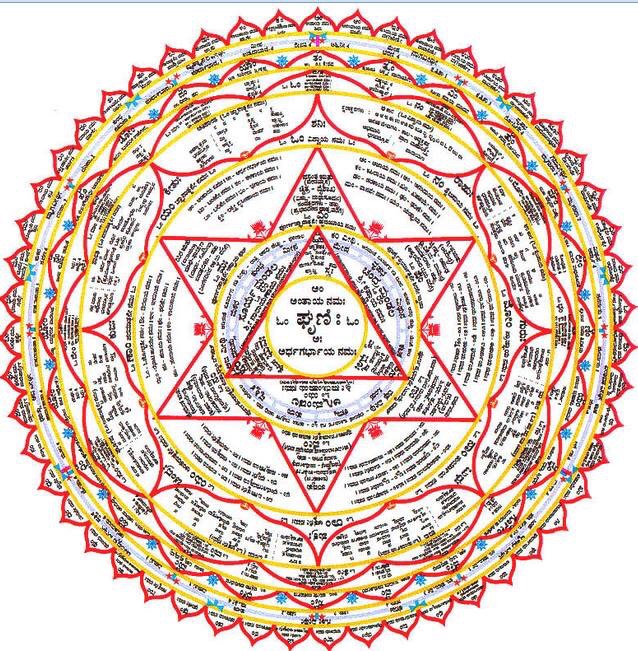
Sri Madhwacharyaru in TantraSaraSangraha has stated”Poojascha Bhagavan nityam Chakrabja mandale”;
everyday wherever/whenever possible Chakrabja Mandala rangoli has to be drawn and the Saligrama/Devara Pooje has to be done on this rangoli.
Chakrabja Mandala is a unique sacred chart utilised for the mediation of God designated Ghruni (the name meaning most compassionate) – He is meditated as most compassionate.
The chart has seven Avaranas i e boundaries. In the last Aavarana, the forms of the God conveyed by 51 symbols Am, Aam etc are present. In other Aavaranas, the presiding forms of stars, planets, years, months, days etc are present.
Two most important aspects of this chart are
- Presence of the Keshava etc twenty four forms of the supreme God.
- Presence of Eight Mahamanthras.
Vijayadasaru has composed kankana kara suladhi that explains chakrabja mandala.
ರಾಗ: ಭೈರವಿ ಧೃವ ತಾಳ
ಕಂಕಣಾಕಾರವನ್ನು ಬರೆದು ಅದರ ಮಧ್ಯ |
ಓಂಕಾರ ಎರಡು ಎಡ-ಬಲದಿ ರಚಿಸಿ |
ಶಂಕೆ ಇಲ್ಲದೆ ನಡುವೆ ಘೃಣಿಯೆಂದು ಲಿಪಿಸಿ ಮೀ |
ನಾಂಕನಯ್ಯನ ಪೀಠಸ್ಥಳವಿದೆಂದು |
ಬಿಂಕದಲಿ ಸ್ವರದೊಳಗೆ ಕಡಿಯಣಾ ಸ್ವರವೆ ಎರಡಾ |
ಲಂಕಾರವನೆ ಮಾಡಿ ಅದರ ಬಳಿಯ |
ಕಂಕಣಾಕಾರವನ್ನು ಒಳಗೆ ಮಾಡಿಕೊಂಡು |
ಮಂಕುಮತಿಯ ತೊರೆದು ತ್ರಿಕೋಣಸುತ್ತಿಸಿ |
ಶ್ರೀಂಕಾರ ಇಚ್ಛಾಶಕ್ತಿ ಕ್ಲೀಂಕಾರ ಕ್ರಿಯಾಶಕ್ತಿ |
ಹ್ರೀಂಕಾರ ಜ್ಞಾನಶಕ್ತಿ ಮೂರು ಮೂಲೆಗೆ ಬರೆಯೊ |
ಪಂಕಜ ಪಾಣಿಯು ಶ್ರೀ – ಭೂ – ದುರ್ಗಾನಾಮಕಳು |
ಪಂಕಜಾಕ್ಷನ ರೂಪ ಮೂರು ಉಂಟು |
ಕಂಕಣಾಕಾರ ಮರಳೆ ತ್ರಿಕೋಣ ಮೇಲೆ ಬರೆದು |
ಸಂಕೋಚವಾಗಿ ಇದೆ ದ್ವಿತೀಯ ವಲಯ |
ಪಂಕಜ ಮಿತ್ರ ಸೋಮ ಅಗ್ನಿ ಜನರ ನಾಗ
ಕಂಕಣ ಅನಲ ವರುಣ ದಿಕ್ಕಿಗೆ ರಚಿಸಿ |
ಕಿಂಕರ ಜನಪಾಲ ವಿಜಯ ವಿಠ್ಠಲ ಅಕ |
ಳಂಕನ ಭಜಿಸುವುದು ಹೃದಯದಲಿ ತಿಳಿದು ||೧||
ಮಟ್ಟ ತಾಳ
ಕರಿ ಅಜ ರಥ ವೀಥಿ ಎಂದೆಂಬುವೆ ಮೂರು |
ಬರೆದು ಇದಕೆ ಹನ್ನೆರಡು ರಾಶಿಗಳು ವಿ- |
ಸ್ತರವಾಗಿ ಉಂಟು ಎರಡೆರಡು ವೊಂದು ಕಡೆ |
ಅರಿವದು ಸ್ಥಿಮಿತ ಸಮಗತಿ ತ್ವರಗತಿ ಸೂರ್ಯನ್ನ |
ಎರಡು ನಾಲಕು ಕೋಣೆ ವಿರಚಿಸಿ ಅದರ ಮೇಲೆ |
ಮರಳೆ ಮಧು – ಮಾಧವಾ ಕರೆಸುವ ಋತು ಒಂದು |
ಬರೆದು ಪ್ರಣವ ವಿವರ ಹೃದಯದಲ್ಲಿ ನಮ |
ಸ್ಕರಿಸು ಜ್ಞಾನಾತ್ಮನೆಂದು |
ಧರಿಸು ಈ ಪರಿ ಮೂರು ಎರಡು ಕೋಣಿಯ ಮಧ್ಯ |
ತರುವಾಯ ಮಾಸ – ಋತು ವರುಷ ತಾರಕ ಸಂ |
ಸ್ಮರಿಸಿ ಕ್ರಮ ವರ್ಣ ಹರಿ ಐಶ್ವರ್ಯಾದಿ |
ಪರಮ ಮೂರ್ತಿಗಳನ್ನು ಶಿರಸು ಮೊದಲು ಮಾಡಿ |
ಕರತಳ ಪದತನಕ ಚರಿತೆಯಾಕೊಂಡಾಡು |
ಗುರುತು ಆರು ಕೋಣೆ ಸರಿ ಉಪರಿಭಾಗ |
ಎರಡರ ಮಧ್ಯ ವರಣಂಗಳು ಉಂಟು |
ಅರಹುವೆ ಪ್ರಥಮದಲ್ಲಿ ಎರಡೆರಡು ನಾಲ್ಕು ೧. – “ಅ,ಆ,ಕ,ಖ,ಡ,ಢ,ಮ,ಯ” |
೨. ಎರಡೆನೆಯ ಮನಿಯಲ್ಲಿ ವರಣಗಳಿಪ್ಪವಯ್ಯ |
“ಇ,ಈ,ಉ,ಊ,ಗ,ಘ,ಣ,ತ,ರ,ಲ” |
೩. ಸ್ಮರಿಸು ಮೂರನೆ ಮನಿಯಲ್ಲಿರುತಿಪ್ಪ ಮಾತ್ರ “ಋ,ೠ,ಲೃ,ಲೄ,ಙ,ಚ,ಥ,ದ,ವ,ಶ” |
೪. ಕರಿಸಿಕೊಂಡವು ಇನಿತು ನಾಲ್ಕನೆ ಸ್ಥಾನದಲಿ
“ಎ,ಐ,ಛ,ಜ,ಧ,ನ,ಷ,ಸ” |
೫. ವರಣಂಗಳು ಗ್ರಹಿಸು ಐದನೆ ಮನಿಯಲ್ಲಿ |
“ಓ,ಔ,ಝ,ಞ,ಪ,ಫ,ಹ,ಳ” |
೬. ನಿರುತ ಇಪ್ಪದು ಕೇಳಿ ಕಡಿಯಣ ಮನಿಯಲ್ಲಿ |
“ಅಂ,ಅಃ,ಟ,ಠ,ಬ,ಭ,ಕ್ಷ” ಬರೆದು ಈ ಪರಿಯಲ್ಲಿ ಆರುಮನಿಯ ಮಧ್ಯ |
ಸರಿ ಇಲ್ಲಿಗೆ ಎನ್ನಿ ತರುವಾಯ ನಾಲ್ಕು |
ಎರಡೂ ವಲಯಾಕಾರ ಎರಡು ಕೋಣಿಯ ಗಣಿತ |
ನಿರೀಕ್ಷಿಸಿ ಮನದಲ್ಲಿ ಪರಿಶುದ್ಧನಾಗಿ |
ಪರಮಪುರುಷ ನಮ್ಮ ವಿಜಯವಿಠ್ಠಲ ಮೂರ್ತಿಯ |
ಸ್ಮರಿಸು ಅಜ್ಯಾದಿಗಳ ನರಸಿಂಹ ಪರಿಯಂತ ||೨||
ರೂಪಕ ತಾಳ
ಆರು ಕೋಣಿಯ ಮೇಲೆ ವರ್ತುಳಾಕಾರವನ್ನು |
ಚಾರುವಾಗಿ ಬರೆದು ಅದರ ಸುತ್ತಲು ಎಂಟು |
ವಾರಿಜ ದಳವನ್ನು ರಚಿಸಿ ರಮ್ಯವಾಗಿ |
ಸೌರಿ ಸ್ವರ್ಭಾನು ಗುರು ಬುಧ ಶುಕ್ರ ಚಂದ್ರಮ |
ಧಾರುಣಿಸುತ ಕೇತು ಇವರನ್ನ ಮಧ್ಯ |
ಹಾರೈಸಿ ಬರೆದು ಇವರಿವರ ಬಳ್ಳಿಯಲ್ಲಿ ಓಂ-|
ಕಾರ ಸಹಿತವಾಗಿ ನಮೋನಾರಾಯಣನೆಂಬೊ |
ಈರೆರಡು ನಾಲ್ಕು ವರ್ಣಗಳು ಓಂದೊಂದರಲ್ಲಿ |
ಆರಾಧಿಸಿ ಬರೆದು ಬೀಜಾಕ್ಷರವೆನ್ನು |
ಸಾರವನ್ನು ತಿಳಿ ಎಂಟು ವರ್ಣಮಿಳಿತ |
ತಾರಮಂತ್ರವೆ ಸತ್ಯ ಇದರ ನಿಯಾಮಕ ವಿಶ್ವ |
ಮೂರುತಿ ಮೊದಲಾದ ಅಷ್ಟ ರೂಪಂಗಳುಂಟು |
ಸೌರಿ ರಾಹು ಮಧ್ಯ ಆದಿ ವರ್ಣವೆ ಲಿಪಿಸಿ |
ದ್ವಿರಷ್ಟ ಮಾತ್ರಾ ವರ್ಗವ ಇದಕೆ ಇಂದಿರಾ |
ಮಾರುತ ದೇವನ್ನ ಬರೆದು ಶ್ರುತಿ ಕಾಲಗಳ |
ಈ ರೀತಿಯಿಂದಲಿ ವಿಶ್ವನ್ನ ಸ್ಮರಿಸೆ |
ಕಾರುಣ್ಯ ಮಾಡುವನು ಮುಂದೆ ಕ ವರ್ಗ ಉ- |
ಕಾರ ತೈಜಸ ದೇವನ ಬರೆದು ಕ ವರ್ಗಕ್ಕೆ |
ಧಾರುಣಿ ಉದಕಾಗ್ನಿ ವಾಯು ಗಗನ ಭೂತ |
ಮೂರೆರಡು ಸ್ಥಾಪಿಸಿ ಅಲ್ಲಿ ಮಾನಿಗಳನ್ನು |
ತಾರೇಶ-ಸ್ವರ್ಭಾನು ಮಧ್ಯದಲ್ಲಿ ಸಿದ್ಧಾ |
ಆ ರೋಹಿಣೆಯ-ಗುರು ಈರ್ವರ ನಡುವೆ ಮ- |
ಕಾರ ಪ್ರಾಜ್ಞ ಮೂರುತಿ ಚ ವರ್ಗ ಒಂದೊಂದಕೆ |
ಈರೆರಡು ಮೇಲೊಂದು ಜ್ಞಾನೇಂದ್ರಿಯಗಳುಂಟು |
ವಾರ ವಾರಕೆ ಬಿಡದೆ ತತ್ವೇಶರುಗಳವಾಸ |
ತೋರುವ ತುರ್ಯದೇವನು ಟ ವರ್ಗಕೈದು |
ಮೀರದೆ ಕರ್ಮೇಂದ್ರಿಯ ಪಾಣಿ ಪಾದದಿ ಪಂಚ |
ಕಾರಣಿಕರಲ್ಲಿ ವಸ್ವಾದಿ ನಿರ್ಜರರೂ |
ಸಾರಿರೈ ಬುಧ-ಶುಕ್ರ ಅಂತರಾಳದಲ್ಲಿ ವಿ- |
ಸ್ತಾರ ಇದನೆ ತಿಳಿದು ಶುಕ್ರ-ಚಂದ್ರನ ನಡುವೆ |
ಭೊರನ್ನ ಆತ್ಮಾಮೂರುತಿ ಬಿಂದು ತ ವರ್ಗ |
ಪೂರೈಸು ಪಂಚ ತನ್ಮಾತ್ರಗಳು ಶಬ್ದಾದಿ |
ಮಾರುತಗಳೈದು ಪ್ರಾಣಾದಿ ನಾಮದಲ್ಲಿ ಸೇರಿ ಕೊಂಡಿಪ್ಪರೈ ಮುಂದೆ ಲಾಲಿಸಿ ಕೇಳಿ |
ಗೌರೀಶನ ಶಿರದಲ್ಲಿ ಇಪ್ಪ ಕುಜನ ನಡುವೆ |
ಮೂರುತಿ ಆಂತರಾತ್ಮನು ಘೋಷ ಪ ವರ್ಗ |
ಆರನೇ ಮನೆ ಎನ್ನಿ ಇಲ್ಲಿಪ್ಪದು ಅಹಂ- |
ಕಾರ-ಬುದ್ಧಿ-ಚಿತ್ತ-ಮನಸು-ಚೇತನ ತತ್ವ |
ಮಾರಾರಿ ಮಿಗಿಲಾದ ದೇವತಿಗಳಕ್ಕು |
ಧಾರುಣಿಸುತ ಕೇತು ಇವರ ಮಧ್ಯದಲ್ಲಿ |
ಶ್ರೀರಮಣ ಪರಮಾತ್ಮ ಶಾಂತವೆಂಬೋದು ಓಂ- |
ಕಾರದೊಳಗಿನ ವರ್ಣ ಯ ವರ್ಗ ಚತುರ್ವಿಧಾ |
ಆರೊಂದು ಧಾತುಗಳು ತ್ವಕ್-ಚರ್ಮ-ರಕ್ತಾದಿ |
ವಾರಿಜ ಮಿತ್ರನ್ನ ಮುಸುಕುವನ ಶನಿ ಮಧ್ಯ |
ಬೀರುವೆನು ಜ್ಞಾನಾತ್ಮ ಅತಿಶಾಂತ ಶ ವರ್ಗ- |
ಕ್ಷಾಂತ ಸತ್ವ ರಜ ತಮ ತ್ರಯಾವಸ್ಥಿಗಳು ತಾರ ನಮೋ ನಾರಾಯಣವೆಂಬೊವೆಂಟು |
ಸೌರಿ ಮಿಕ್ಕಾದೆಂಟು ದಳದಲ್ಲಿ ಲಿಖಿಸೋದು |
ವಾರಿಜಭವನಯ್ಯ ವಿಜಯವಿಠ್ಠಲರೇಯ |
ಶರೀರದೊಳಗಿದ್ದು ತನ್ನವಗೆ ತಿಳಿಪುವಾ ||೩||
ಝಂಪೆತಾಳ
ಹನ್ನೆರಡು ದಳವುಳ್ಳ ಕಮಲ ವಲಯಾಕಾರ |
ಚನ್ನಾಗಿ ಬರೆಯುವುದು ಇದರ ಮೇಲೆ |
ಇನ್ನು ಒಂದೊಂದು ದಳದೊಳಗೆ ಲಿಖಿಸಲಿಬೇಕು |
ಮನ್ನಿ ಪದು ಜ್ಞಾನಿಗಳು ಬಾಲಬೋಧ |
ಮುನ್ನಾದಿ ದಳದಲ್ಲಿ ಮೇಷರಾಶಿಯ ಬರೆದು |
ಬಿನ್ನಣದಿ “ಓಂ ಓಂ” ಇದಕೆ ಕೇಶವಮೂರ್ತಿ |
ಭಿನ್ನ ವರ್ಣಂಗಳು “ಅ ಕ ಡ ಮ” ವೆಂಬವು ನಾಲ್ಕು |
ಇನ್ನಿತು ತಚಿಸಿ ಎರಡನೇದಳದಲ್ಲಿ |
ಸನ್ನುತಿಸು ವೃಷಭ “ಆ ಖ ಢ ಯ” ಚತುರವರ್ಣಗಳು |
“ಓಂ ನಂ” ನಾರಾಯಣ ಮೂರ್ತಿ ನೆನೆದು |
ಘನ್ನ ಮೂರನೆ ದಳದಿ ಮಿಥುನ ರಾಶಿಯ ಬಳಿಯ |
ವರ್ಣಿಸಿ “ಓಂ ಮೋಂ” ಮಾಧವದೇವನ್ನ |
ಗಣ್ಯ “ಇ ಗ ಣ ರ” ನಾಲ್ಕು ಮಾತ್ರಗಳ ಬರೆದು ನಿಜ- |
ವೆನ್ನಿ ನಾಲ್ಕನೆ ದಳಕೆ ಮನಸು ಮಾಡಿ |
ಪುಣ್ಯವೇ ಉಂಟು ಕರ್ಕರಾಶಿ “ಈ ಘ ತ ಲ” |
ವನ್ನು “ಓಂ ಭಂ” ವರ್ಣ ಗೋವಿಂದನು |
ನಿನ್ನೊಳಗೆ ತಿಳಿವುದೂ ಐದನೆ ಪತ್ರದಲಿ |
ಪೆಣ್ಣುಗಳ ಮಧ್ಯದಾ ಪೆಸರಿನ ರಾಶಿ |
“ಉ ಊ ಙ ಥ ವ” “ಓಂ ಗಂ” ಇದಕೆ ವಿಷ್ನುಮೂರ್ತಿ |
ಕನ್ಯೆಯಲಿ “ಋ ೠ ಚ ದ ಶ” “ಓಂ ವಂ” ವರ್ಣ ಮಧುಸೂ- |
ದನ ದೇವನ ಭಜಿಸು ಷಡ್ದಳದಲ್ಲಿ |
ಸನ್ಮತವಹುದು ತುಲಾರಾಶಿ “ಲೃ ಲೄ ಛ ಧ ಷ” ಗಳು |
ಇನ್ನು ತ್ರಿವಿಕ್ರಮ “ಓಂ ತೇಂ”(ಓಷ್ಠಾ) ಸಪ್ತಮ ದಳದಿ |
ಮಣ್ಣು ಭಕ್ಷಿಪ ಕ್ರಿಮಿ “ಏ ಐ ಜ ನ ಸ” ವರ್ಣ |
“ಓಂ ವಾಂ” ವಾಮನ ಅಷ್ಟಮ ದಳದಿ |
ಹೊನ್ನಿನಂಥ ಮಾತು ಧನು ರಾಶಿ ಲಿಪಿಸೆ ಸಂ- |
ಪನ್ನ “ಓ ಝ ಪ ಹ” “ಓಂ ಸುಂ” ಶ್ರೀಧರ |
ಇನ್ನು ನೋಡು ಪತ್ರ ನವಮದಲಿ ಈ ಪರಿ |
ಎನ್ನು ಗ್ರಹಿಸುವುದು ಹತ್ತು ದಳದಿ |
ಇನಿತಾದರು ಸತ್ಯ ಮಕರ “ಜ ಞ ಫ ಳ” “ಔ ದೇ” |
ಅನಂತರೂಪಾತ್ಮಕ ಹೃಷೀಕೇಶ ಹನ್ನೊಂದನೆ ದಳದಲ್ಲಿ ಕುಂಭ |
“ಅಂ ಟ ಭ ಕ್ಷ” “ಓಂ” ಎನ್ನು “ವಾಂ” ಇದಕೆ ಶ್ರೀ ಪದ್ಮನಾಭ |
ಹನ್ನೆರಡನೇ ದಳದಿ ಮೀನ “ಅಃ ಠ ಭ” ಚೆನ್ನಾಗಿ ರಚಿಸಿ “ಓಂ ಯಂ” ದಾಮೋದರ |
ಹನ್ನೆರಡು ದಳದೊಳಗೆ ಇಷ್ಟೆ ಭಗವದ್ರೂಪ |
ಹನ್ನೆರಡು ಮಾತೃಕೆಯ ಕೂಡಿಸಲು |
“ಓಂ ನಮೊ ಭಗವತೆ ವಾಸುದೇವಾಯ” ಪ್ರ- |
ಸನ್ನ ದೇವನ್ನ ನೋಡಿ ಏಕಪಂಚಾಶ-|
ದ್ವರ್ಣ ಓಂದೊಂದರಲಿ ಹಂಚಿ ಹಾಕಿ |
ಹನ್ನೆರಡು ರಾಶಿಗಳ ಬರೆದು ಸ್ತುತಿಸಿ |
ಧನ್ಯನಾಗೆಲೊ ಮುಂದೆ ದಳದ ಸಂಧಿಗಳಲ್ಲಿ |
ರನ್ನ ತಾರಯೋಗ ಒಂಭತ್ತು ಪದದಂತೆ |
ಹನ್ನೆರಡು ರಾಶಿಗೆ ವಿಭಾಗ ಮಾಡಿ |
ಪನ್ನಗಶಾಯಿ ಸಿರಿ ವಿಜಯ ವಿಠ್ಠಲನ್ನ ಕಾ- |
ರುಣ್ಯವನು ಪಡೆದು ಚಿಂತಿಸು ಸುಹೃದಯದೊಳಗೆ ||೪||
ತ್ರಿವಿಡತಾಳ
ದ್ವಾದಶದಳವುಳ್ಳ ಕಮಲದ ಮೇಲೆ |
ದ್ವಿದ್ವಾದಶಪತ್ರದ ಕಮಲ ಬರೆದು |
ಸಾಧಿಸು ಓಂದೊಂದು ದಳದ ಮಧ್ಯದಲ್ಲಿ ವಿ- |
ನೋದ ಚತುರವಿಂಶತಿ ವರ್ಣಗಳ |
ವೇದ ಮಾತಾ ಮಂತ್ರ ಇದೆ ಎನ್ನು ಕೇಶವ |
ಮಾಧವಾದಿ ವರ್ಣ ಮೂರ್ತಿಗಳ |
ಪಾದವೇ ಸ್ಮರಿಸುತ್ತ ಮತ್ತೆ ಸೂರ್ಯನ ಗಮನ |
ಭೇದದಿಂದಲಿ ತಿಳಿ ನವವೀಥಿಯ |
ಐದಿಸು ಒಂದೊಂದು ಕಡೆ ಮೂರರ ಪ್ರಕಾರ |
ಆದಾವಿಲ್ಲಿಗೆ ತಾರೆ ಇಪ್ಪತ್ತೇಳು |
ಐದೇಳು ರಾಶಿಗಳು ಹಂಚಿ ಹಾಕಲಾಗಿ |
ಪಾದ ಪಾದಾರ್ಧ ತ್ರಿಪಾದವಹುದು |
ಪಾದತ್ರಿಮಂತ್ರ ತತ್ಸವಿತುಃ ವರೇಣ್ಯಂ ಭ- |
ರ್ಗೋದೇವಸ್ಯ ಧೀಮಹಿ ಧಿಯೋಯೋನಃ ಪ್ರಚೋದಯಾ- |
ಆದಿ ಮೂರುತಿ ನಮ್ಮ ವಿಜಯ ವಿಠ್ಠಲನ ಶ್ರೀ- |
ಪಾದವ ನೆರೆನಂಬು ಓಂ ಕಾರ ನುಡಿಯುತ್ತಾ ||೫||
ಅಟ್ಟತಾಳ
ಇದರ ಮೇಲೇ ಎಕ ಪಂಚಾಶದ್ದಳವುಳ್ಳ |
ಪದುಮವ ಬರೆದು ಪ್ರದಕ್ಷಿಣೆ ಮಾಡಿ |
ಮುದದಿಂದ ದ್ವಿರಷ್ಟ ಮಿಕ್ಕ ಮೂವತ್ತೈದು |
ಇದೆ ಇದೆ ದಳದೊಳು ಲಿಪಿಸಿ ಅಜಾದಿಯ |
ವೊದಗಿ ಸ್ತೋತ್ರವ ಮಾಡು ವರ್ಣದೇವತವೆಂದು |
ತುದಿ ಮೊದಲಿದರ ವಿಸ್ತಾರವೆ ಈ ಪರಿ |
ಇದೆ ಚಕ್ರಾಂಬುಜವೆಂದು ಕರೆಸುತಿಪ್ಪುದು |
ಹೃದಯಾಕಾಶ-ವಾರಿ-ಸ್ಥಂಡಿಲ-ಗಗನ-ಸೂರ್ಯ |
ವಿಧುಮಂಡಲ ಸಮಸ್ತ ಉತ್ತಮಸ್ಥಾನ |
ಇದೆ ನಿರ್ಮಾಣ ಮಾಡಿ ಸತ್ಕರ್ಮದಲಿ ನಿತ್ಯ |
ಪದೋಪದಿಗೆ ಶ್ರೀಹರಿಯ ಧ್ಯಾನ ಮಾಡಲಿಬೇಕು |
ಇದರೊಳು ಏಳುಕೋಟಿ ಮಂತ್ರಾರ್ಥವೆ ಉಂಟು |
ಆಧಿದೈವ ಆಧಿಭೂತ ಅಧ್ಯಾತ್ಮವೇ ಉಂಟು |
ಅಧಿಕಾರತನ ಭೇದ ತಿಳಕೊಂಬ ಜೀವಿಗಳಿಗೆ |
ಸದಮಲಾನಂದ ನಮ್ಮ ವಿಜಯ ವಿಠ್ಠಲರೇಯ |
ಬದಿಯಲ್ಲಿ ಇರುತಿಪ್ಪ ಚಕ್ರಾಬ್ಜ ಬಲ್ಲವನಿಗೆ ||೬||
ಆದಿತಾಳ
ಸ್ನಾನ ಉದಕ ಆಚಮನಿಯ ಸಂಧ್ಯಾರ್ಘ ತ್ರಿಪದ |
ಎಣಿಸುವಾಗ ನಾನಾ ಮಂತ್ರ ಜಪಿಸುವಾಗ |
ಮೇಣು ಅರ್ಚಾ ಅರ್ಚನೆ ಪಾವಕಾಹುತಿ ಯಜ್ಞ |
ಕ್ಷೋಣಿ ಸುರರ ಪೂಜೆ ಆತ್ಮ ಸಂತೋಷ ಅನ್ನ |
ಪಾನಾದಿ ಕೊಡುವಾಗ ಇದನೆ ಚಿಂತಿಸಬೇಕು |
ಏನೆಂಬೆನಯ್ಯ ಅವ ಅಪರೋಕ್ಷಿ ಎಂದಿಗೇ |
ಧ್ಯಾನಸಂಪೂರ್ಣ ಸಿದ್ಧ ಜ್ಞಾನವಂತನಾಹಾ |
ಪ್ರಾಣನಾಗಿ ಇಪ್ಪರು ಹರಿ-ಸಿರಿ-ಪ್ರಾಣಾದ್ಯರು |
ಕಾಣಿಸಿ ಕೊಂಬರು ಒಂದೊಂದು ಮಂಡಲದಲ್ಲಿ |
ಆನಂದ ಗತಿಗೆ ಸಾಧನ ಬೇಕಾದರೆ |
ಮಾನವಾ ಇದನೆ ಕೈಕೊಂಡು ಆಲೋಚಿಸು |
ಸ್ಥಾನಸ್ಥಾನಕೆ ನಿನಗೆ ಶುಭವಕ್ಕು ಪುಸಿ ಅಲ್ಲ |
ದೀನನಾಥನಾದ ವಿಜಯವಿಠ್ಠಲರೇಯನ್ನ |
ಗಾನವ ಮಾಡಿರೊ ಗ್ರಹಿಸಿ ಈ ಪರಿಯಿಂದ ||೭||
ಜತೆ
ಸಿದ್ಧ ಸಾಧನವಿದು ಬಿಂಬ ಕಾಣುವುದಕ್ಕೆ
ಪದ್ಮಿವಲ್ಲಭ ನಮ್ಮ ವಿಜಯವಿಠ್ಠಲ ಪ್ರಾಪ್ತಿ ||೮||
Dhruva tala
Kankanakaravanu baredavara madhya |
Omkara yeradu eda-baladi rachisi|
Sankeyillade naduve grunyendu lipisi mi|
Namkanayyana pithasthalavidendu |
Binkadali svaradolage kadiyana svarave erada |
Lankaravane madi adara baliye |
Kankanaravannola madikondu |
Mankumatiya toredu trikona stutisi |
Srinkara iccasakti klinkara kriyasakti|
Hrinkara ~g~janasakti murumulege bareyo |
Pankajakshana rupamuruntu |
Kankanakara marali trikona mele baredu |
Sankochavagi ide dvitiya valaya |
Pankajamitra soma agni mandala naga |
Kankana anala maruna dikkige rachisi |
Kimkara janapala vijayavithala aka|
Lankanna Bajisuvudu hrudayadali tilidu ||
Mathya tala
Kari aja ratha vidhi endembane muru |
Baredu idake hanneradu rasigalu vi|
Staravagiye untu erederadu ondu kade |
Aridu stimita samagati tvaregatiya suryanna |
Eredu nakaku koni viracisi adara mele |
Marali madhu- madhava karesuva Rutuvondu |
Baredu pranava vivarna hrudayadali nama|
Skarisu ~g~janatmanendu karidu I pari muru|
Eradu koniya madhya taruvaya masa Rutu |
Varushakaradkana smarisu krama varnagala |
Hariya a^^isvaryadi parama murtigalannu |
Sirasu modalu madi karatala pada tanaka |
Chariteya kondadu gurutu Aru koni |
Sari upari baga eredara madhya |
Varunangaluntu aruhuve prathamadali|
Erederadu nalku “a^^A kaka dadha maya”|
Eradaneya maneyalli varanagalippavayya |
I I, u U, ga Ga , Nata, rala” |
Smarisu murane maneyalippa matre |
Ru^^RU, lrulru ~j~ga ca dhada vasa” sarisikondavu
Initu nalkane sthanadali, “e E, caja dhana Shasa”| varnangala grahisu aidane maneyalli |
” o au, Ja~ja, pa Pa hala” |
Niruta ippudu keli kadiyana maneyalli amah tatha, baba, ksha| baredu I
Pariyalli Aru maneya madya sari illige enni taruvaya nalku|
Eradu valayakara eradu koniya ganita|
Nirukisi manadalli parisuddhanagi |
Paramapurusha namma vijayavithala murutiya |
Smarisu ajadigala nasimha pariyanta ||
Rupaka tala
Aru koniyamele vartulakaravanu|
Charuvagi baredu adara suttalu|
Varijadalavannu racisi ramyavagi |
Sauri svarbanu guru buda Sukra chandrama|
Jarinisuta ketu ivaranne madhya |
Haraisi baredu ivarivara baliyalli OM|
Kara sahitavagi namo narayanayembo |
Ereradu nalku varnagalu ondondarali |
Aradhisi baredu bijaksharavannu |
Saravannu tili emtu varnamilita|
Taramantrave satya idar niyamaka visva |
Muruti modalada ashta rupagaluntu|
Sauri rahu madhya Adi varnava lipisi|dvirashta matrukavargave idake indira |
Maryta devanna baredu Sruti kalugala |
I ritiyindali visvanna smarisi karunya maduvanu munde ka varga u |
Kara taijasa devana karedu kavargakke |
Darini udakagni vayu gagana buta |
Mureradu stapisi alli manigalannu |
Taresa -svarbanu madyadalli siddha A rauhiniya – buru Irvara naduve ma |
Kara pra~j~ga muruti ca varga ondondake |
Ireradu melondu ~g~janendriyamgaluntu |
Varavarake bidade tattvesarugala vasa |
Toruva turya devanu Tavargakadu |
Mirade karmendriya panipadadi pancha |
Karanikaradall vasvadi nirjanaru |
Sarirai budha sukra amtaraladali vi |
Staravatilidu Sukra chandrara naduve |
Boranna Atma muruti bindu tavarga |
Puraisu panchatannmatragalu sabdadi |
Marutagalaidu pranadi namadali |
Seridomdipparai munde lalisi keli |
Gaurisana Siradalippana kujana naduve |
Muruti antaratmanu gosa pa varga |
Arane maneyallipudu aham |
Kara buddhi chitta manassu cetana tatva |
Maradi migilada devategalikku |
Dharinisuta ketu ivara madhyadalli |
Sriramana paramatma santavembodu OM |
Karadkolagina varna ya varga chaturvida^^a|
Arondu dhatugalu tvak – carma raktadi |
Vari^^a mitranna musukuvana Sani madhya |
Biruvanu ~g~janatma atisanta Sa varga |
Kara satva raja tama trayavasthegalu |
Tara namonarayananembo entu |
Saurri vikkademtu daladalli irisodu varrihabanayya vijayavithala reya |
Sariradolagiddu tannavage tilipuva ||
Jampe tala
Hanneradu dalavulla kamala valayakara |
Cennagi bareyuvudu idara mele |
Innu ondondu daladolage lipisali beku mannipudu ~g~janigalu balaboda |
Munnadi daladalli mesharasiya baredu |
Binnanadi “OM OM ” idake kesava murti| B
Inna varnangalu |akadama|
Vembavu nalku |
Innitu racisi eradane daladalli sannutisu vrushaba “akadaya” chaturavarnagalu |
OM nam narayana murtiya nenedu |
Ganna murane daladi mithuna rasiya baredu |
Varnisi OM mom madhavadevanna| ganya iganara nalku natregala baredu nija|
Vennu nalkane dalake manasu madi| punyabe umtu karkarasiyali “I Ga tala” |
Varnagalu OM bam varna govindanu |
Ninnolage tilivudo Idane patradali |
Pennugala madhyada pesarina rasi| u U ~j~ga Tha va ” “OM bam|
Idake vishnumurti| kanneyali “Ru^^ruca da Sa ” “OM vam ” varna madhusu |
Danadevana Bajisu shashthadaladalli|
Sanmatavahudu tularasi ” l
Ru lru Ca dha Sha galu | innu trivikrama OM tem” saptama daladi |
Mannubakshipa krimi “ye a^^I ja na sa ” varna “OM vam ” vamana ashtama daladi |
Honninantha matu dhanu rasi lipise sam |
Panna O Ja pa ha ” OM sum ” sridhara |
Innu nodu patra navama dala I pari |
Ennu grahisuvudu hattaneya daladi |
Innitadaru satya ” au ~ga Pa La ”
“OM dem” anantarupatmaka hrushikesa |
Hannomdane daladalli kumba
“am Ta ba ksha ” “OM vam idake sri padmanaba |
Hanneradane daladi mina ah Tha Ba varna cennagi
Rachisi OM yam damodara hanneradu daladolage ishte bagavadrupa
Stutisi dhanyavagelo munde daladi sandhigalalli
Rannatara yoga ombattu padadamte |
Hanneradu rasige vibaga madi pannagasayi siri
Vijayavithalana karunyavanu padedu cimtisu hrudayadolage ||
Trivida tala
Dvadasadalavulla kamalada mele | dvi|
Dvasapatrada kamala baredu sadhisu |
Ondondu dalada madhyadalli vi| noda caturavimsati varnangala |
Vedamata mantra ide^^ennu kesava|
Madhava govindadi varna murutigala padave
Smarisutta matte suryana gamana |
Bedadindali tili navavithisya |
Idisu ondondu kade muru prakara |
Adavillige tare ippattelu |
Aidelu rasigala hamci hakalagi |
Padapadardha tripadavahudu |
Padatrimantra tat saviturvarenyam Ba|
Rgo devasya dhimahi dhiyo yo nah pracodaya |
Dadi muruti namma vijayavithala na sri |
Padavane nerenambu OM kara nudiyuta ||
Atta tala
Idaramelekapancha saddalavulla |
Padumava baredu pradakshine madi |
Mudadinda dvirashta mikka muvattaidu |
Ide ide daladolu lipisi ajadiya |
Vodali stotrava madu varna daivatavendu |
Tudimodalidara vistrarabe I pari |
Ide chakrambujavemdu karesutippudu |
Drudayakasa vari sthamdila dhanana surya |
Cidu mandala samasta uttama sthana |
Ide nirmana madi satkarmadali nitya |
Padapadake sri hariya dhyana madalibeku |
Idarolu elu koti mantrarthave untu |
Adhidaiva adibuta adhyatmave untu |
Adhikaratana beda tilakomba jivigalige |
Sadamalananda namma vijaya vithalareya |
Badiyalli irutippa cakrabja ballavage ||
Adi tala
Snana udaka acamaniya sandhyargya tripade |
Enisuvaga nana mamtra japisuvaga venu arcane pavakahuti ya~g~ja |
Kshonisurara puje Atma santosha anna |
Panadi koduvaga idane chintisabeku |
Enembenayya Ava aparokshi emdige |
Dhyana sampurna siddha ~g~janavantanaha |
Pranaragi ipparu hari-siri pranadyaru |
Kanisikombaru ondondu mandaladalli |
Ananda gatige sadhana bekadare |
Manava idane kaikomdu alocisu |
Sthana sthanake ninage subavakku pusiyalla |
Dinanathanada vijayavithalareyanna| ganava madiro grahisi I pariyinda ||
Jate
Siddha sadhanvidu bimba kambuvudakke |
Padmivallaba srivijayavthala prapti ||
Detailed explanation of Chakrabja mandala in English : Chakrabja mandala


