MADHWA · srinivasa

Venkatesha sthothram

ವೆಂಕಟೇಶೋ ವಾಸುದೇವಃ ಪ್ರದ್ಯುಮ್ನೋs ಮಿತವಿಕ್ರಮಃ
ಸಂಕರ್ಷಣೋನಿರುದ್ಧಶ್ಚ ಶೇಷಾದ್ರಿಪತಿರೇವಚ ||

ಜನಾರ್ಧನಃ ಪದ್ಮನಾಭೋ ವೆಂಕಟಾಚಲವಾಸನಃ
ಸೃಷ್ಟಿಕರ್ತಾ ಜಗನ್ನಾಥೋ ಮಾಧವೋ ಭಕ್ತ ವಾತ್ಸಲ:||

ಗೋವಿಂದೋ ಗೊಪತಿ: ಕೃಷ್ಣಃ ಕೇಶವೋ ಗರುಡಧ್ವಜಃ
ವರಾಹೋ ವಾಮನಶ್ಚೈವ ನಾರಾಯಣ ಅಧೋಕ್ಷಜ||

ಶ್ರೀಧರ: ಪುಂಡರೀಕಾಕ್ಷ: ಸರ್ವದೇವಸ್ತುತೋ ಹರಿ:
ಶ್ರೀನ್ರುಸಿಂಹೋ ಮಹಾಸಿಂಹ: ಸೂತ್ರಾಕಾರ: ಪುರಾತನ:||

ರಮಾನಾಥೋ ಮಹೀಭರ್ತಾ ಭೂಧರಃ ಪುರುಷೋತ್ತಮಃ
ಚೋಲಪುತ್ರಪ್ರಿಯ: ಶಾಂತೋ ಬ್ರಹ್ಮಾದೀನಾಂ ವರಪ್ರದಃ||

ಶ್ರೀನಿಧಿ: ಸರ್ವಭೂತಾನಾಂ ಭಯಕ್ರುದ್ಭಯನಾಶನಃ
ಶ್ರೀರಾಮೋ ರಾಮಭದ್ರಶ್ಚ ಭವಬಂಧೈಕಮೋಚಕಃ ||

ಭೂತಾವಾಸೋ ಗಿರಾವಾಸಃ ಶ್ರೀನಿವಾಸಃ ಶ್ರೀಯಃ ಪತಿ:
ಅಚ್ಯುತಾನಂತ ಗೋವಿಂದೋ ವಿಷ್ಣುವೆಂಕಟನಾಯಕಃ||

ಸರ್ವದೇವೈಕಶರಣಂ ಸರ್ವದೇವೈಕದೆವತಂ
ಸಮಸ್ತದೇವಕವಚಂ ಸರ್ವದೇವಶಿಖಾಮಣಿ:||

ಇತೀದಂ ಕೀರ್ತಿತಂ ಯಸ್ಯ ವಿಷ್ಣೋರಮಿತತೇಜಸಃ
ತ್ರಿಕಾಲೇ ಯಃ ಪಠೇನ್ನಿತ್ಯಂ ಪಾಪಂ ತಸ್ಯ ನ ವಿದ್ಯತೇ||

ರಾಜದ್ವಾರೇ ಪಠೇದ್ಘೋರೆ ಸಂಗ್ರಾಮೇ ರಿಪು ಸಂಕಟೇ
ಭೂತಸರ್ಪಪಿಶಾಚಾದಿಭಯಂ ನಾಸ್ತಿ ಕದಾಚನ||

ಅಪುತ್ರೋ ಲಭತೇ ಪುತ್ರಾನ್ ನಿರ್ಧನೋ ಧನವಾತ್ ಭವೇತ್
ರೋಗಾರ್ತೋ ಮುಚ್ಯತೇ ರೋಗಾದ್ಭದ್ದ್ಹೋ ಮುಚ್ಯೇತ ಬಂಧನಾತ್||

ಯದ್ಯದಿಷ್ಟತಮಂ ಲೋಕೇ ತತ್ತತ್ಪ್ರಾಪ್ನ್ಯೋತಸಂಶಯಃ
ಐಶ್ವರ್ಯಂ ರಾಜಸನ್ಮಾನಂ ಭುಕ್ತಿ ಮುಕ್ತಿ ಫಲಪ್ರದಂ||

ವಿಷ್ಣೋಲೋಕೈಕಸೋಪಾನಂ ಸರ್ವದು:ಖೈಕನಾಶನಂ
ಸರ್ವೈಶ್ವರ್ಯಪ್ರದಂ ನೃಣಾಂ ಸರ್ವಮಂಗಲಕಾರಕಂ||

ಮಾಯಾವೀ ಪರಮಾನಂದಂ ತ್ಯಕ್ತ್ವಾ ವೈಕುಂಠಮುತ್ತಮಂ
ಸ್ವಾಮಿಪುಷ್ಕರಣೀತೀರೇ ರಮಯಾ ಸಹಮೋದತೆ||

ಕಲ್ಯಾಣಾದ್ಭುತಗಾತ್ರಾಯ ಕಾಮಿತಾರ್ಥಪ್ರದಾಯಿನೇ
ಶ್ರೀಮದ್ವೇ೦ಕಟನಾಥಾಯ ಶ್ರೀನಿವಾಸಾಯ ತೇ ನಮಃ||

ವೆಂಕಟಾದ್ರಿಸಮಂ ಸ್ಥಾನಂ ಬ್ರಹ್ಮಾಂಡೇ ನಾಸ್ತಿ ಕಿಂಚನ
ವೆಂಕಟೇಶಸಮೋದೇವೋ ನ ಭೂತೋ ನ ಭವಿಷ್ಯತಿ
ಎತೇನ ಸತ್ಯವಾಕ್ಯೇನ ಸರ್ವಾರ್ಥಾನ್ ಸಾಧಯಾಮ್ಯಹಂ||

|| ಇತಿ ಶ್ರೀ ಬ್ರಹ್ಮಾಂಡಪುರಾಣೇ ಬ್ರಹ್ಮನಾರದಸಂವಾದೇ ಶ್ರೀ ವೆಂಕಟೇಶ ಸ್ತೋತ್ರಂ||
venkaTEShO vAsudEvaH pradyumnOs mitavikramaH
sankarShaNOniruddhaSca SEShAdripatirEvaca ||

janArdhanaH padmanABO venkaTAcalavAsanaH
sRuShTikartA jagannAthO mAdhavO Bakta vAtsala:||

gOvindO gopati: kRuShNaH kESavO garuDadhvajaH
varAhO vAmanaScaiva nArAyaNa adhOkShaja||

SrIdhara: punDarIkAkSha: sarvadEvastutO hari:
SrInrusiMhO mahAsiMha: sUtrAkAra: purAtana:||

ramAnAthO mahIBartA BUdharaH puruShOttamaH
cOlaputrapriya: SAntO brahmAdInAM varapradaH||

SrInidhi: sarvaBUtAnAM BayakrudBayanASanaH
SrIrAmO rAmaBadraSca BavabandhaikamOcakaH ||

BUtAvAsO girAvAsaH SrInivAsaH SrIyaH pati:
acyutAnanta gOviMdO viShNuveMkaTanAyakaH||

sarvadEvaikaSaraNaM sarvadEvaikadevataM
samastadEvakavacaM sarvadEvaSiKAmaNi:||

itIdaM kIrtitaM yasya viShNOramitatEjasaH
trikAlE yaH paThEnnityaM pApaM tasya na vidyatE||

rAjadvArE paThEdGOre sangrAmE ripu sankaTE
BUtasarpapiSAcAdiBayaM nAsti kadAcana||

aputrO laBatE putrAn nirdhanO dhanavAt BavEt
rOgArtO mucyatE rOgAdBadd~hO mucyEta baMdhanAt||

yadyadiShTatamaM lOkE tattatprApnyOtasaMSayaH
aiSvaryaM rAjasanmAnaM Bukti mukti PalapradaM||

viShNOlOkaikasOpAnaM sarvadu:KaikanASanaM
sarvaiSvaryapradaM nRuNAM sarvamaMgalakArakaM||

mAyAvI paramAnaMdaM tyaktvA vaikuMThamuttamaM
svAmipuShkaraNItIrE ramayA sahamOdate||

kalyANAdButagAtrAya kAmitArthapradAyinE
SrImadvEnkaTanAthAya SrInivAsAya tE namaH||

venkaTAdrisamaM sthAnaM brahmAnDE nAsti kincana
venkaTESasamOdEvO na BUtO na BaviShyati
etEna satyavAkyEna sarvArthAn sAdhayAmyahaM||

|| iti SrI brahmAnDapurANE brahmanAradasaMvAdE SrI venkaTESa stOtraM||

dasara padagalu · MADHWA · srinivasa

Sthuti Ratna Mala

ಭಾನುಕೋಟಿ ತೇಜ ಲಾವಣ್ಯ ಮೂರುತಿ
ಶ್ರೀ ವೇಂಕಟೇಶನೇ ನಮೋನಮೋ ಶ್ರೀನಿವಾಸ ದಯಾನಿಧೆ || 1 ||

ಶೇಷಾಚಲನಿವಾಸ ದೋಷದೂರನೆ ಭಕ್ತಪೋ
ಷಕ ಶ್ರೀಕಾಂತ, ನಮೋನಮೋ ಶ್ರೀನಿವಾಸ ದಯಾನಿಧೆ || 2||

ನೀಲಮೇಘಶ್ಯಾಮ ಪಾಲಸಾಗರಶಯನ ಶ್ರೀ
ಲಕುಮೀಶನೆ ನಮೋನಮೋ ಶ್ರೀನಿವಾಸ ದಯಾನಿಧೆ || 3 ||

ಖಗರಾಜವಾಹನ ಜಗದೊಡೆಯನೆ ನಿನ್ನ 
ಅಗಣಿತ ಮಹಿಮಗೆ ನಮೋನಮೋ ಶ್ರೀನಿವಾಸ ದಯಾನಿಧೆ || 4 ||

ಶಂಖಚಕ್ರಧರ ವೇಂಕಟರಮಣ ಅಕ
ಳಂಕ ಮೂರುತಿ ದೇವ ನಮೋನಮೋ ಶ್ರೀನಿವಾಸ ದಯಾನಿಧೆ || 5||

ಪನ್ನಂಗಶಯನನೆ ನಿನ್ನಂತ ದೇವರು 
ಇನ್ನುಂಟೆ ಅಜಭವಸುರವಂದ್ಯ ಶ್ರೀನಿವಾಸ ದಯಾನಿಧೆ || 6||

ಸೃಷ್ಟಿ ಇಲ್ಲದಲೆ ಒತ್ತಟ್ಟಿಗಿದ್ದವರನ್ನು
ಸೃಷ್ಟಿಸಿ ಜೀವರಸಲಹುವಿ ಶ್ರೀನಿವಾಸ ದಯಾನಿಧೆ || 7||

ತನಮನಕರಣಗಳನು ಕೊಟ್ಟು ಅನಿಮಿಷರ
ನು ಅಭಿಮಾನಿಗಳೆನಿಸಿದೀ ಶ್ರೀನಿವಾಸ ದಯಾನಿಧೆ||8||

ದೀನವತ್ಸಲ ನಿನ್ನಾಧೀನದೊಳಗಿಟ್ಟು
ಜ್ಞಾನ ಕರ್ಮಗಳ ಮಾಡಿಸುವಿಯೋ ಶ್ರೀನಿವಾಸ ದಯಾನಿಧೆ ||9||

ಕ್ಷಣ ಬಿಡದೆಲೆ ಭಕ್ತಜನರ ರಕ್ಷಿಸುವಿ ದು
ರ್ಜನರಿಗೆ ದುರ್ಲಭನೆನಿಸುವೀ ಶ್ರೀನಿವಾಸ ದಯಾನಿಧೆ ||10||

ವೈಷಮ್ಯ ನೈರ್ಘ್ರುಣ್ಯ ಲೇಶವಿಲ್ಲವರು 
ಉಪಾಸನದಂತೆ ಫಲಗಳೀವಿ ಶ್ರೀನಿವಾಸ ದಯಾನಿಧೆ ||11||

ಒಂದೇ ರೂಪದಿ ಬಹುಮಂದಿಯೊಳಗಿದ್ದು 
ಬಂಧಮೋಕ್ಷಪ್ರಧ ಎನಿಸುವೀ ಶ್ರೀನಿವಾಸ ದಯಾನಿಧೆ ||12||

ಜ್ಞಾನಿಗಳರಸ ಅಜ್ಞಾನಿಗಳೊಳು ನಾ
ಜ್ಞಾನಿ ಸುಜ್ಞಾನವ ಪಾಲಿಸೋ ಶ್ರೀನಿವಾಸ ದಯಾನಿಧೆ ||13||

ನಂಬಿದೆ ನಾ ನಿನ್ನ ಬಿಂಬ ಮೂರುತಿ ಎನ್ನ
ಡಿಂಬದೊಳಗೆ ಪೊಳೆ ಅನುದಿನ ಶ್ರೀನಿವಾಸ ದಯಾನಿಧೆ ||14||

ನಿನ್ನ ಹೊರತು ಎನಗೆ ಅನ್ಯರಿಂದೇನಯ್ಯ
ನಿನ್ನ ಸ್ತುತಿಪ ಸುಖಕ್ಕೆ ಎಣೆಗಾಣೇ ಶ್ರೀನಿವಾಸ ದಯಾನಿಧೆ ||15||

ಘನ್ನ ಮಹಿಮ ಎನಗಿನ್ನೊಂದು ಬಯಕಿಲ್ಲ
ನಿನ್ನ ಧ್ಯಾನದೊಳಿದು ಮರಿಯದೇ ಶ್ರೀನಿವಾಸ ದಯಾನಿಧೆ ||16||

ದುರ್ಜನ ಸಂಗ ವಿವರ್ಜ ಮಾಡಿಸಿ ಸಾಧು 
ಸಜ್ಜನರ ಸೇವೆಯೊಳಗಿಡೊ ಶ್ರೀನಿವಾಸ ದಯಾನಿಧೆ ||17||

ಏಸು ಜನ್ಮಗಳೀಯೆ ಲೇಸು ಚಿಂತೆಯು ಇಲ್ಲ
ದಾಸನೆಂದೆನಿಸೋ ದಾಸ್ಯವನಿತ್ತು ಶ್ರೀನಿವಾಸ ದಯಾನಿಧೆ ||18||

ಎನ್ನಪ್ಪ ಎನ್ನಣ್ಣ ಎನ್ನ ಕಾಯುವ ದೇವ
ನಿನ್ನ ವಿಸ್ಮರಣೆಯ ಕೊಡದಿರೋ ಶ್ರೀನಿವಾಸ ದಯಾನಿಧೆ ||19||

ಮನಸಿನ ಚಂಚಲವನ್ನು ತೊಲಗಿಸಿ ಪಾದ
ವನಜದಲ್ಲಿರಿಸಯ್ಯ ಜಿತವಾಗಿ ಶ್ರೀನಿವಾಸ ದಯಾನಿಧೆ||20||

ಕರಣಗಳಿಂದ ಆಚರಿಸುವ ವಿಷಯ ಶ್ರೀ
ಹರಿ ನಿನ್ನ ಸೇವೆಯಾಗಲಿ ಸ್ವಾಮಿ ಶ್ರೀನಿವಾಸ ದಯಾನಿಧೆ ||21||

ಬುಧ್ಧಿಪೂರ್ವಕ ಗುರು ಮಧ್ವಮತವ ತಿಳಿ
ದಿದ್ದವನೆ ಜ್ಞಾನವೃಧ್ಧನೋ ಶ್ರೀನಿವಾಸ ದಯಾನಿಧೆ ||22||

ಹರಿಯೇ ಸರ್ವೋತ್ತಮ ಸುರರೆಲ್ಲ ದಾಸರು
ತಾರತಮ್ಯ ಭೇಧ ಜ್ಞಾನವನೀಯೋ ಶ್ರೀನಿವಾಸ ದಯಾನಿಧೆ ||23||

ಗುರುಗಳ ಕರುಣ ಸುಸ್ಥಿರವಾಗಿದ್ದವರಿಗೆ 
ಹರಿ ನಿನ್ನ ಅನುಗ್ರಹವಾಗುವುದೋ ಶ್ರೀನಿವಾಸ ದಯಾನಿಧೆ ||24||

ನಿನ್ನವರಲ್ಲದೆ ಅನ್ಯರು ಬಲ್ಲರೆ
ಘನ್ನಮತದ ಸುಖ ಸವಿಯನ್ನೂ ಶ್ರೀನಿವಾಸ ದಯಾನಿಧೆ ||25||

ನಿನ್ನ ಚಿತ್ತಕೆ ಬಂದುದೆನ್ನ ಚಿತ್ತಕೆ ಬರಲಿ
ಅನ್ಯಥಾ ಬಯಕೆಯ ಕೊಡದಿರೋ ಶ್ರೀನಿವಾಸ ದಯಾನಿಧೆ ||26||

ಸ್ಥುತಿರತ್ನಮಾಲಾ ಸಂಸ್ತುತಿಸಿ ಹಿಗ್ಗುವರಿಗೆ
ಪ್ರತಿದಿನ ಸುಖ ಅಭಿವೃಧ್ಧಿಯೋ ಶ್ರೀನಿವಾಸ ದಯಾನಿಧೆ ||27||

ಗುರುಗಳು ಮಧ್ವರಾಯರು ಮೂರು ಲೋಕಕ್ಕೆ ದೊರೆ
ಗುರು ಶ್ರೀಶವಿಟಲ ನಮೋ ಶ್ರೀನಿವಾಸ ದಯಾನಿಧೆ ||28||

Banukoti teja lavanya muruti
Sri venkatesane namonamo srinivasa dayanidhe || 1 ||

Seshacalanivasa doshadurane baktapo-
Shaka srikanta, namonamo srinivasa dayanidhe || 2||

Nilamegasyama palasagarasayana sri-
Lakumisane namonamo srinivasa dayanidhe || 3 ||

Kagarajavahana jagadodeyane ninna
Aganita mahimage namonamo srinivasa dayanidhe || 4 ||

Sankacakradhara venkataramana aka-
Lanka muruti deva namonamo srinivasa dayanidhe || 5||

Pannangasayanane ninnanta devaru
Innunte ajabavasuravandya srinivasa dayanidhe || 6||

Srushti illadale ottattigiddavarannu
Srushtisi jivarasalahuvi srinivasa dayanidhe || 7||

Tanamanakaranagalanu kottu animishara-
Nu abimanigalenisidi srinivasa dayanidhe||8||

Dinavatsala ninnadhinadolagittu
J~jana karmagala madisuviyo srinivasa dayanidhe ||9||

Kshana bidadele Baktajanara rakshisuvi du-
Rjanarige durlabanenisuvi srinivasa dayanidhe ||10||

Vaishamya nairgrunya lesavillavaru
Upasanadante palagalivi srinivasa dayanidhe ||11||

Onde rupadi bahumandiyolagiddu
Bandhamokshapradha enisuvi srinivasa dayanidhe ||12||

J~janigalarasa aj~janigalolu na a-
J~jani suj~janava paliso srinivasa dayanidhe ||13||

Nambide na ninna bimba muruti enna
Dimbadolage pole anudina srinivasa dayanidhe ||14||

Ninna horatu enage anyarindenayya
Ninna stutipa sukakke enegane srinivasa dayanidhe ||15||

Ganna mahima enaginnondu bayakilla
Ninna dhyanadolidu mariyade srinivasa dayanidhe ||16||

Durjana sanga vivarja madisi sadhu
Sajjanara seveyolagido srinivasa dayanidhe ||17||

Esu janmagaliye lesu chinteyu illa
Dasanemdeniso dasyavanittu srinivasa dayanidhe ||18||

Ennappa ennanna enna kayuva deva
Ninna vismaraneya kodadiro srinivasa dayanidhe ||19||

Manasina canchalavannu tolagisi pada
Vanajadallirisayya jitavagi srinivasa dayanidhe||20||

Karanagalinda Acarisuva vishaya sri
Hari ninna seveyagali svami srinivasa dayanidhe ||21||

Budhdhipurvaka guru madhvamatava tili
Diddavane j~janavrudhdhano srinivasa dayanidhe ||22||

Hariye sarvottama surarella dasaru
Taratamya bedha j~janavaniyo srinivasa dayanidhe ||23||

Gurugala karuna susthiravagiddavarige
Hari ninna anugrahavaguvudo srinivasa dayanidhe ||24||

Ninnavarallade anyaru ballare
Gannamatada suka saviyannu srinivasa dayanidhe ||25||

Ninna cittake bandudenna cittake barali
Anyatha bayakeya kodadiro srinivasa dayanidhe ||26||

Sthutiratnamala samstutisi higguvarige
Pratidina suka abivrudhdhiyo srinivasa dayanidhe ||27||

Gurugalu madhvarayaru muru lokakke dore
Guru srisavitala namo srinivasa dayanidhe ||28||

dasara padagalu · jagannatha dasaru · MADHWA · yatra

Theertha Kshethra smarane by Jagannatha dasaru

ಸ್ಮರಿಸಿ ತೀರ್ಥಕ್ಷೇತ್ರ ಸಜ್ಜನರು ನಿತ್ಯದಲಿ
ಅರಣೋದಯದಲೆದ್ದು ಭಕ್ತಿಪೂರ್ವಕವಾಗಿ
ಕಠಿಣಶ್ರಮದಿ ಮಾಳ್ಪ ಪಾಪರಾಶಿಗಳ ಪರಿಹರಿಸುತ್ತ ಸಂತ್ಯೆಸುವಾ ||pa||

ಭಾಗೀರಥಿ ಸರಸ್ವತಿ ಯಮುನಾ ವಾರಾಣಾ
ಶ್ರೀ ಗೋದ ಫಲ್ಗುಣಿ ಶೋಣಭದ್ರಾ ನರ್ಮ
ದಾ ಗಂಡಕಿ ಭಿಮರಥಿ ತುಂಗಭದ್ರೆ ಪ್ರಯಾಗ ತ್ರಿವೇಣಿ ಹೇಮಾ
ವೇಗವತಿ ಗಾಯತ್ರೀ ಕಾಶಿಮಣಿಕರ್ಣಿ
ಕಾ ಗೌತಮಿ ವಿಯದ್ಗಂಗಾ ಕುಮುದ್ವತೀ
ಕಾಗಿನೀ ನೇತ್ರಾವತಿ ಹೈಮ ಸಿಂಧು ಪಾಪಾಘನಾಶಿನೀ ||1||

ಸರಯು ಜಯಮಂಗಳ ಜಮದಗ್ನಿ ವರತಾಮ್ರ
ಪರಣಿ ಯೋಗಾನಂದ ಕೃತಮಾಲಕುಹು ಮಹೇ
ಶ್ವರಿ ಶಂಖ ಚಕ್ರವತಿ ಭವನಾಶಿನಿ ಗದಾಧರ ಮೇನಕಾ
ಧುನಾಶಿ ಗರುಡ ಮದಿರಾ
ಮರುದ್ವತಿ ಸ್ವರ್ಣಮುಖರಿ ವರ ಝರತಾಪಿನಿ ಕಾಳಿ ಸೌ
ಪರಣಿ ದಕ್ಷಿಣೋತ್ತರಪಿನಾಕಿ ಕಪಿಲ ಶೀತಳ ಕಾನಂದ
ಕುರಮುಖಿ ಪ್ರಣವಸಿದ್ಧ||2||

ಕಾವೇರಿ ಸಿಧು ಮಾಲತಿ ಗಾರ್ಗಿಣಿ ಹರಿ
ದ್ರವತಿ ಇಂದ್ರಾಣಿ ಕುಂದ ಕುಂದಿನಿ ಶೈವ
ದೇವವತಿ ಪಾತಾಳ ಗಂಗಾ ಪುನಹ ನೀರಾ ಕುಮಾರಧಾರಾ
ಸಾವಿತ್ರಿ ದಾನ್ಯಮಾಲಾ ಪುಷ್ಪವತಿ ಲೋಕ
ಪಾವನಿ ಮೌಳಿ ಮೌಕ್ತಿಕ ಸಿಂಧು ಧರ್ಮಕು
ಶಾವಂತಿನಿ ಚಕ್ರತೀರ್ಥ ಭವ ನಾಶಿನಿ
ವರದಾ ಮಲಾಪಹಾರಿ ||3||

ಸ್ವಾಮಿ ಪುಷ್ಕರಣಿ ಮಾನಸ ಚಂದ್ರ ಪುಷ್ಕರಣಿ
ಭೂಮಂಡಲದೊಳುತ್ತಮೋತ್ತಮ ತ್ರಿಪುಷ್ಕರಣಿ
ಶ್ರೀ ಮಧ್ವ ನಿತ್ಯ ಪುಷ್ಕರಣಿ ಸೀತಾ
ಪದ್ಮಸರ ಚಂದ್ರಭಾಗತೀರ್ಥ
ವಾಮನ ಮಯೂರ ಪಂಪಾಸರೋವರ ಪುಣ್ಯ
ಧಾಮ ವ್ಯಾಸ ಸಮುದ್ರ ಧವಳಗಂಗಾ ಸುಸಾ
ಧ್ಯಮೃತ ಸಮುದ್ರ ಗುರು ಭೀಮಸೇನತಟಾಕ
ರೋಮಹರ್ಷತೀರ್ಥ ||4||

ದ್ವಾರಕಾನಗರ ಸಾಲಗ್ರಾಮ ಟರರ ಬದರಿ ಕೇ
ದಾರ ನರನಾರಾಯಣ ಶ್ರೀ ಮಜ್ಜಗನ್ನಾಥ ಶ್ರೀ ಮುಷ್ಣ
ಮೇರು ಪಾಶ್ರ್ವ ಮಂದರ ಸುಪಾಶ್ರ್ವ
ಮೈನಾಕ ಕೈಲಾಸ ಕಂಚಿ
ಶ್ರೀರಂಗನಾಥ ನೈಮಿಷ ದ್ವೈತವನ ಚಂಪ
ಕಾರುಣ್ಯ ಕಾಶಿ ಪಂಪಾವಂತಿಕಾ ಪುರಿ
ಗೌರಿ ಮಯೂರ ಸಿಂಹಾದ್ರಿ ಪಾಟಲ
ಹರಿದ್ವಾರ ಛಾಯಾಪಿಪ್ಪಲ ||5||

ಕೇದಾರ ಸಾಗರ ಮಂದಾಕಿನಿ ಕುಸುಮವತಿ
ಆದಿಸುಬ್ರಹ್ಮಣ್ಯ ಕೋಟೇಶ್ವರ ನಂದಿ
ಪಾದ ಕ್ರೌಂಚಾದ್ರಿ ಮಹಾನಂದಿ ಶಂಕರ ನಾಮ
ನಾರಯಣ ನಿವರ್ತಿ
ವೇದಪಾದ ಯಯಾತಿ ಗಿರಿ ಕಾಲಹಸ್ತಿ ಕೌ
ಮೋದಕೀ ಪಾಡುರಂಗ ಕ್ಷೇತ್ರ ಶ್ರೀ ವಿಷ್ಣು
ಪಾದ ಗಯಾ ಕಾಳೇಶ್ವರೀ ಹಸ್ತನಾಪುರಿ
ಪಾಟಲೀ ಮಂತ್ರಾಲಯ||6||

ಗೋವರ್ಧನಾದ್ರಿ ಮೈನಾಕ ಮಂದರ ಮಲಯ
ಕೈವಲ್ಯನಾಥ ಕಾಶೀರ ಜಾಂಬವತಿ ವೃಂ
ದಾವನ ಧನುಷ್ಕೋಟಿ ವಾತಾಪುರಿ
ಕನ್ಯಾಕುವರಿ ಕೈಲಾದ್ರಿ ವೃಷಭಾ
ಶ್ರೀ ವಿರೂಪಾಕ್ಷ ಕುಂದರ ನಂದಪುರಿ ಮಾಯಾ
ಶ್ರೀವತ್ಸ ಗಂಧಮಾದನ ಚಿತ್ರಕೂಟ ದ್ವಾ
ರಾವತಿ ವ್ಲಾಘ್ರಪುರಿಗೋಕುಲ
ನರಾಚಲಾಸೌಭದ್ರಿ ಆದಿನಾಥ ||7||

ಈ ಮಹಿಮಂಡಲದೊಳಿಪ್ಪ ತೀರ್ಥಕ್ಷೇತ್ರ
ನಾಮಗಳ ಕಾಲತ್ರಯದಲ್ಲಿ ಸರಿಸುತಿಹ
ಧೀಮಂತರಿಗೆ ಸಂಚಿತಾಪ ಪರಿಹರದಾನಂತರದಲಿ
ಸೋಮಾರ್ಕರುಳನಕ ಸಕಲ ಭೋಗಗಳ ಸು
ತ್ರಾಮಲೊಕದ ಲುಣಿಸಿ ಕರುಣಾಳು ಪ್ರಾತ್ಯಕೆ ಸ್ವ
ಧಾಮ ಮುಕ್ತರ ಮಾಳ್ಪನು ಅಹುದು
ಅಹುದೆಂದು ಸೂತ ಶೌನಕಣೆ ಪೇಳ್ದ||8||

ಈ ಭರತ ಖಂಡದೊಳಗುಳ್ಳ ತೀರ್ಥಕ್ಷೇತ್ರ
ವೈಭವಾಬ್ಜ ಭವಾಂಡ ಪಾರನದೊಳಗೆ ಹರಿ
ನಾಭಿ ಸಂಭವ ಪೇಳ್ದ ನಾರದನಿಗಿಸಿತೆಂದು
ಪರಮಕಾರುಣ ದಿಂದ
ಸ್ತ್ರೀಬಾಲ ಗೋವಿಪ್ರಮಾತ ಪಿತೃಗಳ ಧನ
ಲೋಭದಿಂದಲಿಕೊಂದ ಪಾತಕವ ಪರಿಹರಿಸಿ
ಶ್ರೀಭೂರಮಣ ಜಗನ್ನಾಥ ವಿಠ್ಠಲ ಕೊಡುವ
ಬೇಡಿದಿಷ್ಟಾರ್ಥಗಳನು ||9||
smarisi tIrthakShEtra sajjanaru nityadali
araNOdayadaleddu BaktipUrvakavAgi
kaThiNaSramadi mALpa pAparASigaLa pariharisutta santyesuvA ||pa||

BAgIrathi sarasvati yamunA vArANA
SrI gOda PalguNi SONaBadrA narma
dA ganDaki Bimarathi tuNgaBadre prayAga trivENi hEmA
vEgavati gAyatrI kASimaNikarNi
kA gautami viyadgaNgA kumudvatI
kAginI nEtrAvati haima siNdhu pApAGanASinI ||1||

sarayu jayamaNgaLa jamadagni varatAmra
paraNi yOgAnaNda kRutamAlakuhu mahE
Svari SaNKa cakravati BavanASini gadAdhara mEnakA
dhunASi garuDa madirA
marudvati svarNamuKari vara JaratApini kALi sau
paraNi dakShiNOttarapinAki kapila SItaLa kAnaMda
kuramuKi praNavasiddha||2||

kAvEri sidhu mAlati gArgiNi hari
dravati iNdrANi kuMda kuNdini Saiva
dEvavati pAtALa gaNgA punaha nIrA kumAradhArA
sAvitri dAnyamAlA puShpavati lOka
pAvani mauLi mauktika siNdhu dharmaku
SAvaNtini cakratIrtha Bava nASini
varadA malApahAri ||3||

svAmi puShkaraNi mAnasa caNdra puShkaraNi
BUmaNDaladoLuttamOttama tripuShkaraNi
SrI madhva nitya puShkaraNi sItA
padmasara caNdraBAgatIrtha
vAmana mayUra paMpAsarOvara puNya
dhAma vyAsa samudra dhavaLagaMgA susA
dhyamRuta samudra guru BImasEnataTAka
rOmaharShatIrtha ||4||

dvArakAnagara sAlagrAma Tarara badari kE
dAra naranArAyaNa SrI majjagannAtha SrI muShNa
mEru pASrva maNdara supASrva
mainAka kailAsa kaNci
SrIraNganAtha naimiSha dvaitavana caMpa
kAruNya kASi paMpAvaNtikA puri
gauri mayUra siMhAdri pATala
haridvAra CAyApippala ||5||

kEdAra sAgara maNdAkini kusumavati
AdisubrahmaNya kOTESvara naNdi
pAda krauMcAdri mahAnaMdi SaNkara nAma
nArayaNa nivarti
vEdapAda yayAti giri kAlahasti kau
mOdakI pADuraNga kShEtra SrI viShNu
pAda gayA kALESvarI hastanApuri
pATalI maMtrAlaya||6||

gOvardhanAdri mainAka maNdara malaya
kaivalyanAtha kASIra jAMbavati vRuN
dAvana dhanuShkOTi vAtApuri
kanyAkuvari kailAdri vRuShaBA
SrI virUpAkSha kuNdara naMdapuri mAyA
SrIvatsa gaMdhamAdana citrakUTa dvA
rAvati vlAGrapurigOkula
narAcalAsauBadri AdinAtha ||7||

I mahimaNDaladoLippa tIrthakShEtra
nAmagaLa kAlatrayadalli sarisutiha
dhImaMtarige saNcitApa pariharadAnaNtaradali
sOmArkaruLanaka sakala BOgagaLa su
trAmalokada luNisi karuNALu prAtyake sva
dhAma muktara mALpanu ahudu
ahudeMdu sUta SaunakaNe pELda||8||

I Barata KaNDadoLaguLLa tIrthakShEtra
vaiBavAbja BavANDa pAranadoLage hari
nABi saMBava pELda nAradanigisiteNdu
paramakAruNa diNda
strIbAla gOvipramAta pitRugaLa dhana
lOBadiNdalikoNda pAtakava pariharisi
SrIBUramaNa jagannAtha viThThala koDuva
bEDidiShTArthagaLanu ||9||

dasara padagalu · jagannatha dasaru · MADHWA · nadee taratamya

Nadhi taratamya by Jagannatha dasaru

ಭಾಗೀರಥ್ಯಾದಿ ನದಿಗಳ ತಾರತಮ್ಯ ನಿಜ
ಭಾಗವತ ತಿಲಕ ನಿಮಿರಾಜಗೊಲಿದು ವಸಿಷ್ಠ
ಯೋಗೀಶ ಪೇಳ್ದ ಸುಕಥಾಕುತೂಹಲವನು
ರಾಗದಲಿ ಕೇಳಿ ಜನರಯ್ಯಾ ||pa||

ಒಂದು ದಿನ ಗೋದಾವರಿಯ ತಟದಿ ನಿಮಿರಾಜ
ಸಂದು ಯಜ್ಞವ ಮಾಡುತಿರಲಾಗ ಪರಮೇಷ್ಠಿ
ನಂದನೆನಿಪ ವಶಿಷ್ಠ ಮಹಮುನಿ ನಡೆತಂದ ಮೇಧಾಗಾರಕೆ
ಬಂದ ಯತಿವರನ ಮಣಿಪೀಠದಲಿ ಕುಳ್ಳಿರಿಸಿ
ಮಂದಹಾಸದಲಿ ತನ್ನಯ ಮನೋವಾಂಛಿತವ
ಸುಂದರಾಧಿಪ ಬೆಸಸಿದಾ ||1||

ವ್ರತಿಪತಿ ವಶಿಷ್ಠ ವೈಷ್ಣವಕುಲ ಶಿರೋರತುನ
ಶ್ರುತಿಶಾಸ್ತ್ರ ಸರ್ವಜ್ಞ ಗಂಗಾದಿ ಪುಣ್ಯತೀ
ರ್ಥ ತಾರತಮ್ಯ ಎನಗರುಪು ಕರುಣದಲೀ
ಮತ್ಪಿತನೆನುತ ಪದಕೆರಗುವಾ
ಕ್ಷಿತಿಪನೋಕ್ತಿಯ ಕೇಳುತಾನಂದ ಶರಧಿಯೊಳು
ಗತನಾಗಿ ರೋಮ ಲಕ್ಷಣ ಕಳೇವರದಿ ಪುಳ
ಕಿತವಾದವನ ಕಾರುಣ್ಯದಲಿ ಯತಿವರನುನ್ನತ
ನೃಪತಿಗಿಂತೆಂದನು ||2||

ಕೇಳು ಜನನಾಥ ಮಹಭಾಗ ನಿನ್ನಯ ಪ್ರಶ್ನ
ದೇಳಿಗೆಗೆ ಎನ್ನ ಸಂತೋಷ ಕಲ್ಪತರು ತ
ತ್ಕಾಲ ಉದಿಸಿ ಫಲೋನ್ಮು ಖವಾಯಿತು
ಶಿಷ್ಯರೊಳು ಮೌಳಿಮಣಿ ನೀನಹುದು
ಮಾಲತಿ ಮೊದಲೊಂಡು ನಿಖಿಳ ನದಿಗೊಳಿಪ್ಪ
ಶ್ರೀಲೋಲನ ಸುಮೂರ್ತಿಗಳು ತಾರತಮ್ಯ ಸುವಿ
ಶಾಲವ ನಿನಗೊರೆವೆ ಮಾನವ ಚಂಚಲಿಸದೆ
ಇದನಾಲಿಪುದು ನೀನೆಂದನು ||3||

ಹರಿಪಾದನಖದ ಸಂಸ್ಪರ್ಶ ಮಾತ್ರದಿಂದಲಿ
ಸುರತರಂಗಿಣಿ ಶ್ರೇಷ್ಠಳೆನಿಸುವಳು ನದಿಗಳೊಳು
ದರರಥಾಂಗನದಾ ವಿಧೃತಪಾಣಿ ಮಾಧವನು
ದೊರೆಮೆನಿಪನಾ ತೀರ್ಥಕೆ
ಸರಿತಾಗಗಣ್ಯ ಗೋದಾವರಿ ನಳಿನಿಗಿಂ
ಕೊರತೆಯೆನಿಪಳೈ ವತ್ತು ಗುಣದಲಿ ಶಂಖ
ಚರಣ ಸುಗದಾಬ್ಜ ಶೋಭಿತ ವೀರನಾರಾಯಣ-
ರಸೆನಿಪನಾ ಸಲಿಲಕೆ ||4||

ಹರಜಟೋದ್ಭವ ಕುಶಾವರ್ತಿಗೆ ಸಹಸ್ರಗುಣ
ವರಳೆನಿಪ ಕೃಷ್ಣಾಖ್ಯಾಸ್ಲಂದನದಿ ಚಾರು ಕಂ
ಬುರಲಿ ವಾರುಚಿ ಧನುರ್ಧಾರಿ ಯಮನಂದನಲಿ
ವಿಹರಿಸುತಿಹನಾಜಲದೊಳು
ತುರುಗಾಯ್ದ ದೇವನಂಗಜ ನದಿಗೆ ಈರೈದು
ನೆರೆ ಗುಣವಿರುವ ಹೀನ ವಾಗ್ದೇವಿ ಶರಧಿಯೊಳು ಪು
ಷ್ಕರನಾಭ ಆ ಸರಸ್ವತಿ ಸಮಳು ಕಾವೇರಿ
ಗೋದ ರಂಗನಾಥನೆನಿಪ ||5||

ಆ ಯಮಳನದಿಗಳಿಗೆರಡು ಗುಣಾಧಮ ಸರಯು
ತೋಯಾಧಿಪತಿ ರಾಮ ಸರಯು ನೀರೆಂದು ಗುಣ
ದಿ ಯಮುನೆ ಕಡಿಮೆನಿಪಳಲ್ಲಿ ದಾಮೋದರ
ವಿಹಾಯ ಸಮಮಣಿತನಯಳೆ
ಸ್ಥಾಯಕೆ ಚತುರ್ಬಾಹು ವಿಷ್ಣು ಕಾವೇರಿಗೆ
ರಾಯಕೇಳ್ವರಾಹಿನೂರೊಂದುಗುಣ ಕಡಿಮೆ
ನಾಯಕ ವರಾಹದೇವಾ||6||

ಸಿಂಧು ಭವನಾಶಿಗೀರ್ವರು ಸಮರು ಕ್ಷೀರಾಬ್ಧಿ
ಮಂದಿರ ನೃಸಿಂಹರಲ್ಲಿಹರು ಭವನಾಶನಿಗೆ
ಸುಂದರ ಕುಮುದ್ವತಿಯ ಕಿಂಚಿತ್ಗುಣಾಧಮಳು
ತಂದೆಯೆನಿಪ ತ್ರಿವಿಕ್ರಮ
ಒಂದೆನಿಸುವುವು ನಾಲ್ಕು ನದಿಗಳು ಗುಣಗಳಿಂದ
ಮುಂದಿಹ ಪದದಿ ಪೇಳ್ವೆ ಪೆಸರು ಹರಿರೂಪ ನೆಲ
ದಿಂದಲಿ ಶ್ರೀಮಂತನೆನುತ ಕರುಣದಲಿ
ತಮ್ಮಿಂದೀರಗಿಂತೆಂದನೂ ||7||

ವಾಜಿವದನು ಮಂಝರಾನದಿಯೊಳಿಹನು ನವ
ರಾಜೀವನಯನ ಶ್ರೀಧರ ಭೀಮರಥಿಯೊಳಿಹ
ರಾಜಶಯನಾನಂತ ತಾಮ್ರಪರ್ಣಿಯೊಳಗೆ
ವಿರಾಜಿಪ ಮಲಾಪಹಾರಿ
ಭಾಜನದೊಳಿಪ್ಪ ದುಷ್ಟ ಜನರನು ಮರ್ದಿಸುವ
ಶ್ರೀ ಜನಾರ್ದನ ನಾಲ್ಕು ನದಿಗಳು ದ್ವಿಗುಣದಿಂದಾ
ಈ ಜಗತಿಯೊಳಧಮರೆನಿಸುತಿಪ್ಪರು ನಿತ್ಯ
ನೈಜಭಕ್ತಿ ಸುಜ್ಞಾನದಿ ||8||

ಭೀಮರಥಿ ಸಮ ಪಿನಾಕಿನಿಯೊಳಗೆ ಕೇಶವನು
ಭೂಮಿಯೊಳು ಪೃಥಕು ಪೃಥಕು
ಸಮಾನವೆನಿಪವು ಪಿನಾಕಿನಿಗೆ ತಮೊಳಸಮವೊಪ್ಪುತ
ಸುಖ ಸುಜ್ಞಾನದಿ
ಶ್ರೀ ಮನೋರಮ ಕೇಶವಾದಿ ರೂಪಗಳಿಂದ
ಸ್ವಾಮಿಯೆನಿಸುವನಲ್ಲ ಸ್ನಾನಾದಿ ಸತ್ಕರ್ಮ
ಧೀಮಂತರಾಚರಿತೆ ಪ್ರತಿದಿನದಿ ಧರ್ಮಾರ್ಥ ಕಾಮ
ಮೋಕ್ಷ ಗಳೀವನೊ||9||

ಈ ನದಿಗಳೆರಡು ಗುಣ ಪುಷ್ಕರಣಿನಿಚಯ
ನ್ಯೂನವೆನಿಪವು ಮುಕ್ತಿ ದತ್ತಾತ್ರಯನು ಕೃಷ್ಣ
ವೇಣಿಗೆ ಸಮಾನ ಚಂದ್ರ ಸ್ವಾಮಿ ಪುಷ್ಕರಣಿ
ಮಾನಸ ಸರೋವರದೊಳು
ಸುಜ್ಞಾನಾತ್ಮ ವಾಮನನ ಶ್ರೀ ಭೂ ಸಹಿತ ಪ್ರಸ
ನ್ನಾನನಾಬ್ಜದಿದರೆ ಜಘನಸ್ಥಿತಾಭಯ ಸು
ಪಾಣಿ ವೆಂಕಟನ ಮಧುಸೂದÀನನ ತ್ರಿಸ್ಥಳದಿ
ಧೇನಿಪುದು ಎಂದಾ ||10||

ದೇವಖಾತಗಳು ಶತಗುಣಕಡಿಮೆ ಮಾನಸ ಸ
ರೋವರಕೆ ಇತರ ಪುಷ್ಕರಣಿಗಳಿಗಲ್ಪಗುಣ
ಭಾವಿಸುವುದಲ್ಲ ಸುಗಧಾಧರನ ಪಾಪಿಗಳ
ಪಾವನವಗೈವ ಕ್ಷುದ್ರಾ
ಪ್ರಾವಹಿಗಳೀರೈದು ಗುಣದಿ ಕಡಿಮೆ ಲಕ್ಷ್ಮೀ
ದೇವಿಪತಿ ನಾರಾಯಣನ ಚಿಂತಿಸೆಂದು ನೃಪ
ಗಾ ವಶಿಷ್ಠ ಮುನೀಶ ಪೇಳ್ದ ಶ್ರೀಘ್ರದಲಿ
ಭವನೋವ ಪರಿಹರಿಪುದೆಂದು ||11||

ಈ ಸಲಿಲತೀರ್ಥಂಗಳೆರಡು ಗುಣದಿ ತಟಾಕ
ಶೇಷಪರ್ಯಂಕ ಅಚ್ಯುತನಿಹನು ಸಜ್ಜನರ
ದೋಷಗಳ ಕಳೆವ ವಾಪಿಗಳೆರಡು ಕಡಿಮೆ
ವಾಸವಾಗಿಹನು ಚಕ್ರಿ
ಘೋಷಗೈವ ಧರಾಂತಕೂಪಗಳೊಳಿರುತಿಹ ನಾ
ಕೇಶನದಿಗಳ ತಾರÀತಮ್ಯ ರೂಪಗಳನುಪ
ದೇಶಿಸದೆ ಸರ್ವವು ನಿನಗೆ ಮಹಾರಹಸ್ಯವಿದು
ಪಾಸನಗೈವುದೆದೆಂದು ||12||

ಈ ತೆರದಿ ನಿಮಿರಾಜಗೋಸುಗ ವಶಿಷ್ಠಮುನಿ
ತಾ ತಿಳಿದ ಕಥಾತಿಶಯ ಪರಮ ವಿಬುಧರು ಧ
ರಾತಳದೊಳಿಪ್ಪ ತೀರ್ಥಗಳಲ್ಲಿ ಸ್ನಾನ ಜಪ
ಪ್ರೀತಿಯಿಂದಾಚರಿಸಲು
ಶೀತಾಂಶು ಕಮಲಾಪ್ತರುಳ್ಳನಕ ಸುರಪತಿ ನಿ
ಕೇತನದಿ ವಿವಿಧ ಭೋಗಗಳಿತ್ತು ಶ್ರೀ ಜಗ
ನ್ನಾಥ ವಿಠ್ಠಲ ಪಾಲಿಸುವನು ತನ್ನವರ
ಸಂಪ್ರೀತಿಯಿಂದನುರಾಗದೀ ||13||

BAgIrathyAdi nadigaLa tAratamya nija
BAgavata tilaka nimirAjagolidu vasiShTha
yOgISa pELda sukathAkutUhalavanu
rAgadali kELi janarayyA ||pa||

ondu dina gOdAvariya taTadi nimirAja
sandu yaj~java mADutiralAga paramEShThi
nandanenipa vaSiShTha
mahamuni naDetanda mEdhAgArake
banda yativarana maNipIThadali kuLLirisi
mandahAsadali tannaya manOvAnChitava
sundarAdhipa besasidA ||1||

vratipati vaSiShTha vaiShNavakula SirOratuna
SrutiSAstra sarvaj~ja gangAdi puNyatI
rtha tAratamya enagarupu karuNadalI
matpitanenuta padakeraguvA
kShitipanOktiya kELutAnanda SaradhiyoLu
gatanAgi rOma lakShaNa kaLEvaradi puLa
kitavAdavana kAruNyadali yativaranunnata
nRupatigiMteMdanu ||2||

kELu jananAtha mahaBAga ninnaya praSna
dELigege enna santOSha kalpataru ta
tkAla udisi PalOnmu KavAyitu
SiShyaroLu mauLimaNi nInahudu
mAlati modalonDu niKiLa nadigoLippa
SrIlOlana sumUrtigaLu tAratamya suvi
SAlava ninagoreve mAnava chancalisade
idanAlipudu nInendanu ||3||

haripAdanaKada saMsparSa mAtradiMdali
suratarangiNi SrEShThaLenisuvaLu nadigaLoLu
dararathAnganadA vidhRutapANi mAdhavanu
doremenipanA tIrthake
saritAgagaNya gOdAvari naLinigiM
korateyenipaLai vattu guNadali SanKa
caraNa sugadAbja SOBita vIranArAyaNa-
rasenipanA salilake ||4||

harajaTOdBava kuSAvartige sahasraguNa
varaLenipa kRuShNAKyAslaMdanadi cAru kaM
burali vAruci dhanurdhAri yamanaMdanali
viharisutihanAjaladoLu
turugAyda dEvanangaja nadige Iraidu
nere guNaviruva hIna vAgdEvi SaradhiyoLu pu
ShkaranABa A sarasvati samaLu kAvEri
gOda raMganAthanenipa ||5||

A yamaLanadigaLigeraDu guNAdhama sarayu
tOyAdhipati rAma sarayu nIrendu guNa
di yamune kaDimenipaLalli dAmOdara
vihAya samamaNitanayaLe
sthAyake chaturbAhu viShNu kAvErige
rAya kELvarAhinUronduguNa kaDime
nAyaka varAhadEvA||6||

sindhu BavanASigIrvaru samaru kShIrAbdhi
mandira nRusiMharalliharu BavanASanige
sundara kumudvatiya kincitguNAdhamaLu
tandeyenipa trivikrama
ondenisuvuvu nAlku nadigaLu guNagaLinda
mundiha padadi pELve pesaru harirUpa nela
dindali SrImantanenuta karuNadali
tammindIragintendanU ||7||

vAjivadanu manJarAnadiyoLihanu nava
rAjIvanayana SrIdhara BImarathiyoLiha
rAjaSayanAnanta tAmraparNiyoLage
virAjipa malApahAri
BAjanadoLippa duShTa janaranu mardisuva
SrI janArdana nAlku nadigaLu dviguNadindA
I jagatiyoLadhamarenisutipparu nitya
naijaBakti suj~jAnadi ||8||

BImarathi sama pinAkiniyoLage kESavanu
BUmiyoLu pRuthaku pRuthaku
samAnavenipavu pinAkinige tamoLasamavopputa
suKa suj~jAnadi
SrI manOrama kESavAdi rUpagaLinda
svAmiyenisuvanalla snAnAdi satkarma
dhImantarAcarite pratidinadi dharmArtha kAma
mOkSha gaLIvano||9||

I nadigaLeraDu guNa puShkaraNinicaya
nyUnavenipavu mukti dattAtrayanu kRuShNa
vENige samAna chandra svAmi puShkaraNi
mAnasa sarOvaradoLu
suj~jAnAtma vAmanana SrI BU sahita prasa
nnAnanAbjadidare jaGanasthitABaya su
pANi venkaTana madhusUdaÀnana tristhaLadi
dhEnipudu endA ||10||

dEvaKAtagaLu SataguNakaDime mAnasa sa
rOvarake itara puShkaraNigaLigalpaguNa
BAvisuvudalla sugadhAdharana pApigaLa
pAvanavagaiva kShudrA
prAvahigaLIraidu guNadi kaDime lakShmI
dEvipati nArAyaNana cintisendu nRupa
gA vaSiShTha munISa pELda SrIGradali
BavanOva pariharipudendu ||11||

I salilatIrthangaLeraDu guNadi taTAka
SEShaparyanka acyutanihanu sajjanara
dOShagaLa kaLeva vApigaLeraDu kaDime
vAsavAgihanu cakri
GOShagaiva dharAntakUpagaLoLirutiha nA
kESanadigaLa tAraÀtamya rUpagaLanupa
dESisade sarvavu ninage mahArahasyavidu
pAsanagaivudedendu ||12||

I teradi nimirAjagOsuga vaSiShThamuni
tA tiLida kathAtiSaya parama vibudharu dha
rAtaLadoLippa tIrthagaLalli snAna japa
prItiyindAcarisalu
SItAMSu kamalAptaruLLanaka surapati ni
kEtanadi vividha BOgagaLittu SrI jaga
nnAtha viThThala pAlisuvanu tannavara
saMprItiyindanurAgadI ||13||

MADHWA · theertha prabandha · Vadirajaru · yatra

Theertha prabandha

Sri Vadirajaru visited all the holy places in Bharata starting from Udupi in a clockwise direction via West, North , East and Southern directions

Vadirajaru finally reached Thiruvanantapura and submitted this holy Grantha called Theertha prabanda to the lotus feet of Sri Ananathapadmanaba swamy

Sloka version: theertha-prabanda-kannada(PDF link)

Paschima prabanda(Total:44)

  1. Invocation
  2. Parashurama kshetra
  3. Madhwa sarovara
  4. Sri Krishna temple
  5. Anantheshwara temple
  6. Pajaka kshetra
  7. Kunjarugiri
  8. Yelluru vishwanatha
  9. Madhyavata mutt
  10. Chintamani narasimha
  11. Netravati river
  12. Netravathi and kumaradhara sangam
  13. Subramanya kshetra
  14. Vedavyasa samputa
  15. Payaswini river
  16. Suverna river
  17. Kumbhasi kshetra
  18. Koteshwara kshetra
  19. Sankaranarayana kshetra
  20. Mukambika kshetra kolluru
  21. Sahyadri
  22. Harihara
  23. Bidarahalli ashwatha narayana
  24. Bidarahalli someshwara
  25. Bankapura keshava
  26. Varada river
  27. Banavasi mudukeshwara
  28. Dharmaganga river
  29. Shalmali river
  30. Sonda kshetra
  31. Manjuguni Venkatesha
  32. Yena bhairava
  33. Gokarna kshetra
  34. Kolhapur mahalakshmi
  35. Tapati river
  36. Narmada river
  37. Prabhasa kshetra
  38. Banaganga thirtha
  39. Dwaraka krishna
  40. Gomati river
  41. Chakra thirtha
  42. Shankoddhara tirtha
  43. Gopichandana
  44. Siddapuri and Bindusarovara
  45. Theertaharaja pushkara

Uttara Prabandha(Total:20) 

  1. Krishna river
  2. Pandarapura kshethra
  3. Godavari river
  4. Yamuna river
  5. Triveni sangamam
  6. Prayaga madhava
  7. Ganga water
  8. Kasi kshethra
  9. Gaya Gadadara
  10. Palgu river
  11. Mathura
  12. vishranthi theertha
  13. Vrindavan
  14. Ayodhya
  15. Naimisharanya
  16. Hastinapura
  17. Kurukshethra
  18. Shambala
  19. Shat prayagas
  20. Badari Kshethra

Purva prabandha

  1. Ganga sagara sangama
  2. puri Jagannatha
  3. srisaila
  4. Ahobila
  5. Bhavanashini river
  6. Nivrutthi sangama
  7. Tungabhadra river
  8. Hampi vittal
  9. Virupaksha temple
  10. Pampa kshethra
  11. Hampadevi
  12. Anegondi
  13. Jaya theertha
  14. Thirumala srinivasa
  15. Suvarna Mukhari river
  16. Kanchi varadaraja
  17. Shiva Kanchi Ekambareshwara
  18. Kanchi Kamakshi
  19. Arunachaleshwara
  20. Thirukovilur
  21. Vriddhalacheswara
  22. Srimushna Bhuvaraha
  23. Kumbakonam

Dakshina Prabandha

  1. Sriranga kshethra
  2. Panchapani kshethra
  3. Chandra pushkarani
  4. Cauvery river
  5. Vrishabachala
  6. Nupura ganga
  7. Darbashayana
  8. Rama sethu
  9. Rameshwara
  10. Dhanushkoti
  11. Sri Ramapada stotra
  12. Sri Rama stotra
  13. Tamraparani river
  14. Mahendra hills
  15. Kanyakumari
  16. Agasthya varnana
  17. Suchindra kshethra
  18. Adikeshava kshethra
  19. Gharatamala kshethra
  20. Ananta shayana kshethra

Paschima prabanda(Total:44)

Invocation

Sri Vadirajaru starts theertha prabandha by praying Lord sri Hari to provide purity of mind and for the successful completion of tour

Parasurama kshethra

Parasurama conquered lands from Kshathriyas and donated the land to brahmins. The land from Gokarna to Kanyakumari is called as Parasurama Kshethra

Madhwa sarovara

It is the holy pond in Udupi Sri Krishna Temple. Vadirajaru describes Madhwa sarvora and his aradhana daiva Udupi sri Krishna.

60345468.jpg

Udupi Sri Krishna temple

The greatness of Udupi Sri Krishna pooja done by Ashta mutt Swamijis in rotation is described and also how the idol from Dwaraka came to udupi is well narrated

Legend has it that Krishna’s mother Devaki and his wife Rukmini wished to enjoy his childhood pranks, at the end of the Dwapara yuga. The divine architect Viswakarma then created this image of Krishna bearing a churn in his right hand and a string in his left. Rukmini worshiped this image every day.

A sailor from Dwaraka loaded this heavy lump in his boat as ballast, in one of his trips along the west coast. The ship was caught in a terrible storm while sailing in the western coast of Malpe. Legend has it that while Sri Madhvacharya was meditating near Malpe Beach, he noticed that ship approach which was on the verge of sinking. Madhva knew beforehand that the ship carried the sacred idols of Lord Krishna and Balarama, and saved the ship by his yogic power. After saving it, he accepted the Gopi Chandana pieces that the captain of the ship offered. Madhva then installed Balarama idol in Vadabhandeshwara near Malpe beach and took Krishna idol to the lake later known as Madhva sarovar, purified it and installed it in the matt.

udupi-krishna

Anantheshwara Temple

Legend has it that Acharya Madhwa’s father served here as the temple priest. When he shifted to the holy Pajaka kshetra, he carried a replica of Lord Ananthapadmanabha’s idol with him and installed it at Pajaka where it is worshipped to this day

The deity worshipped here is referred to as Mahadeva of Padudevalaya in ancient inscriptions.

Even now worship is offered to the granite slab on which Acharya Madhwa sat invariably while teaching his students.

According to History, Lord Parashurama appeared in Lingakara in Anantheshwara temple

Anantheshwara.png

Pajaka kshethra and Kunjarugiri

Pajaka kshethra marks the birth place of Sri Madhvacharyaru. On this sacred place, Vadirajaru Installed sri Madhwacharyaru

On its foursides are four holy teerthas or tanks created by Lord Parashurama. On the eastern side is Parasu Teertha, on the southern side is Dhanus Teertha, on the west is Gada Teertha and on the north is Bana Teertha.

Inside the temple there is a pond named Vasudeva theertha. In the childhood days of Madhwacharya, once his mother wanted to have holy dip four theerthas around Durga betta. But due to health issues she was not possible for her to go to those theerthas and have holy dip. At that time child Vasudeva created this pond and assured his mother that, a holy dip in this pond itself is equivalent to the dip in those four theerthas. Hence the pond is named as Vasudeva Theertha.

There is another place close to Pajaka on our way to Pajaka from Durga betta where Vasudeva crushed a demon in the form of a snake. A small temple is built to preserve this monument

10629695_337274723119988_9015386385353602565_n

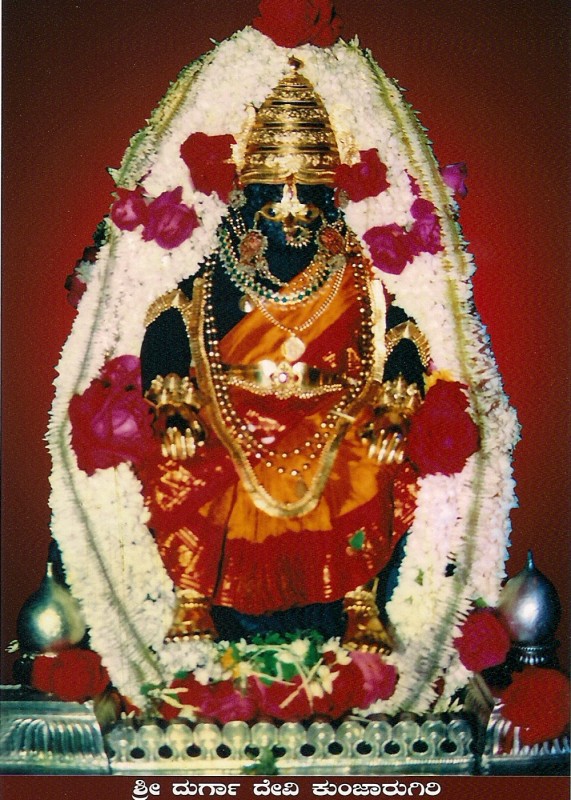
Kunjarugiri temple: 

Kunjaru is a hamlet in Kurkaal grama, situated 6-7 miles (approximately 11kms) to the south-east of Shree Krishna’s Udupi. This small village is reputed for its sanctity owing to the celebrated Durga Temple on a high hillock popularly known by the names: Kunjarugiri, Durgabetta and Vimanagiri

The magnificent idol of Shree Durga is a Chaturbhuja (four-armed) image. It stands holding the Shanka (conch) and Chakra (discus) in the upper hands and Dhanus (bow) and Trishula (trident) are being held in the lower hands.

The Durga temple is installed by Sri Parasurama devaru on the hilltop

travel-durga-parameshwari-pajaka-kshethra

Yelluru viswanatha

It is about 24 kms away from Udupi. When vadirajaru visited this place, it was noon. The temple was closed. Vadirajaru prayed to Lord shankara standing outside, The temple doors opened automatically . Vadirajaru went inside for darshan, again Nandi interrupted him and He prayed to Nandi and continued further

Here one can worship Viswanatha anywhere standing in front of Nandi

The temple has a rich history of over 1,000 years as the divine place of Swayambhu Saannidhya, a linga that is unusual and made of a special stone called ‘Rudrakshi shila’.

ganu_050309_yeloor14.jpg

Madhyavata mutt

This is the place where Madhwacharyaru used to do afternoon pooja on his way from Udupi to subramanya

one of the eight shaligrams which Madhwacharyaru brought from Badri is installed here

img_8420

Chintamani Narasimha

Chintamani Shree Laxminarasimha Temple is situated on the bank of Nethravathi river at Kade Shivalaya village in Bantwal Taluk

Chintamani is 6kms away from Uppinangadi road On Mangalore – Bangalore highway. According to History, Lord shiva was doing tapas here. certain bad elements tried to divert shiva. Narasimha appeared from Patala and destroyed bad elements and protected Shiva

Kade-Shivalaya-.jpg

Nethravathi river

This river takes its birth from Varaha hills and joins Arabian sea @ Mangalore

Nethravathi and Kumaradara sangamam

Nethravathi and Kumaradara sangamam river is in Uppinangadi place. Kumaradara starts from kumara hills. Vadirajaru describes the glory of this two rivers

Subramanya kshethra

It is inside the dense forests of Sahyachala. Sri Vishnu theertha , (younger brother of Madhwacharya is said to be here doing penance) established subramanya mutt.

Kukke Subrahmanya, one among the seven holy places created by Parashurama is mythologically and historically famous for “Nagaradhane”. Residing with Vasuki, God Subrahmanya showers his divine grace on devotees as the presiding deity of the Kshetra. It is also called “Guptha Kshetra”. “Mruthika Prasada” given here is regarded as sacrosanct.

Vadirajaru explains That visiting this kshethra will clear all past sinful deeds, will cure any types of skin diseases and pains

images.jpg

Vedavyasa samputa

Vadirajaru explains the salagrama which neither cant be opened or nor be seen

This temple is situated at the South East of Subrahmanya Temple. Devotees pray to the salagrama of Narasimha daily at this mutt

As per legends, the Lakshmi Narasimha and VedaVyasa idols placed at this shrine were present by VedaVyasa to Madhvacharyaru.

12141030_970736539649534_3685185560228923862_o.jpg

Payaswini river

Vadirajaru glorifies this river as Lord Jagannatha is present here and also he praises the birth of Mahalakshmi (As durga) around here

Suvarna river

This river originates from Varahagiri and passes through vedagiri and Moves along north of Kalyanpur

Kumbhashi kshehtra

It is around 30kms from Udupi. The Lord is called Siddhi Vinayaka or Sarva Siddhi Pradaayaka will grant and fulfill his devotees’ wishes.

This place is actually now called as Anegudde. Anegudde means elephant (Aane) hillock (Gudde) and it is the abode of the elephant god, Sri Vinayaka

It is believed when drought hit this area, the sage Agasthya came here to perform yagna to please the rain god. The demon Kumbhasura tried to disrupt the yagna by troubling the sages performing the yagna. To rescue the sages Lord Ganesha blessed Bheema, the strongest among the Padavas with a sword, using which Bheema killed the demon and facilitated the completion of the yagna.

In Theertha Prabandham Shri Vadirajaru exlained, since Bheema Killed demon using the sword(Asi) the name of the place is termed as Kumbhashi.

935152_10202552131301297_1797517255_n.jpg

Koteshwara kshethra

It is 2 kms away from Kumbhasi. There is a big Mahalingeshwara shrine here. The name koteshwara is derived from koti lingas.

The temple is believed to have been created by Saint Parashurma and is one of the 7 Parashurama Srishti Khetras. Lord Brahma is said to have worshiped Kotilingeshwara here.

According to the legends, one crore sages gathered in the place and did penance to Lord Shiva. Immensely pleased with their devotion, the Lord appeared in front of each of them. Thus the place came to be called Kotee-eshwar(one crore God) which late became Koteshwar.

namma1

Sankara Narayana kshethra

Shankaranarayana village, named after the temple, is located in the valley of mountain ranges close to the Sahyadris. It is located in Udupi District, Karnataka, 25KM from the Arabian Sea.

Lord Hari and Hara joined together to bless a saint called Kroda. Vadirajaru describes Hara with Trishula, Half moon, serpent whereas Hari with Sudarshana, Necklace and crown etc

Shankaranarayana village, named after the temple, is located in the valley of mountain ranges close to the Sahyadris.

The main deity of Shankaranarayana Temple is in the form of Udbhava Linga. The naturally formed lingam of Lord Shankara and Lord Narayana is one feet below the ground, inside the Garbhagudi. The devotees can only see the mirror image of the lingam. The Shankara Linga is on the right (left as seen by the devotees) and Narayana Linga on the left. While Shankara Lingam is in round shape, where as Narayana Linga is a flat one with foot prints of holy cow in it.

shankaranarayanaMain.jpg

Kolluru Mookambika kshethra

It is 80 km away from Udupi. Kolluru is a great shakthi and siddhi kshethra

Once, Sage Kola Maharishi was performing Tapas here when he was persistently troubled by a demon. This Demon had also been praying to Lord Shiva to get powers that would make him invincible and let him do whatever he wanted. Knowing the evil mind of this demon, Devi Shakthi made him Mooka (Dumb). So, when Lord Shiva appeared before him, he was unable to ask for any boon. Enraged by this, the Demon began to harass Kola Maharishi, who was also praying to the Lord. Kola Maharishi appealed to the Divine Mother for help. So, Devi Shakthi came down and vanquished the Demon, Mookasura.

Henceforth, in this region, she came to be known as Mookambika. Lord Shiva also appeared before the sage. Maharishi Kola asked that the Lord with His Consort should remain here forever. To grant his wish, a Jyotirlinga appeared, with a Swarnarekha (golden line) in the middle. Thus, one half of this Linga stands for the conscious principle as embodied by Shiva, Vishnu and Brahma, while the other stood for the Creative Principle in the form of Parvati, Lakshmi and Saraswathi.

Goddess uma appeared here with Lord shankara and slayed Mukasura. The Goddess Mookambika is in the form of Jyotir-Linga incorporating both Shiva and Shakthi

kollur-mookambika-devi11

Sahyadri

It is the mountain range that lies in the west coast. Kolluru temple is located at the foot hills of Kutachadri. Kutachadri is part of Sahyadri mountains

Harihara

It is located at Davanagere in Bangalore – Bombay highway on the banks of tungabadra river

It is said that the demon Guha appeased the creator of the universe and got a “vardan” or boon. As per this boon, neither Shiva (Hara) nor Vishnu (Hari) could destroy him single handedly. Guha started torturing the gods in Indralok as well as human beings in the prithvilok and it became difficult for everyone to withstand his devastation. As both Shiva and Hari could not destroy him on their own, they had to unite and take the form of Harihara to destroy Guha.

Hari and Hara are seen in the same idol inside garbhagudi. Hara on the right side wearing rudrakshi, crown and Trishula in the hand, Hari on the left side with chakra on one hand and showering blessings on the other hand

harihareshwara

Bidarahalli Ashwatha narayana

Vadirajaru explains the glory of Ashwatha vruksha on the banks of river Tungabadra. Vadirajaru defines one need not visit ram sethu, badri, Gaya, Pushkara, prayaga etc to get the blessings of Sri Hari, Just by visiting this aswatha Narayana(In the aswatha vruksha) We can get Sri Hari’s complete blessings

Bidarahalli someshwara

This kshetra is on the banks of Tungabhadra river in Bidarahalli.

Bankapura kesava

Bankapur is a town, just off NH4 between Haveri (10kms) and Hubli (60kms).

Bankapura was an area of Bakasura, which later on became the premises of Ghatothgaja. When the Pandavas escaped from the Wax Palace, through a tunnel, the other end of the tunnel opened at Bankapur. Its believed that Pandavas stayed here for some time and consecrated this idol of Sri Keshava

Varada river

The Varada river originates near Vardamoola in Sagara of Karnataka. It flows through the Western Ghats and enters the central districts of Karnataka, (Haveri and Bellary). The river joins the Tungabhadra River at Galaganath

Banavesi madhukeshwara

It is 25 kms away from sirsi.

The Madhukeshwara temple is located in Banavasi, an ancient town on the borders of the Uttara Kannada and Shimoga districts. The temple is dedicated to Lord Shiva. It is believed to have been built during the reign of the Kadamba dynasty.


800px-Madhukeshwara_Temple.JPG

Dharmaganga river

Vadirajaru took a holy dip here and explains the holiness of the river

shalmali river

shalmali river joins Arabian sea near Gokarna. Vadirajaru describe water is little salty on normal days and it become sweet on the eve of Gangashtami.

Sonda kshethra

It is approximately 20 kms from Sirsi town.

Vadirajaru describes the Trivikrama temple and Dhavala ganga.

The ruler of Swadi  requested Sri Vadiraja Theertharu to construct a temple as there existed no Vishnu temple at that place. Sri Vadiraja Swamy asked the king to start construction of a temple. When people questioned Swamiji on the idol, he told them that the idol of Sri Trivikrama would come to Sode from Uttara Badari (in the Himalayas). He told them that the idol is being worshipped by Sri Madhvacharya and the same was seen by him when he visited him and Sri Vyasa in Badari.

It is believed that the idol was brought to Sode by Sri Bhutaraja. Bhutaraja started bringing the entire Garbha Gudi (sanctum sanctorum) of the temple from Badari.

The structure is in the form of a stone chariot. On the way, he is supposed to have been stopped by a demon. Sri Bhutaraja used one of the wheels of the stone chariot to destroy the demon and made it on time to Sode. Even today, one can find that the stone chariot structure housing the idol in the temple has just three wheels. Devotees visiting Sode must definitely visit this temple and observe the unique stone chariot and the three wheels.

Dhavala Gange:

It is the sacred tank in the Sodhe kshethra and those who perform seva, Should take bath in Dhavala gange before commencing the seva. It is believed that this tank has all the holy rivers within it

maxresdefault12321271_546377195543072_18185678547807786_n

Manjuguni venkatesha

Manjuguni is located at a distance of 26 km from Sirsi. The temple here is dedicated to Lord Venkataramana and Goddess Padmavathi. According to “Sri Venkatesha Mahatmya” the founder of this temple is ” Sri Tirumala Yogi” a saint.

During winter, this place will be covered by thick fog and hence this place called by the name “Manjuguni”

manjuguni-sirsitourism-blogspot-com-2

Yena Bhairava

It is situated in Kumta Taluk of karwar district

According to the local history, Shankara entered the cave as being driven away by bhamasura. Water drops are falling on shiva’s head even though there is no water source found nearby.

Gokarna kshethra

Shiva is in Gokarna in the form of Athmalinga. The temple is located on the Arabian sea shore.

In Threthayuga, Ravana (Demon/Asura King of Lanka) reaches Kailasa and performed rigorous penance to get the “Atma Linga” from Lord Shiva, as Ravana’s mother expressed a keen desire to worship the atmalinga of Lord Shiva.

After a long penance, Lord shiva gave the “Atma linga” to Ravana as a boon and instructs Ravana to carry it home by walk, that he should never place it on the earth even for a short while failing which the linga would get eternally embedded at the place were he broke his commands.

As Ravana was coming near Gokarna. Maha Vishnu who had known well that Ravana was punctual in performing his periodical rites (Sandyavandhana), hides sun with his Sudarshana Chakra (Wheel). Thinking that it was time to perform the evening rites, Ravana finds a Brahmin boy and asked him to hold the Atma linga in his hand till he came back after finishing the rites.

Lord Ganapathi agreed to hold the linga on one condition that he would do so till he would be able to bear the weight of Linga and that thereafter he would call Ravana three times and if failed to come to him by then he would place the linga on the earth.

Lord Ganapathi calls Ravana three times when he was performing his rites and places the linga on the earth and he vanished. The Atma linga at once got firmly entrenched in the earth. Ravana learned that he had been tricked by the Gods.

The depressed demon king Ravana was deeply agitated and tried to pull up the linga, but the linga did not budge a little. It resulted in his throwing the coverings of the Linga to Dhareshwar, Gunavanteshwara, Murdeshwar and Shejjeshwar temples. Ravana was unable to lift the Linga from the ground again and called shiva linga as Mahabala (you are too strong). And ever since the Linga illustrious as Mahabaleshwara.

images

Kolhapur Mahalakshmi

This temple is located around 58 kms from Miraj town. In skanda purana this place is referred as karaveerapura

Legend says, Mahalakshmi came and stayed here at this place because of the anger caused by Brughu muni when he hits narayana’s chest

The statue of the Goddess Mahalakshmi is made of gemstone and is considered to be at least 5000 to 6000 years old. It weighs about 40 kilos.

mk110216.jpg

Tapati river

This river originates from vindhya hills and merges Arabian sea near Surat town.

Vadirajaru describes Tapti river as she clears all the sin of the good people

Narmada river

sins accumulated in 100 births are just cleared by just taking one holy bath in this river. The river originates from mekala giri of Amara Karnataka village situated in between vindhya hills and satpura hills

Prabhaasa kshethra

This place is also known as Somanath. Kapila, Saraswathy and Hiranya rivers join each other before they join Arabian sea.

Somnath temple is also known as Prabhas Pattan and the Shrine Eternal. Somnath is one of the 12 jyotirlinga shrines of God Shiva.

Chandra, (moon) was the first one to receive the benefic boon of Shri Somanath of Saurashtra, the Shiva pilgrimage, Agni Teerth and Surya Teerth. Then Chandra built a beautiful golden temple and put a glorious JyotirLinga in it, the first of its kind in India.

Chandra or moon is also called Som. That is why this JyotirLinga has become famous as Somanath. Chandra or moon looks very bright here. Therefore, this place is also known as “Prabhasapattana”.

bc4930c5-7

Banaganga theertha

It is 3km away from Somnath temple. The spring was created when Lord Krishna threw the arrow set on his leg by Jaravyadha.

banaganga-1024x768

Dhwarakapuri

After defeating Kushasura, Sri Krishna created a new town called Dwaraka over the kushali island through Vishwakarma. Later he came along with yadavas to stay at Dwarkaka leaving Mathura

It is also believed Dwaraka town was submerged under the sea after Sri Krishna’s mission was over

Dwarkadheesh temple is built in Chalukyan style of architecture. This beautiful temple has 51.8 meters height. Dwarkadheesh temple is also known as jagat Mandir.

gujarat-dwarakadhish-temple-fidwaraka

Gomathi river

Gomathi river merges with Arabian sea at Dwaraka. Vadirajaru glorifies the Gomathi river as washing the feet of Dwarakanath every day

Chakra theertha

After sri Krishna’s earthly mission was over, Chakra theertha was not visible and must have submerged under the sea

Vadirajaru describes the chakra theertha merged in Sea converts every ordinary stone into Chakrankana and in turn become fit for worship like saaligrama.

shankodhara theertha

Sri krishna killed panchajanas entering deep into the sea and came out with panchajanya to offer the same guru pradakshine to Guru sandipana Acharya

Vadirajaru describes the defeat of panchajana and significance of Panchajanya

Gopichandana

Vadirajaru describes the glory of Gopi chandana as one who wears the Gopi chandana are so powerful and more knowledgeable person.

Siddhapuri and bindu sarovara

Siddhapuri is 100 kms away from Ahmedabad.

Lord vishnu took the form of Kapila (who was born to Maharisi karmadama and Devahuti). Bindu Saravora was made up of cheerful tears by Kapila

Vadirjaru describes Siddhapuri as offering moksha to the visitors

img.jpg

Theertharaja pushkara

Here Mahavishnu remain as Varaha devaru after defeating Hiranyaksha.

According to local history, Demon was killing the childrens here. Brahma slayed the demon by throwing Pushkara , a spring appeared hill called as pushkara

The place became famous as pushkara as it was created on the fall of Pushkara(Lotus)

pushkar.JPG


Uttara Prabandha(Total:20) 

Krishna river

This river is also known as krishnaveni. The river originates from Mahabaleshwara 120 kms from Pune.

bhima and Tungabadra river joins krishna towards their flow and joins Bay of Bengal near Vijayawada.

When guru enters Kanyarashi, Holy Ganges along with 33 crores of Theerthas are present in this river.

Pandarapura kshethra

It is around 60 kms from Sholapur, Maharashtra.

Bhima river flowing river is called as chandra bhaga river

Here Panduranga appeared here to bless Pundarika(Who loved and worshipped his parents with utmost bhakthi and dedication).Upon the request of Pundarika, Panduranga appeared to stay here.

Lots of Hari dasaru visited panduranga and composed numerous songs on Panduranga/vittoba

images

pandharpur

Godavari river

This river originates from Trayambaka river and 25 kms away from Nasik station. This river merges with Bay of bengal near Rajamundry travelling a distance of 1500 kms.

When guru enters simha rashi, Holy Ganges along with 33 crores of Theerthas are present in this river.

Yamuna river

The origin of yamuna river is 10000 ft above sea level at the point known as Yamunadhri in Himalaya mountains. The water of the river is very cold. Yamuna is also known as kalindi .

Yamuna joins Holy Ganges at Prayag.

Vadirajaru describes as Yamuna never send the one who worship her to Yama, Instead she sends the good soul to Vaikunta

Triveni sangamam

Those who take a holy tip at the merging point of Ganga, Yamuna and Saraswathy(Triveni sangama or Prayaga) gets deliberated from rebirth

There is a vata vruksha which can wipe away all our sins. During pralaya kala, Lord vishnu is used to rests here

Kumbha mela is held here once in 12 years

Triveni Sangam Allahabad in Films.jpeg

Prayaga madhava

Lord brahma performed a yagna during the period of creation after pralaya. Hence this place is called as Prayaga

veni2.jpg

Ganga water

holy ganga is the biggest of all rivers in India. Ganges originates from Gangothri at Himalayas and after travelling a distance of 2400 kms, merges with Bay of Bengal at Calcutta. Gangothri is 92 kms away from uttara kashi

Vadirajaru states the color of yamuna is pink, color of saraswathy is blue black and color of Ganges is snow white and how it merges at Prayaga

Vadirajaru also describes how Ganga is related to Lord Hari and How she is special in all the ways.

ganga-river-hd-wallpaper

Kasi kshethra

Kashi is well known for Lord Viswanatha.

Lord shankara was liberated from Brahma kapala that stuck to his hand for twelve long years on reaching kashi town , the abode of bindu madhava

The Kashi Vishweshwar temple as we see it now was built by Ahalya Devi Holkar in 1777 AD. In 1785 AD, the then King of Kashi, Mansaram and his son Belvant Singh built many more temples near Varanas

kashi-vishwanath-shivling

bindu-madhava-2

Gaya Gadadara

It is situated on the banks of river Palguni

It is a belief that doing pinda pradhana here will relieve our departed elders from rebirth. Vadiraru explains the significance of Vishnu pada.

The city is named after Gayasura, the son of Tripurasura. The history of Gaya is found in the Gaya Mahatmya, an appendix to the Vayu Purana, and in shorter form in the Agni and Garuda Puranas.he asura (demon) Gaya acquired divine powers so that anyone who saw or touched him went straight to heaven. This intruded on the jurisdiction of Yamaraja, who rules death. Lord Vishnu killed the demon after granting him the boon that the ground covered by his body—some ten miles in extent—would become the holiest place on earth and be known as Gaya Ksetra. The ancestors of those who perform funeral ceremonies here are supposed to be sent straight to heaven.

gadadhara
Gaya Gadadara
hqdefault
Vishnu pada

On behalf of their forefathers, the pilgrims pour water on the temple’s main object of worship, a stone imprint, 40 cm long and 15 cm wide, of the lotus feet of Lord Vishnu in an octagonal basin, 1.2m in diameter. The footprint is imprinted in solid rock and is surrounded by a silver-plated basin.

Palgu river

This river is seen flowing in front of Vishnu pada temple. The river originates from kolhala mountains near gaya.

1621-050-FFCB3339.jpg

Mathura

Mathura is a city in the North Indian state of Uttar Pradesh. It is located approximately 50 km north of Agra, and 145 km south-east of Delhi; about 11 kilometers from the town of Vrindavan and 22 kilometers from Govardhan. Mathura is the birthplace of Lord Krishna at the centre of Braj or Brij-bhoomi, called Shri Krishna Janma-Bhoomi.

This holy town was constructed by Chathrugna during treta yuga, after slaying lavanasura with an arrow

Child dhruva performed deep penance here for 6 months before getting the darshan of Lord Sri Hari. Sri vishnu chakra saved ambareesha from the wrath of sage Durvasa

Lord Krishna who lifted Govardhana hill for protecting yadavas is just 22 kms away from here

mathura1A.jpg

vishranthi theertha

It is the holiest ghat out of 24 ghats on the banks of River Yamuna

This place is called vishranthi as Lord Krishna rested here for some time after killing kamsa

panPhoto_3903.jpg

Vrindavan

It is 5 kms away from Mathura.

Sri krishna spent his early years here and had his rasa kreeta at vrindavan

42d52558b6e6c44c92ee091289508cb9

Ayodhya

It is 134 kms away from Lucknow

It is the holy Raama kshethra of Treta Yuga. Vadirajaru describes How Bharata ruled Ayodhya just with Raama paadukas

122-4

Naimisharanya

Naimisharanya is located in the state of Uttar Pradesh about 90 km from its capital Lucknow in the district of Sitapur. Naimisharanya is situated on the left bank of the river Gomathi, which is a tributary of the river Ganges. Naimisharanya is popularly known as Neemsar or Naimisha. In the Bhagavata Purana it is mentioned: naimishe animisha-kshetre.

Naimisharanya is also called as Nemisharanya. Nemi means the outer surface of the disc (chakra) and the place where it fell is called by the name of Nemisharanya or popularly called as Naimisharanya. The spot where the Nemi of the chakra fell came to be known as Chakra Tirtha (a holy bathing place in the shape of a chakra) and the surrounding forest area as Naimisharanya.

It is also believed and said that once upon a time Lord Maha Vishnu had killed demons at this place within a split second – a nimisha (nimisha is a unit of time, the time it takes to blink) and thence forth this are was called as Naimishaaranya.

Suta puranika gave discourse on Bhagavatha and Mahabharata to Shaunaka and other 80,000 saints

91162728

Hastinapura

It is 35 kms south of Meerut

It was the capital of Pandavas for 36 years after kurukshethra war. Pandavas performed Ashwameda yaga here for 15 long years

Sri madhwacharyaru did one chathurmaasya here

Kurukshethra

The great saint Vishwamithra became Maharishi here

Sri Krishna delivered Geeta to the people through Arjuna here. During Solar/ Lunar eclipse, Sri Krishna visited this place to have holy bath in Brahma sarovara

Sri Madhwacharyaru visited this place on his way to Badari and remembered the weapons used by him during his bheemasena avathara during the epic war

brahm_sarovar_10

Shambala

It is situated in Moradabad district of Uttara pradesh. the holy town was known as sathyavrata in krutayuga, Mahadgiri during treta yuga, pingala in Dwapara yuga and sambhala in Kali yuga

Sri hari will take tenth avatara as kalki to eradicate evil in this world

Shat prayagas

To reach Badri, one has to cross six prayagas(300kms) from Hrishikes

The six prayagas are Deva prayaga, Rudra prayaga, Karna prayaga, Nanda prayaga, Vishnu prayaga and KEshava prayaga

PRayaga means confluence of two or more rivers

Badari Kshethra

Sri hari came here in four different avatharas: first one as Hayagriva devaru from Yagna Kunda, in Second as Sri Narayana, In third avathara as sri Krishna and fourth as Lord Vedavyasa

The temple history says that the presiding deity measuring about 1 meter is a black stone idol of Vishnu named as Badrinarayan. This image is considered as one of the eight Swayam vyakta kshetras where Lord Vishnu is seen self-manifested.

Sri Madhwacharyaru wrote Geeta bhasya at Badari and offered the same to Badari Narayana

badri-narayana-perumal

sri-badri-narayana-perumal-temple_1413612289.JPG


Purva prabandha

Ganga sagara sangama

It is the place where Holy Ganga joins Bay of Bengal near Calcutta

puri Jagannatha

This place is also known as Purushotthama kshethra and shanka kshethra

Puri was earlier known as Neelachala where existed temple of Neela madhav. When Neelachala was submerged under the sea, The celestials took neela madhav to heaven

Later, Indrayumna found holy wood and from which idols of Krishna, Bala rama and subadhra are found and installed here

1443803566903jai-jagannath-ji.jpg

srisaila

Srisaila is the abode of Lord Malligarjuna Swamy

The shrine of Lord Mallikarjuna picturesquely situated on a flat top of Nallamalai Hills, It is on the right side of the River Krishna in Kurnool District of Andhra Pradesh. This celebrated mountain is also named as Siridhan, Srigiri, Sirigiri, Sriparvatha and Srinagam

download (1).jpg

Ahobila

Ahobilam Narasimha Temple is situated on the Upper Ahobilam at a distance of 8km from Lower Ahobilam

This temple is located 35 kms from Nandyal. It is believed Lord Narasimha appeared in the pillar here to save Prahladha by killing Hiranyakasipu

Presiding deity of this temple is believed to be ‘svayambu’ (self-formed) and worshipped as ‘Lord Ahobila Narasimha Swamy’ and also called as ‘Ugra Narasimha’ because He appears here in His fierce aspect

Nine temples are dedicated to ‘Lord Narasimha’ (one of the ten incarnations of ‘Lord Vishnu’) which is called as Nava Narasimha temples and also situated at Ahobilam in the of Karnool district in Andhra Pradesh. The Nava Narasimha Temples are:

  1. Ahobilam Narasimha Temple
  2. Varaha Narasimha Temple
  3. Jwala Narasimha Temple
  4. Malola Narasimha Temple
  5. Karanja Narasimha Temple
  6. Yoganandha Narasimha Temple
  7. Chatravata Narasimha Temple
  8. Paavana Narasimha Temple
  9. Bhargava Narasimha Temple

Lord-Ahobila-Narasimha-Swamy-with-Goddess-Lakshmi.jpg

Nava_Narasimha_Temples.jpg

Bhavanashini river

Vadirajaru describes bhavanashini river that flows in Ahobila as sacred for providing Abhisheka water and Lotus for the Narasimha swamy

Nivrutthi sangama

It is the sangama of Krishna and Tungabadra rivers(Krishnaveni, Malapahari, Bhimarathi, Tungabadra and Bhavanashini)

Tungabhadra river

It is the sweetest water to drink. It originates from varaha hills. Tunga river and Bhadra river merges at kudli after flowing separately from the origin.

Hampi vittal

Hampi is situated at a distance of 15 kms from Hospet. Hampi was the capital of Vijayanagara empire

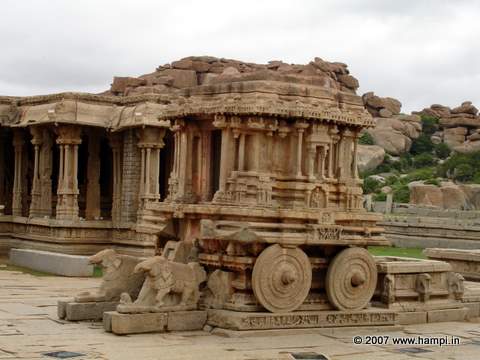
The highlight of Vittala temple is its impressive pillared halls and the stone chariot. The halls are carved with an overwhelming array of sculptures on the giant granite pillars. The stone chariot located inside the campus is almost an iconic structure of Hampi.

charriot


Virupaksha temple

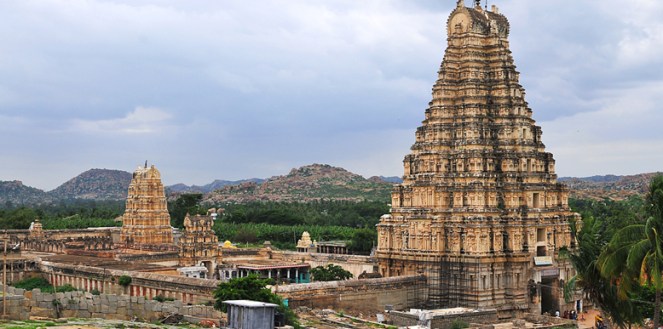
Hampi used to be the seat of the Vijayanagara Empire and the Virupaksha Temple is among the group of monuments built during 1336 – 1570 A.D.

It is situated on the banks of river Tungabadra near Hemakuta hills. The main temple is east facing and has two large courtyards, one leading to the other.

Virupaksha-Temple-1010136.jpg

Pampa kshethra

It is also known as southern Kashi. Vadirajaru states Pampa as the kshethra that destroys all the sins

Hampadevi

Goddess durga devi temple is situated on Pampa saravora(Banks of River Tungabadra)

Anegondi

Vadirjaru glorifies Nava brindavana where there were eight brindavanas during his visit. Vadirajaru described those 8 yathis as Ashta diggajas who are bearing the burden of this universe

The place is surrounded by hills on three sides and by river Tungabhadra on the remaining side

According to Indian mythology, Anegundi was called Kishkindha, the kingdom of monkeys. Sugriva after defeating his evil brother Bali with the help of Lord Rama, established justice and order in the city and ruled there.

In Kannada , Anegundi means the elephant pit. This place was used for bathing the elephants of Vijayanagara Empire and also became the first capital of the empire.

img_8863

Malkhed Jaya theertha

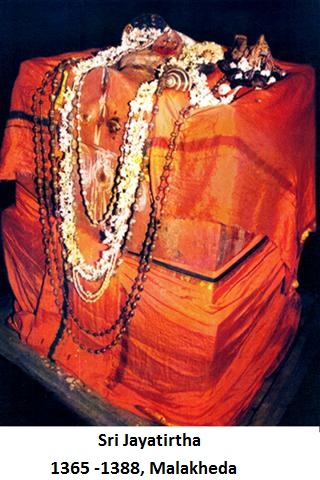
Jayatheertharu is also known as Teekacharyaru. Vadirjaru glorifies the work of Jaya theertharu in Nyaya sudha and teekas

Malkhed comes under Gulbarga District.It is 40 kms away from Gulbarga

06_jayatheertharu.jpg

Thirumala srinivasa

Thirumala tirupathi is known as sheshadri during dwapara yuga, anjanadhri in treta yuga and vrishabadri in kruta yuga

The glory of tirumala is explained in varaha purana. Tirupathi is the abode of Lord Venkateshwara swamy

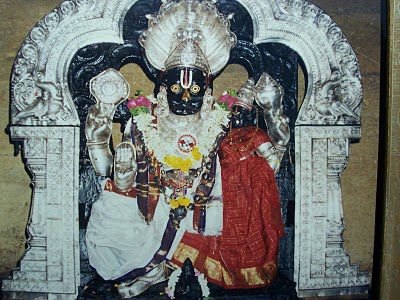
 ‘Sri Venkatachala Mahatrnyam’ contains Puranic lores from the twelve Mahapuranas. The puranic legends say that after the Pralaya  kalpa preceding the great Deluge, the Supreme Being Maha Vishnu, revealed Himself in the form of a White Boar, Sweta Varaha, rescued the earth and recreated it and having re-established the universe, He decided to stay on the earth for some time to protect the good and destroy the evil. Thus God Vishnu revealed Himself earlier. in the previous incarnation as Varahaswami on the bank of the Varaha Tirumala i.e. northern portion of Pushkarini at Tirumala. This manifestation as the White Boar is enshrined in the Adi Varahaswami temple on the north western bank ofthe Pushkarini at Tirumala_ This temple is believed to be older than the temple of Lord Venkateswara and claims precedence in worship and Nivedana.

Lord Vishnu Came to Bhu-loka on searching Goddess mahalakshmi who left Vaikunta because of the anger caused by Brughumini hitting sri Hari’s chest.

Lord vishnu lived as srinivasa, married Padmavathi and stayed in Tirumala for blessing people in kaliyuga

tirumala-tirupati-balaji-templedownload

Suvarna Mukhari river

This river flows near Thiruchanoor. Sri kshethra kalahasthi is situated on the banks of this river

Kanchi varadaraja

The 40 feet long idol of Lord Athi Varadaraja Perumal in reclining posture is made of Athi wood. This is brought out once in 40 years for the darshan of devotees. Chakkarathazwar shrine – the deity of the discus of Lord Perumal – with 16 hands holding conch and discus is on the eastern side of the temple tank.

Lord Varadaraja Perumal in His standing posture facing west blesses the devotees with all mercy.  As Perumal granted a boon – Varam in Tamil – to Lord Brahmma pleased with His Yajna, He is praised as Varadaraja Perumal.  The place derived the name Athigiri as Iravadam elephant lifted Perumal as a Mount.  Athi-Mount.   The 24 steps in the temple represent the number of letters of Gayatri Mahamantra.

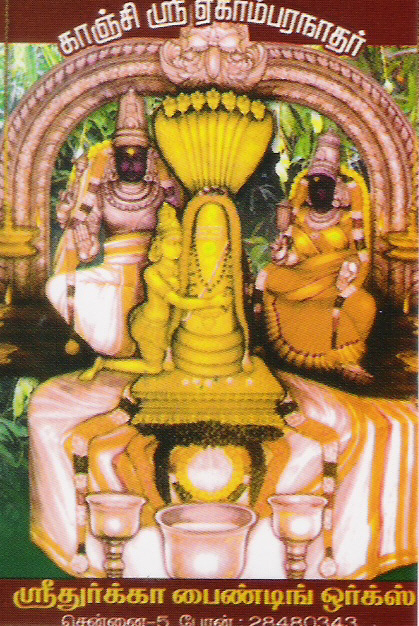
When brahma performed Satrayaga, Lord Narayana emerged as Varadaraja

461e184b949b22ffd1f34c539500e577.jpg

Shiva Kanchi Ekambareshwara

Goddess parvathi worshipped Shankara by creating a Linga out of sand under the mango tree. Lord shiva is pleased and came to this punya kshethra

ent014_sanctum.jpg

Kanchi Kamakshi

The Goddess Kamakshi prevails in the form of Shakti. The place where goddess resides is “Gayatri Mandapam”. The Goddess lives in temple in 3 forms. They are Sri Kamakshi, Sri Bilahasam and Sri Chakram. The goddess is in a sitting posture of “Padmasana” .The goddess contains Pasa, Angusa, Pushpabana and Sugarcane in her forehands.

6442785977.jpg

Arunachaleshwara

This place is now called as thiruvannamalai. among the five type of lingas, Agni linga is present here

arunachaleshwara-mandir-prasad-thiruvannamalai-89.jpg

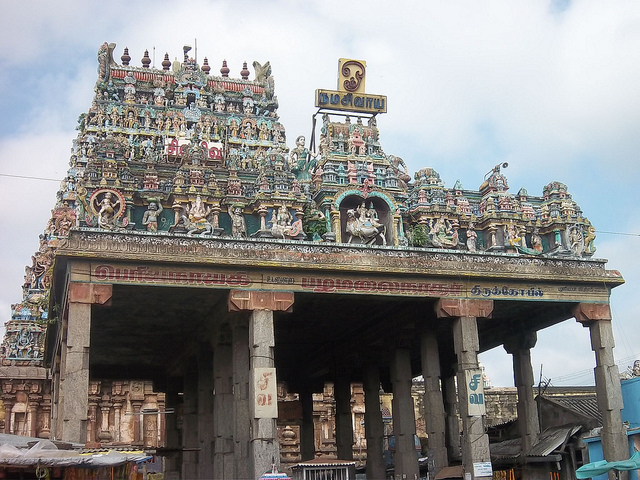
Thirukovilur

Vadirjaru describes the avatara of Bali and Trivikrama. This town is about 40 KM from Villupuram.

This is one among the “Pancha Krishnaranya Kshetram”. (five palces of Lord Krishna).

sri-thiruvikrama-perumal-temple_1420964345.jpg

Vriddhalacheswara

The big temple of maheshwara is situated at Vriddhachala. shankara presented himself before a saint called by Vibhishita, pleased by the deep penance of the later one

5573641455_c1dc5cdd17_z.jpg

Srimushna Bhuvaraha

It is 60 kms away from Thirukovilur

Mahavishnu took varaha avatara in this holy place. Acharya Madhwaru did one chathur maasya here

Srimushnam.jpg

Kumbakonam

It is situated on the banks of river Cauvery. Kumbakonam is a temple town with large number of temples.

Vadirajaru described the glory of sarangapani.

Tri-Kudandai.jpg


Dakshina Prabandha

Sriranga kshethra

Srirangam is an island with a length of 27 km and breadth of 5 km. It is 10 kms away from Tiruchirapalli

Ranganatha was the kula devaru of Sri Raama. After the requests of Vibhishana, Lord Raama handed over Ranganatha swamy to him.

On his way towards Srilanka, vibheeshana has to place the ranganatha on the ground to perform sandhyavandana.

Lord Ranganatha remained there firmly but for blessing vibhsana, Lord is  facing Srilanka

maxresdefault.jpg

Panchapani kshethra

Vadirajaru describes Sesha who spreads his five hoods as umbrella over the head of Ranganatha swamy.

Chandra pushkarani

On the fifth prakara of temple in srirangam, there is a tank known as chandra pushkarini in the form of full moon.

Cauvery river

This river originates from Sahyachala and merges with Bay of bengal beyond tanjore. The actual place of origin is Thala cauvery of coorg district

During Tula maasa, Holy ganges is present in cauvery water.

Vrishabachala

This place is around 20 kms from Madurai. this is also called as Azhagiri kovil. The main deity is sundara rajan, Sri Hari

Once Yamadharma raja did deep penance in the full to earn the grace of sri hari.

Sri Hari appeared as sundara raja before Yama and blessed him

moolava sundara perumal.jpg

Nupura ganga

when Sri Hari appeared as sundara raja before Yama, the holy ganges emerged out of his anklets and formed Nupura Ganga

Darbashayana

It is 10 kms away from Ramanathapuram town. According to local history, Lord Raama slept over dharba here in three days to please Sea god for constructing a bridge over it to cross the ocean and reach srilanka

Sri-Kalyana-Jagannatha-Perumal-Temple-2.jpg

Rama sethu

this is the bridge of 100 yojana in length was built by Raama from Rameshwaram to Dhanushkodi.

Vadirajaru also explains how hanuma was helpful in constructing the bridge and also Madhwacharyas Sarva moola granthas

25178206235_0d38df9787_b.jpg

Rameshwara

This place is also called as Gandha madana. Pandavas and Balarama has visited this place. Vadirajaru describes the prathistapana of Linga by Raama

Rameswaram2-v.jpg

Dhanushkoti

It is 20 kms away from Rameshwaram.  as per the vibishanas request of preventing hostile forces entering into Dhanush kodi, Lord Raama breaks the bridge built by him at different points standing at Dhanushkoti

Sri Ramapada stotra

Sri Rama stotra

Tamraparani river

This river orginates from Malayachala

Vadirajaru describes this river as the power of converting rain water into pearls

Mahendra hills

It is reported to be near Dharbshayana

Hanuma while on his search to locate seeta, Took a step in this mountain and the mountain was pressed to the bottom of the sea due to the force

Kanyakumari

This place is 96 kms from Tirunelveli. we can see sangama of Arabian sea, Bay of Bengal and Indian ocean.

Vadirajaru worships the divine power of Sridevi in the form of Kanyakumari. He describes how Goddess defeated Banasura

Vadirajaru describes Sri Kanyakumari as Goddess Mahalakshmi

kumari.jpg

Agasthya varnana

Vadirajaru worships Agasthya who lived in vyasa hills near Kanya theertha

Agasthya muni converted the whole ocean into single drop and sipped it to protect the celestials in the sea who were harrased by the demons

Suchindra kshethra

It is 13 kms away from Kanyakumari. The celestial head Mahendra, who was cursed by Sage gautama got deliberated at this place

suchindram.jpg

Adikeshava kshethra

it is situated in tiruvattar, 18 kms away from Trivandrum

The idol of keshava is 16 feet in length.

image001.jpg

Gharatamala kshethra

It is seen at Neyyatikara, 20 kms away from Thiruvattar.

Ananta shayana kshethra

It is situated 85 kms away from Kanyakumari. We pray Ananthapadmanabha in three sepatate doors as the idol is too long.

padmanabhaswami.jpg

Finally Vadirajaru submitted this holy Grantha “Theerta Prabhanda” in this place.

||Krishnarpanamasthu||

hanuma · MADHWA · Vijaya dasaru

Yanthrodharaka hanumanta suladhi by Vijaya dasaru

ಧ್ರುವತಾಳ
ಯಂತ್ರೋದ್ಧಾರಕ ಹನುಮಾ ಸುರಸಾರ್ವಭೌಮಾ |
ಯಂತ್ರ ಧಾರಕ ಎನಗೆ ಮನಸಿನೊಳಗೆ |
ಯಂತ್ರ ವಾಹನನ ಪೂರ್ಣದಯದಿಂದ ಸಕ |
ಲಾಂತರಿಯಾಮಿಯಾಗಿ ಚರಾಚರದಿಲ್ಲೀ |
ತಂತ್ರವನು ನಡಿಸುವ ಮಂತ್ರಿ ಈತನು ಕಾಣೊ ಸ್ವಾ |
ತಂತ್ರ ಪುರುಷ ವಿಜಯವಿಠಲನ್ನ ನಿಜ ಭಕ್ತ |
ಅಂತ್ರವಿಲ್ಲದ ತನ್ನ ಸ್ತುತಿಪರನ್ನ ಪೊರೆವ ||1||

ಮಟ್ಟತಾಳ
ವ್ಯಾಸರಾಯರು ತಮ್ಮ ಮೀಸಲ ಮನದಲ್ಲಿ ನಿಜ |
ದ್ಯಾಸನ ಧ್ಯಾನದಲಿ ಶ್ರೀಶನ ಪೂಜಿಸಲು |
ಆ ಸಮಯದೊಳು ಸುಳಿದು ನಿಂದು |
ಈ ಶಿಲೆಯೊಳಗೆ ಪ್ರಕಾಶ ಮಾನವಾಗೆ |
ತ್ರಿಸಾಮಾ ವಿಜಯವಿಠಲವ ಸೇವೆ ಹಾ |
ರೈಸಿ ಇಲ್ಲೆ ಮೆರದೆ ದಾಸರನ ಪೊರದೆ ||2||

ತ್ರಿವಿಡಿತಾಳ
ಮೂರುಕೋಟಿ ಬೀಜಾಕಾರಾ ಮಂತ್ರವ ಜಪಿಸಿ |
ಧಾರಿಯನು ಎದು ನಿನ್ನಯ ಸುಂದರ |
ಮೂರುತಿಯನು ನಿರ್ಮಾಣವನು ಮಾಡಿದರು |
ಆರುಕ್ಷೋಣಿ ವಲಯಾ ಕಾರಾ ವಾನರ ಬದ್ಧ |
ಚಾರು ಶೋಭಿತ ತುಂಗಾತೀರದಲ್ಲಿ ವಾಸ |
ವೀರಾ ವಿಜಯವಿಠಲನ್ನ |
ಕಾರುಣ್ಯದಲೀ ಗನುಗುಣ್ಯವಾಗಿ ನಿಂದೆ ||3||

ಅಟ್ಟತಾಳ
ಒಂದು ಕೋಟಿ ಬೀಜ ಮಂತ್ರ |
ದಿಂದ ಸುತ್ತ ಯಂತ್ರವ ಬರಿಸಿ |
ಅಂದು ಪ್ರಾಣ ಪ್ರತಿಷ್ಠೆಯ ಮಾಡಿ |
ನಿಂದಿರಿಸಿದರು ನಿನ್ನ ಮಂದಹಾಸದಿ ವ್ಯಾಸ ಮುನಿಗಳು |
ಒಂದು ಕರದಲಿ ಜಪಮಾಲೆ |
ಒಂದು ಕರಾ ನಾಭಿ ಕೆಳಗೆ |
ಚಂದದಿಂದ ಪದು ಮಾಸನ |
ದಿಂದ ಕುಳಿತು ನಿತ್ಯ ನಿತ್ಯಾ |
ನಂದ ವಿಜಯವಿಠಲನ್ನ |
ವಂದಿಸಿ ವರಗಳ ಕೊಡುತ |
ಬಂದ ನರರ ಪಾಲಿಸುತ್ತ ||4||

ಆದಿತಾಳ
ಭೂತ ಪ್ರೇತ ಪಿಶಾಚ ಪೀಡೆ |
ವಾತ ಶೀತ ಜ್ವರ ಮಿಕ್ಕಾದ |
ಯಾತನೆ ನಾನಾ ಕಠಿಣ ಭೀತಿ ಮತ್ತೆ |
ಯಾತರ್ಯಾತರರ್ಧಪೇಕ್ಷಿತ ತೆರದಲೆ |
ಆತುರದಿಂದಲೆ ಕೊಟ್ಟು ಪಾತಕವ ಹರಿಸಿ |
ಭೂತಭೃತೆ ವಿಜಯವಿಠಲನ |
ದೂತರೊಳು ಶ್ರೇಷ್ಠನೀತಾ ||5||

ಜತೆ
ವ್ಯಾಸಮುನಿ ಪೂಜಿಪ ಯಂತ್ರೋದ್ಧಾರಕ ಹನುಮಾ |
ಈಶಾನಾ ವಿಜಯವಿಠಲನ ದಾಸರ ಪ್ರೇಮಾ ||6||


Dhruva tala
Yantroddharaka hanuma surasarvabauma |
Yantra dharaka enage manasinolage |
Yantra vahanana purnadayadimda saka |
Lantariyamiyagi caracaradilli |
Tantravanu nadisuva mantri Itanu kano sva |
Tantra purusha vijayavithalanna nija Bakta |
Antravillada tanna stutiparanna poreva ||1||

Matta tala
Vyasarayaru tamma misala manadalli nija |
Dyasana dhyanadali srisana pujisalu |
A samayadolu sulidu nimdu |
I sileyolage prakasa manavage |
Trisama vijayavithalava seve ha |
Raisi ille merade dasarana porade ||2||

Trividi tala
Murukoti bijakara mantrava japisi |
Dhariyanu edu ninnaya sundara |
Murutiyanu nirmanavanu madidaru |
Arukshoni valaya kara vanara baddha |
Caru sobita tungatiradalli vasa |
Vira vijayavithalanna |
Karunyadali ganugunyavagi ninde ||3||

Attatala
Ondu koti bija mantra |
Dinda sutta yantrava barisi |
Andu prana pratishtheya madi |
Nindirisidaru ninna mandahasadi vyasa munigalu |
Ondu karadali japamale |
Ondu kara nabi kelage |
Chandadinda padu masana |
Dinda kulitu nitya nitya |
Nanda vijayavithalanna |
Vandisi varagala koduta |
Banda narara palisutta ||4||

Aditala
Buta preta pisaca pide |
Vata sita jvara mikkada |
Yatane nana kathina biti matte |
Yataryatarardhapekshita teradale |
Aturadindale kottu patakava harisi |
Butabrute vijayavithalana |
Dutarolu sreshthanita ||5||

Jate
Vyasamuni pujipa yantroddharaka hanuma |
Isana vijayavithalana dasara prema ||6||

MADHWA · sulaadhi · Vadirajaru · Vijaya dasaru

Vadiraja Suladhi by Vijaya dasa

ಧ್ರುವತಾಳ
ಮಾಧವನಂಘ್ರಿ ನಿತ್ಯ ಮೋದದಲ್ಲಿ ಭಜಿಪ
ಸಾಧು ಸನ್ಮುನಿವರ್ಯ ಸಮ್ಮೋದ ತೀರ್ಥಕರಪಾದ
ಸಾದರದಿಂದ ಭಜಿಸಿ ಮೇದಿನಿಗೆ ಭಾರ
ವಾದ ಮಾಯಾವಾದಿಗಳ ಗೆದ್ದೆ
ವಾದಿರಾಜರ ಮಹಿಮೆ ವರ್ಣಿಸಲರ್ಹನಲ್ಲಾ
ಮಾಧವ ವೇದವೇದ್ಯ ವಿಜಯವಿಠ್ಠಲ ತಾನು
ಆದರದಿಂದವರ ಭುಜದಿ ಹಯವಕ್ತ್ರನಾಗಿ
ಪಾದವನ್ನು ಇಟ್ಟು ಸ್ವಾದುವಾದ
ಕಡಲಿ ಹೂರಣವನು ಉಂಡ
ಶ್ರೀಧರನ ಮಹಿಮೆ ಸಾಧುಜನರು ಕೇಳಿ ||1||

ಮಟ್ಟತಾಳ
ಕಡಲಲ್ಲಿ ಪವಡಿಸಿದ ಒಡಿಯ ತಾ ಪೊಡವಿಯಲಿ
ಮೃಡನುತ ಗೋವಿಂದ ಜಡದ ಹರಿವಾಣದಲ್ಲಿ
ಕಡಲಿ ಸಕ್ಕರೆ ಬೆರಿಸಿ ಲಡ್ಡುಗೆಯ ಮಾಡಿದ
ಸಡಗರದ ಭಕ್ಷ ಪಾಯಸ ಘೃತ ನೀಡೆ
ಒಡೆಯನು ಬ್ರಹ್ಮಾದಿ ಪರಿವಾರ ಸಹಿತುಂಡು
ಕಡಗೋಲು ನೇಣು ಪಿಡಿದುಡುಪಿಲಿ ನಿಂದ
ಉಡುರಾಜಮುಖ ನಮ್ಮ ವಿಜಯ ವಿಠ್ಠಲನು
ಬೆಡಗು ಕಾರ್ಯವನ್ನು ನಡೆಸಿದ ಬಗೆ ಕೇಳಿ ||2||

ತ್ರಿವಿಡಿತಾಳ
ತಾಮಸಗುಣವುಳ್ಳ ಪಾಮರ ಜನರಿಗೆ
ಈ ಮಹಿಮೆ ದೊರಕುವುದೇ ಸ್ವಾಮಿ ಸಿಲಕುವನೆ
ಕಾಮಿಸಿ ಕೋಟಿ ವರುಷ ನಾಮನುಡಿಯೆ ಪರಂ
ಧಾಮ ದೊರಿಯದು ಭೂಮಿಯೊಳಗಿದ್ದ
ಭ್ರಾಮಕ ಜನರಿಗೆ ವಾಮದೇವನೆ
ಹಿರಿಯನೆಂದು ಬುದ್ಧಿಯಕೊಡುವ
ಕಾಮಾರಿ ವಂದ್ಯ ನಮ್ಮ ವಿಜಯ ವಿಠ್ಠಲನು
ಸಾಮಾನ್ಯ ಜನರಿಗೆ ದೊರಕುವನೆ ಕೇಳಿ ||3||

ಅಟ್ಟತಾಳ
ಅಜ ಸತ್ಯಲೋಕಾಧಿಪತ್ಯವನ್ನು ಮಾಡಿ ದಿ
ಗ್ವಿಜಯ ಮಾಡಲು ಪುರಕೆ
ನಿಜಸುಜ್ಞಾನ ಪೂರ್ಣಪ್ರಜ್ಞರೆಂಬೋ ಮುನಿಯು
ಅಜಪದಕೆ ಬಂದು ಅಖಿಳರನಾಳಿದಾ
ನಿಜವಾಯು ಹನುಮ ಭೀಮ ಮಧ್ವನೆನಿಸಿದ
ವಿಜಯಸಾರಥಿ ಪಾದರಜದ ಮಹಾತ್ಮೆಯಿಂದ
ಗಜವೈರಿ ಭಂಜನ ವಿಜಯವಿಠಲನ್ನ
ಭಜನಿಯ ಗೈಯುತ ಬಹುಕಾಲದಿ
ಋಜುಗಣ ಪಂಕ್ತಿಯೊಳಗೆ ಕುಳಿತಾ
ನಿಜ ನಿರ್ಮಲ ಸುಜ್ಞಾನ ಧ್ಯಾನದಿಂದ
ಜ್ಞಾನ ಪಕ್ವಾದ ಮಾನವುಳ್ಳ
ಸುಜನ ಶಿರೋಮಣಿ ವಾದಿರಾಜನು ತಾ
ನಿಜವಾಗಿ ಬೊಮ್ಮಾಂಡ ಪುರಾಣ ಸಾಧಕದಿಂದ
ಅಜಪದ ಸಲ್ವದು ಲೇಶ ಸಂಶಯಬೇಡಿ
ನಿಜ ನಿಜ ನಿಜವೆಂದು ನಿತ್ಯದಿ ಕೊಂಡಾಡಿ||4||

ಆದಿತಾಳ
ಮನಶುದ್ಧರಾಗಿ ಮಾಧವನಂಘ್ರಿಯನು
ದಿನ ದಿನದಲ್ಲಿ ನಂಬಿ ಕೊಂಡಿಪ್ಪರೆ
ಅನವರತಾನಂದ ಗುರು ಮಧ್ವರಾಯರ ದಿವ್ಯ
ವನಜ ಪಾದಂಗಳ ಸ್ಮರಿಸಲು
ಹನುಮೇಶ ನಮ್ಮ ಸಿರಿ ವಿಜಯವಿಠ್ಠಲ ತಾನು
ಮುನಿವಾದಿರಾಜರು ಸಾಮಾನ್ಯರೆಂತೆಂದು
ಎಣಿಸಿದವರನ್ನು ಘನವಾಗಿ ಶಿಕ್ಷಿಪ
ಇನತನೂಧ್ಬವ ಕೋಪದಿಂದೀ ಕಾರಣ ಮಹಿಮೆ
ಯನು ಕೊಂಡಾಡಿ ಅನುದಿನ ಸುಜನರು ||5||

ಜತೆ
ಮೋದ ತೀರ್ಥ ಮತ ಸೇನಾಧಿಪತಿಯಾದ
ವಾದಿರಾಜ ಮುನಿಯು ವಿಜಯವಿಠ್ಠಲದಾಸಾ||6||


Dhruvatala
Madhavanangri nitya modadalli Bajipa
Sadhu sanmunivarya sammoda tirthakarapada
Sadaradinda Bajisi medinige bara
Vada mayavadigala gedde
Vadirajara mahime varnisalarhanalla
Madhava vedavedya vijayaviththala tanu
Adaradindavara Bujadi hayavaktranagi
Padavannu ittu svaduvada
Kadali huranavanu unda
Sridharana mahime sadhujanaru keli ||1||

Mattatala
Kadalalli pavadisida odiya ta podaviyali
Mrudanuta govinda jadada harivanadalli
Kadali sakkare berisi laddugeya madida
Sadagarada baksha payasa gruta nide
Odeyanu brahmadi parivara sahitundu
Kadagolu nenu pididudupili ninda
Udurajamuka namma vijaya viththalanu
Bedagu karyavannu nadesida bage keli ||2||

Trividitala
Tamasagunavulla pamara janarige
I mahime dorakuvude svami silakuvane
Kamisi koti varusha namanudiye param
Dhama doriyadu bumiyolagidda
Bramaka janarige vamadevane
Hiriyanemdu buddhiyakoduva
Kamari vandya namma vijaya viththalanu
Samanya janarige dorakuvane keli ||3||

Attatala
Aja satyalokadhipatyavannu madi di
Gvijaya madalu purake
Nijasuj~jana purnapraj~jarembo muniyu
Ajapadake bandu akilaranalida
Nijavayu hanuma bima madhvanenisida
Vijayasarathi padarajada mahatmeyimda
Gajavairi Banjana vijayavithalanna
Bajaniya gaiyuta bahukaladi
Rujugana panktiyolage kulita
Nija nirmala suj~jana dhyanadinda
J~jana pakvada manavulla
Sujana siromani vadirajanu ta
Nijavagi bommanda purana sadhakadinda
Ajapada salvadu lesa samsayabedi
Nija nija nijavendu nityadi kondadi||4||

Aditala
Manasuddharagi madhavanangriyanu
Dina dinadalli nambi kondippare
Anavaratananda guru madhvarayara divya
Vanaja padamgala smarisalu
Hanumesa namma siri vijayaviththala tanu
Munivadirajaru samanyarentendu
Enisidavarannu ganavagi sikshipa
Inatanudhbava kopadindi karana mahime
Yanu kondadi anudina sujanaru ||5||

Jate
Moda tirtha mata senadhipatiyada
Vadiraja muniyu vijayaviththaladasa||6||

MADHWA · Vishnu · vishnu sahasra nama

Vishnu Sahasra Nama

Vishnu Sahasranama’ refers to the 1000 names of Lord Vishnu

Who wrote this and when?

Bheesma Ekadashi: It falls on Magha maasa shukla Ekadashi. It is believed that the Vishnu Sahasranama Stothram was revealed to the Pandavas on this day by Bhisma, who was lying in a bed of arrows after the Great War in Mahabharat.


ವಿಶ್ವಂ ವಿಷ್ಣುರ್ವಷಟ್ಕಾರೋ ಭೂತಭವ್ಯಭವತ್ಪ್ರಭುಃ |
ಭೂತಕೃದ್ಭೂತಭೃದ್ಭಾವೋ ಭೂತಾತ್ಮಾ ಭೂತಭಾವನಃ || ೧ ||

ಪೂತಾತ್ಮಾ ಪರಮಾತ್ಮಾ ಚ ಮುಕ್ತಾನಾಂ ಪರಮಾ ಗತಿಃ |
ಅವ್ಯಯಃ ಪುರುಷಃ ಸಾಕ್ಷೀ ಕ್ಷೇತ್ರಜ್ಞೋಽಕ್ಷರ ಏವ ಚ || ೨ ||

ಯೋಗೋ ಯೋಗವಿದಾಂ ನೇತಾ ಪ್ರಧಾನಪುರುಷೇಶ್ವರಃ|
ನಾರಸಿಂಹವಪುಃ ಶ್ರೀಮಾನ್‌ ಕೇಶವಃ ಪುರುಷೋತ್ತಮಃ || ೩ ||

ಸರ್ವಃ ಶರ್ವಃ ಶಿವಃ ಸ್ಥಾಣುರ್ಭೂತಾದಿರ್ನಿಧಿರವ್ಯಯಃ |
ಸಂಭವೋ ಭಾವನೋ ಭರ್ತಾ ಪ್ರಭವಃ ಪ್ರಭುರೀಶ್ವರಃ || ೪ ||

ಸ್ವಯಂಭೂಃ ಶಂಭುರಾದಿತ್ಯಃ ಪುಷ್ಕರಾಕ್ಷೋ ಮಹಾಸ್ವನಃ |
ಅನಾದಿನಿಧನೋ ಧಾತಾ ವಿಧಾತಾ ಧಾತುರುತ್ತಮಃ || ೫ ||

ಅಪ್ರಮೇಯೋ ಹೃಷೀಕೇಶಃ ಪದ್ಮನಾಭೋಽಮರಪ್ರಭುಃ |
ವಿಶ್ವಕರ್ಮಾ ಮನುಸ್ತ್ವಷ್ಟಾ ಸ್ಥವಿಷ್ಠಃ ಸ್ಥವಿರೋ ಧ್ರುವಃ || ೬ ||

ಅಗ್ರಾಹ್ಯಃ ಶಾಶ್ವತಃ ಕೃಷ್ಣೋ ಲೋಹಿತಾಕ್ಷಃ ಪ್ರತರ್ದನಃ |
ಪ್ರಭೂತಸ್ತ್ರಿಕಕುದ್ಧಾಮ ಪವಿತ್ರಂ ಮಂಗಲಂ ಪರಮ್ || ೭ ||

ಈಶಾನಃ ಪ್ರಾಣದಃ ಪ್ರಾಣೋ ಜ್ಯೇಷ್ಠಃ ಶ್ರೇಷ್ಠಃ ಪ್ರಜಾಪತಿಃ |
ಹಿರಣ್ಯಗರ್ಭೋ ಭೂಗರ್ಭೋ ಮಾಧವೋ ಮಧುಸೂದನಃ || ೮ ||

ಈಶ್ವರೋ ವಿಕ್ರಮೀ ಧನ್ವೀ ಮೇಧಾವೀ ವಿಕ್ರಮಃ ಕ್ರಮಃ |
ಅನುತ್ತಮೋ ದುರಾಧರ್ಷಃ ಕೃತಜ್ಞಃ ಕೃತಿರಾತ್ಮವಾನ್ || ೯ ||

ಸುರೇಶಃ ಶರಣಂ ಶರ್ಮ ವಿಶ್ವರೇತಾಃ ಪ್ರಜಾಭವಃ |
ಅಹಃ ಸಂವತ್ಸರೋ ವ್ಯಾಲಃ ಪ್ರತ್ಯಯಃ ಸರ್ವದರ್ಶನಃ || ೧೦ ||

ಅಜಃ ಸರ್ವೇಶ್ವರಃ ಸಿದ್ಧಃ ಸಿದ್ಧಿಃ ಸರ್ವಾದಿರಚ್ಯುತಃ |
ವೃಷಾಕಪಿರಮೇಯಾತ್ಮಾ ಸರ್ವಯೋಗವಿನಿಃಸೃತಃ || ೧೧ ||

ವಸುರ್ವಸುಮನಾಃ ಸತ್ಯಃ ಸಮಾತ್ಮಾ ಸಂಮಿತಃ ಸಮಃ |
ಅಮೋಘಃ ಪುಂಡರೀಕಾಕ್ಷೋ ವೃಷಕರ್ಮಾ ವೃಷಾಕೃತಿಃ || ೧೨ ||

ರುದ್ರೋ ಬಹುಶಿರಾ ಬಭ್ರುರ್ವಿಶ್ವಯೋನಿಃ ಶುಚಿಶ್ರವಾಃ |
ಅಮೃತಃ ಶಾಶ್ವತಃ ಸ್ಥಾಣುರ್ವರಾರೋಹೋ ಮಹಾತಪಾಃ || ೧೩ ||

ಸರ್ವಗಃ ಸರ್ವವಿದ್ಭಾನುರ್ವಿಷ್ವಕ್ಸೇನೋ ಜನಾರ್ದನಃ |
ವೇದೋ ವೇದವಿದವ್ಯಂಗೋ ವೇದಾಂಗೋ ವೇದವಿತ್‌ ಕವಿಃ || ೧೪ ||

ಲೋಕಾಧ್ಯಕ್ಷಃ ಸುರಾಧ್ಯಕ್ಷೋ ಧರ್ಮಾಧ್ಯಕ್ಷಃ ಕೃತಾಕೃತಃ |
ಚತುರಾತ್ಮಾ ಚತುರ್ವ್ಯೂಹಶ್ಚತುರ್ದಂಷ್ಟ್ರಶ್ಚತುರ್ಭುಜಃ || ೧೫ ||

ಭ್ರಾಜಿಷ್ಣುರ್ಭೋಜನಂ ಭೋಕ್ತಾ ಸಹಿಷ್ಣುರ್ಜಗದಾದಿಜಃ |
ಅನಘೋ ವಿಜಯೋ ಜೇತಾ ವಿಶ್ವಯೋನಿಃ ಪುನರ್ವಸುಃ || ೧೬ ||

ಉಪೇಂದ್ರೋ ವಾಮನಃ ಪ್ರಾಂಶುರಮೋಘಃ ಶುಚಿರೂರ್ಜಿತಃ |
ಅತೀಂದ್ರಃ ಸಂಗ್ರಹಃ ಸರ್ಗೋ ಧೃತಾತ್ಮಾ ನಿಯಮೋ ಯಮಃ || ೧೭ ||

ವೇದ್ಯೋ ವೈದ್ಯಃ ಸದಾಯೋಗೀ ವೀರಹಾ ಮಾಧವೋ ಮಧುಃ |
ಅತೀಂದ್ರಿಯೋ ಮಹಾಮಾಯೋ ಮಹೋತ್ಸಾಹೋ ಮಹಾಬಲಃ || ೧೮ ||

ಮಹಾಬುದ್ಧಿರ್ಮಹಾವೀರ್ಯೋ ಮಹಾಶಕ್ತಿರ್ಮಹಾದ್ಯುತಿಃ |
ಅನಿರ್ದೇಶ್ಯವಪುಃ ಶ್ರೀಮಾನಮೇಯಾತ್ಮಾ ಮಹಾದ್ರಿಧೃಕ್ || ೧೯ ||

ಮಹೇಷ್ವಾಸೋ ಮಹೀಭರ್ತಾ ಶ್ರೀನಿವಾಸಃ ಸತಾಂಗತಿಃ |
ಅನಿರುದ್ಧಃ ಸದಾನಂದೋ ಗೋವಿಂದೋ ಗೋವಿದಾಂಪತಿಃ || ೨೦ ||

ಮರೀಚಿರ್ದಮನೋ ಹಂಸಃ ಸುಪರ್ಣೋ ಭುಜಗೋತ್ತಮಃ |
ಹಿರಣ್ಯನಾಭಃ ಸುತಪಾಃ ಪದ್ಮನಾಭಃ ಪ್ರಜಾಪತಿಃ || ೨೧ ||

ಅಮೃತ್ಯುಃ ಸರ್ವದೃಕ್‌ ಸಿಂಹಃ ಸಂಧಾತಾ ಸಂಧಿಮಾನ್ ಸ್ಥಿರಃ |
ಅಜೋ ದುರ್ಮರ್ಷಣಃ ಶಾಸ್ತಾ ವಿಶ್ರುತಾತ್ಮಾ ಸುರಾರಿಹಾ || ೨೨ ||

ಗುರುರ್ಗುರುತಮೋ ಧಾಮ ಸತ್ಯಃ ಸತ್ಯಪರಾಕ್ರಮಃ |
ನಿಮಿಷೋಽನಿಮಿಷಃ ಸ್ರಗ್ವೀ ವಾಚಸ್ಪತಿರುದಾರಧೀಃ || ೨೩ ||

ಅಗ್ರಣೀರ್ಗ್ರಾಮಣೀಃ ಶ್ರೀಮಾನ್‌ ನ್ಯಾಯೋ ನೇತಾ ಸಮೀರಣಃ |
ಸಹಸ್ರಮೂರ್ಧಾ ವಿಶ್ವಾತ್ಮಾ ಸಹಸ್ರಾಕ್ಷಃ ಸಹಸ್ರಪಾತ್ || ೨೪ ||

ಆವರ್ತನೋ ನಿವೃತ್ತಾತ್ಮಾ ಸಂವೃತಃ ಸಂಪ್ರಮರ್ದನಃ |
ಅಹಃ ಸಂವರ್ತಕೋ ವಹ್ನಿರನಿಲೋ ಧರಣೀಧರಃ || ೨೫ ||

ಸುಪ್ರಸಾದಃ ಪ್ರಸನ್ನಾತ್ಮಾ ವಿಶ್ವಧೃಗ್ವಿಶ್ವಭುಗ್ವಿಭುಃ |
ಸತ್ಕರ್ತಾ ಸತ್ಕೃತಃ ಸಾಧುರ್ಜಹ್ನುರ್ನಾರಾಯಣೋ ನರಃ || ೨೬ ||

ಅಸಂಖ್ಯೇಯೋಽಪ್ರಮೇಯಾತ್ಮಾ ವಿಶಿಷ್ಟಃ ಶಿಷ್ಟಕೃಚ್ಛುಚಿಃ |
ಸಿದ್ಧಾರ್ಥಃ ಸಿದ್ಧಸಂಕಲ್ಪಃ ಸಿದ್ಧಿದಃ ಸಿದ್ಧಿಸಾಧನಃ || ೨೭ ||

ವೃಷಾಹೀ ವೃಷಭೋ ವಿಷ್ಣುರ್ವೃಷಪರ್ವಾ ವೃಷೋದರಃ |
ವರ್ಧನೋ ವರ್ಧಮಾನಶ್ಚ ವಿವಿಕ್ತಃ ಶ್ರುತಿಸಾಗರಃ || ೨೮ ||

ಸುಭುಜೋ ದುರ್ಧರೋ ವಾಗ್ಮೀ ಮಹೇಂದ್ರೋ ವಸುದೋ ವಸುಃ |
ನೈಕರೂಪೋ ಬೃಹದ್ರೂಪಃ ಶಿಪಿವಿಷ್ಟಃ ಪ್ರಕಾಶನಃ || ೨೯ ||

ಓಜಸ್ತೇಜೋದ್ಯುತಿಧರಃ ಪ್ರಕಾಶಾತ್ಮಾ ಪ್ರತಾಪನಃ |
ಋದ್ಧಃ ಸ್ಪಷ್ಟಾಕ್ಷರೋ ಮಂತ್ರಶ್ಚಂದ್ರಾಂಶುರ್ಭಾಸ್ಕರದ್ಯುತಿಃ || ೩೦ ||

ಅಮೃತಾಂಶೂದ್ಭವೋ ಭಾನುಃ ಶಶಬಿಂದುಃ ಸುರೇಶ್ವರಃ |
ಔಷಧಂ ಜಗತಃ ಸೇತುಃ ಸತ್ಯಧರ್ಮಪರಾಕ್ರಮಃ || ೩೧ ||

ಭೂತಭವ್ಯಭವನ್ನಾಥಃ ಪವನಃ ಪಾವನೋಽನಲಃ |
ಕಾಮಹಾ ಕಾಮಕೃತ್ ಕಾಂತಃ ಕಾಮಃ ಕಾಮಪ್ರದಃ ಪ್ರಭುಃ || ೩೨ ||

ಯುಗಾದಿಕೃದ್ಯುಗಾವರ್ತೋ ನೈಕಮಾಯೋ ಮಹಾಶನಃ |
ಅದೃಶ್ಯೋಽವ್ಯಕ್ತರೂಪಶ್ಚ ಸಹಸ್ರಜಿದನಂತಜಿತ್ || ೩೩ ||

ಇಷ್ಟೋ ವಿಶಿಷ್ಟಃ ಶಿಷ್ಟೇಷ್ಟಃ ಶಿಖಂಡೀ ನಹುಷೋ ವೃಷಃ |
ಕ್ರೋಧಹಾ ಕ್ರೋಧಕೃತ್ ಕರ್ತಾ ವಿಶ್ವಬಾಹುರ್ಮಹೀಧರಃ || ೩೪ ||

ಅಚ್ಯುತಃ ಪ್ರಥಿತಃ ಪ್ರಾಣಃ ಪ್ರಾಣದೋ ವಾಸವಾನುಜಃ |
ಅಪಾಂನಿಧಿರಧಿಷ್ಠಾನಮಪ್ರಮತ್ತಃ ಪ್ರತಿಷ್ಠಿತಃ || ೩೫ ||

ಸ್ಕಂದಃ ಸ್ಕಂದಧರೋ ಧುರ್ಯೋ ವರದೋ ವಾಯುವಾಹನಃ |
ವಾಸುದೇವೋ ಬೃಹದ್ಭಾನುರಾದಿದೇವಃ ಪುರಂದರಃ || ೩೬ ||

ಅಶೋಕಸ್ತಾರಣಸ್ತಾರಃ ಶೂರಃ ಶೌರಿರ್ಜನೇಶ್ವರಃ |
ಅನುಕೂಲಃ ಶತಾವರ್ತಃ ಪದ್ಮೀ ಪದ್ಮನಿಭೇಕ್ಷಣಃ || ೩೭ ||

ಪದ್ಮನಾಭೋಽರವಿಂದಾಕ್ಷಃ ಪದ್ಮಗರ್ಭಃ ಶರೀರಭೃತ್ |
ಮಹರ್ದ್ಧಿಋ೯ದ್ಧೋ ವೃದ್ಧಾತ್ಮಾ ಮಹಾಕ್ಷೋ ಗರುಡಧ್ವಜಃ || ೩೮ ||

ಅತುಲಃ ಶರಭೋ ಭೀಮಃ ಸಮಯಜ್ಞೋ ಹವಿರ್ಹರಿಃ |
ಸರ್ವಲಕ್ಷಣಲಕ್ಷಣ್ಯೋ ಲಕ್ಷ್ಮೀವಾನ್‌ ಸಮಿತಿಂಜಯಃ || ೩೯ ||

ವಿಕ್ಷರೋ ರೋಹಿತೋ ಮಾರ್ಗೋ ಹೇತುರ್ದಾಮೋದರಃ ಸಹಃ |
ಮಹೀಧರೋ ಮಹಾಭಾಗೋ ವೇಗವಾನಮಿತಾಶನಃ || ೪೦ ||

ಉದ್ಭವಃ ಕ್ಷೋಭಣೋ ದೇವಃ ಶ್ರೀಗರ್ಭಃ ಪರಮೇಶ್ವರಃ |
ಕರಣಂ ಕಾರಣಂ ಕರ್ತಾ ವಿಕರ್ತಾ ಗಹನೋ ಗುಹಃ || ೪೧ ||

ವ್ಯವಸಾಯೋ ವ್ಯವಸ್ಥಾನಃ ಸಂಸ್ಥಾನಃ ಸ್ಥಾನದೋ ಧ್ರುವಃ |
ಪರರ್ದ್ಧಿಃ ಪರಮಃ ಸ್ಪಷ್ಟಸ್ತುಷ್ಟಃ ಪುಷ್ಟಃ ಶುಭೇಕ್ಷೇಣಃ || ೪೨ ||

ರಾಮೋ ವಿರಾಮೋ ವಿರಜೋ ಮಾರ್ಗೋ ನೇಯೋ ನಯೋಽನಯಃ |
ವೀರಃ ಶಕ್ತಿಮತಾಂ ಶ್ರೇಷ್ಠೋ ಧರ್ಮೋ ಧರ್ಮವಿದುತ್ತಮಃ || ೪೩ ||

ವೈಕುಂಠಃ ಪುರುಷಃ ಪ್ರಾಣಃ ಪ್ರಾಣದಃ ಪ್ರಣವಃ ಪೃಥುಃ |
ಹಿರಣ್ಯಗರ್ಭಃ ಶತ್ರುಘ್ನೋ ವ್ಯಾಪ್ತೋ ವಾಯುರಧೋಕ್ಷಜಃ || ೪೪ ||

ಋತುಃ ಸುದರ್ಶನಃ ಕಾಲಃ ಪರಮೇಷ್ಠೀ ಪರಿಗ್ರಹಃ |
ಉಗ್ರಃ ಸಂವತ್ಸರೋ ದಕ್ಷೋ ವಿಶ್ರಾಮೋ ವಿಶ್ವದಕ್ಷಿಣಃ || ೪೫ ||

ವಿಸ್ತಾರಃ ಸ್ಥಾವರಸ್ಥಾಣುಃ ಪ್ರಮಾಣಂ ಬೀಜಮವ್ಯಯಮ್ |
ಅರ್ಥೋಽನರ್ಥೋ ಮಹಾಕೋಶೋ ಮಹಾಭೋಗೋ ಮಹಾಧನಃ || ೪೬ ||

ಅನಿರ್ವಿಣ್ಣಃ ಸ್ಥವಿಷ್ಠೋ ಭೂರ್ಧರ್ಮಯೂಪೋ ಮಹಾಮಖಃ |
ನಕ್ಷತ್ರನೇಮಿರ್ನಕ್ಷತ್ರೀ ಕ್ಷಮಃ ಕ್ಷಾಮಃ ಸಮೀಹನಃ || ೪೭ ||

ಯಜ್ಞ ಇಜ್ಯೋ ಮಹೇಜ್ಯಶ್ಚ ಕ್ರತುಃ ಸತ್ರಂ ಸತಾಂಗತಿಃ |
ಸರ್ವದರ್ಶೀ ವಿಮುಕ್ತಾತ್ಮಾ ಸರ್ವಜ್ಞೋ ಜ್ಞಾನಮುತ್ತಮಮ್ || ೪೮ ||

ಸುವ್ರತಃ ಸುಮುಖಃ ಸೂಕ್ಷ್ಮಃ ಸುಘೋಷಃ ಸುಖದಃ ಸುಹೃತ್ |
ಮನೋಹರೋ ಜಿತಕ್ರೋಧೋ ವೀರಬಾಹುರ್ವಿದಾರಣಃ || ೪೯ ||

ಸ್ವಾಪನಃ ಸ್ವವಶೋ ವ್ಯಾಪೀ ನೈಕಾತ್ಮಾ ನೈಕಕರ್ಮಕೃತ್ |
ವತ್ಸರೋ ವತ್ಸಲೋ ವತ್ಸೀ ರತ್ನಗರ್ಭೋ ಧನೇಶ್ವರಃ || ೫೦ ||

ಧರ್ಮಕೃದ್ಧರ್ಮಗುಬ್ಧರ್ಮೀ ಸದಸತ್ ಕ್ಷರಮಕ್ಷರಮ್ |
ಅವಿಜ್ಞಾತಾ ಸಹಸ್ರಾಂಶುರ್ವಿಧಾತಾ ಕೃತಲಕ್ಷಣಃ || ೫೧ ||

ಗಭಸ್ತಿನೇಮಿಃ ಸತ್ತ್ವಸ್ಥಃ ಸಿಂಹೋ ಭೂತಮಹೇಶ್ವರಃ |
ಆದಿದೇವೋ ಮಹಾದೇವೋ ದೇವೇಶೋ ದೇವಭೃದ್ಗುರುಃ || ೫೨ ||

ಉತ್ತರೋ ಗೋಪತಿರ್ಗೋಪ್ತಾ ಜ್ಞಾನಗಮ್ಯಃ ಪುರಾತನಃ |
ಶರೀರಭೂತಭೃದ್ಭೋಕ್ತಾ ಕಪೀಂದ್ರೋ ಭೂರಿದಕ್ಷಿಣಃ || ೫೩ ||

ಸೋಮಪೋಽಮೃತಪಃ ಸೋಮಃ ಪುರುಜಿತ್ ಪುರುಸತ್ತಮಃ |
ವಿನಯೋ ಜಯಃ ಸತ್ಯಸಂಧೋ ದಾಶಾರ್ಹಃ ಸಾತ್ತ್ವತಾಂಪತಿಃ || ೫೪ ||

ಜೀವೋ ವಿನಯಿತಾ ಸಾಕ್ಷೀ ಮುಕುಂದೋಽಮಿತವಿಕ್ರಮಃ |
ಅಂಭೋನಿಧಿರನಂತಾತ್ಮಾ ಮಹೋದಧಿಶಯೋಽಂತಕಃ || ೫೫ ||

ಅಜೋ ಮಹಾರ್ಹಃ ಸ್ವಾಭಾವ್ಯೋ ಜಿತಾಮಿತ್ರಃ ಪ್ರಮೋದನಃ |
ಆನಂದೋ ನಂದನೋ ನಂದಃ ಸತ್ಯಧರ್ಮಾ ತ್ರಿವಿಕ್ರಮಃ || ೫೬ ||

ಮಹರ್ಷಿಃ ಕಪಿಲಾಚಾರ್ಯಃ ಕೃತಜ್ಞೋ ಮೇದಿನೀಪತಿಃ |
ತ್ರಿಪದಸ್ತ್ರಿದಶಾಧ್ಯಕ್ಷೋ ಮಹಾಶೃಂಗಃ ಕೃತಾಂತಕೃತ್ || ೫೭ ||

ಮಹಾವರಾಹೋ ಗೋವಿಂದಃ ಸುಷೇಣಃ ಕನಕಾಂಗದೀ |
ಗುಹ್ಯೋ ಗಭೀರೋ ಗಹನೋ ಗುಪ್ತಶ್ಚಕ್ರಗದಾಧರಃ || ೫೮ ||

ವೇಧಾಃ ಸ್ವಾಂಗೋಽಜಿತಃ ಕೃಷ್ಣೋ ದೃಢಃ ಸಂಕರ್ಷಣೋಽಚ್ಯುತಃ |
ವರುಣೋ ವಾರುಣೋ ವೃಕ್ಷಃ ಪುಷ್ಕರಾಕ್ಷೋ ಮಹಾಮನಾಃ || ೫೯ ||

ಭಗವಾನ್ ಭಗಹಾಽಽನಂದೀ ವನಮಾಲೀ ಹಲಾಯುಧಃ |
ಆದಿತ್ಯೋ ಜ್ಯೋತಿರಾದಿತ್ಯಃ ಸಹಿಷ್ಣುರ್ಗತಿಸತ್ತಮಃ || ೬೦ ||

ಸುಧನ್ವಾ ಖಂಡಪರಶುರ್ದಾರುಣೋ ದ್ರವಿಣಪ್ರದಃ |
ದಿವಃಸ್ಪೃಕ್‌ ಸರ್ವದೃಗ್ವ್ಯಾಸೋ ವಾಚಸ್ಪತಿರಯೋನಿಜಃ || ೬೧ ||

ತ್ರಿಸಾಮಾ ಸಾಮಗಃ ಸಾಮ ನಿರ್ವಾಣಂ ಭೇಷಜಂ ಭಿಷಕ್ |
ಸನ್ಯಾಸಕೃಚ್ಛಮಃ ಶಾಂತೋ ನಿಷ್ಠಾ ಶಾಂತಿಃ ಪರಾಯಣಮ್ || ೬೨ ||

ಶುಭಾಂಗಃ ಶಾಂತಿದಃ ಸ್ರಷ್ಟಾ ಕುಮುದಃ ಕುವಲೇಶಯಃ |
ಗೋಹಿತೋ ಗೋಪತಿರ್ಗೋಪ್ತಾ ವೃಷಭಾಕ್ಷೋ ವೃಷಪ್ರಿಯಃ || ೬೩ ||

ಅನಿವರ್ತೀ ನಿವೃತ್ತಾತ್ಮಾ ಸಂಕ್ಷೇಪ್ತಾ ಕ್ಷೇಮಕೃಚ್ಛಿವಃ |
ಶ್ರೀವತ್ಸವಕ್ಷಾಃ ಶ್ರೀವಾಸಃ ಶ್ರೀಪತಿಃ ಶ್ರೀಮತಾಂವರಃ || ೬೪ ||

ಶ್ರೀದಃ ಶ್ರೀಶಃ ಶ್ರೀನಿವಾಸಃ ಶ್ರೀನಿಧಿಃ ಶ್ರೀವಿಭಾವನಃ |
ಶ್ರೀಧರಃ ಶ್ರೀಕರಃ ಶ್ರೇಯಃ ಶ್ರೀಮಾನ್ ಲೋಕತ್ರಯಾಶ್ರಯಃ || ೬೫ ||

ಸ್ವಕ್ಷಃ ಸ್ವಂಗಃ ಶತಾನಂದೋ ನಂದಿರ್ಜ್ಯೋತಿರ್ಗಣೇಶ್ವರಃ |
ವಿಜಿತಾತ್ಮಾ ವಿಧೇಯಾತ್ಮಾ ಸತ್ಕೀರ್ತಿಶ್ಚಿನ್ನಸಂಶಯಃ || ೬೬ ||

ಉದೀರ್ಣಃ ಸರ್ವತಶ್ಚಕ್ಷುರನೀಶಃ ಶಾಶ್ವತಃ ಸ್ಥಿರಃ |
ಭೂಶಯೋ ಭೂಷಣೋ ಭೂತಿರ್ವಿಶೋಕಃ ಶೋಕನಾಶನಃ || ೬೭ ||

ಅರ್ಚಿಷ್ಮಾನರ್ಚಿತಃ ಕುಂಭೋ ವಿಶುದ್ಧಾತ್ಮಾ ವಿಶೋಧನಃ |
ಅನಿರುದ್ಧೋಽಪ್ರತಿರಥಃ ಪ್ರದ್ಯುಮ್ನೋಽಮಿತವಿಕ್ರಮಃ || ೬೮ ||

ಕಾಲನೇಮಿನಿಹಾ ವೀರಃ ಶೌರಿಃ ಶೂರಜನೇಶ್ವರಃ |
ತ್ರಿಲೋಕಾತ್ಮಾ ತ್ರಿಲೋಕೇಶಃ ಕೇಶವಃ ಕೇಶಿಹಾ ಹರಿಃ || ೬೯ ||

ಕಾಮದೇವಃ ಕಾಮಪಾಲಃ ಕಾಮೀ ಕಾಂತಃ ಕೃತಾಗಮಃ |
ಅನಿರ್ದೇಶ್ಯವಪುರ್ವಿಷ್ಣುರ್ವೀರೋಽನಂತೋ ಧನಂಜಯಃ || ೭೦ ||

ಬ್ರಹ್ಮಣ್ಯೋ ಬ್ರಹ್ಮಕೃದ್ ಬ್ರಹ್ಮಾ ಬ್ರಹ್ಮ ಬ್ರಹ್ಮವಿವರ್ಧನಃ |
ಬ್ರಹ್ಮವಿದ್‌ ಬ್ರಾಹ್ಮಣೋ ಬ್ರಹ್ಮೀ ಬ್ರಹ್ಮಜ್ಞೋ ಬ್ರಾಹ್ಮಣಪ್ರಿಯಃ || ೭೧ ||

ಮಹಾಕ್ರಮೋ ಮಹಾಕರ್ಮಾ ಮಹಾತೇಜಾ ಮಹೋರಗಃ |
ಮಹಾಕ್ರತುರ್ಮಹಾಯಜ್ವಾ ಮಹಾಯಜ್ಞೋ ಮಹಾಹವಿಃ || ೭೨ ||

ಸ್ತವ್ಯಃ ಸ್ತವಪ್ರಿಯಃ ಸ್ತೋತ್ರಂ ಸ್ತುತಿಃ ಸ್ತೋತಾ ರಣಪ್ರಿಯಃ |
ಪೂರ್ಣಃ ಪೂರಯಿತಾ ಪುಣ್ಯಃ ಪುಣ್ಯಕೀರ್ತಿರನಾಮಯಃ || ೭೩ ||

ಮನೋಜವಸ್ತೀರ್ಥಕರೋ ವಸುರೇತಾ ವಸುಪ್ರದಃ |
ವಸುಪ್ರದೋ ವಾಸುದೇವೋ ವಸುರ್ವಸುಮನಾ ಹವಿಃ || ೭೪ ||

ಸದ್ಗತಿಃ ಸತ್ಕೃತಿಃ ಸತ್ತಾ ಸದ್ಭೂತಿಃ ಸತ್ಪರಾಯಣಃ |
ಶೂರಸೇನೋ ಯದುಶ್ರೇಷ್ಠಃ ಸನ್ನಿವಾಸಃ ಸುಯಾಮುನಃ || ೭೫ ||

ಭೂತಾವಾಸೋ ವಾಸುದೇವಃ ಸರ್ವಾಸುನಿಲಯೋಽನಲಃ |
ದರ್ಪಹಾ ದರ್ಪದೋ ದೃಪ್ತೋ ದುರ್ಧರೋಽಥಾಪರಾಜಿತಃ || ೭೬ ||

ವಿಶ್ವಮೂರ್ತಿರ್ಮಹಾಮೂರ್ತಿರ್ದೀಪ್ತಮೂರ್ತಿರಮೂರ್ತಿಮಾನ್ |
ಅನೇಕಮೂರ್ತಿರವ್ಯಕ್ತಃ ಶತಮೂರ್ತಿಃ ಶತಾನನಃ || ೭೭ ||

ಏಕೋ ನೈಕಃ ಸವಃ ಕಃ ಕಿಂ ಯತ್ತತ್ಪದಮನುತ್ತಮಮ್ |
ಲೋಕಬಂಧುರ್ಲೋಕನಾಥೋ ಮಾಧವೋ ಭಕ್ತವತ್ಸಲಃ || ೭೮ ||

ಸುವರ್ಣವರ್ಣೋ ಹೇಮಾಂಗೋ ವರಾಂಗಶ್ಚಂದನಾಂಗದೀ |
ವೀರಹಾ ವಿಷಮಃ ಶೂನ್ಯೋ ಘೃತಾಶೀರಚಲಶ್ಚಲಃ || ೭೯ ||

ಅಮಾನೀ ಮಾನದೋ ಮಾನ್ಯೋ ಲೋಕಸ್ವಾಮೀ ತ್ರಿಲೋಕಧೃಕ್ |
ಸುಮೇಧಾ ಮೇಧಜೋ ಧನ್ಯಃ ಸತ್ಯಮೇಧಾ ಧರಾಧರಃ || ೮೦ ||

ತೇಜೋವೃಷೋ ದ್ಯುತಿಧರಃ ಸರ್ವಶಸ್ತ್ರಭೃತಾಂ ವರಃ |
ಪ್ರಗ್ರಹೋ ನಿಗ್ರಹೋ ವ್ಯಗ್ರೋ ನೈಕಶೃಂಗೋ ಗದಾಗ್ರಜಃ || ೮೧ ||

ಚತುರ್ಮೂರ್ತಿಶ್ಚತುರ್ಬಾಹುಶ್ಚತುರ್ವ್ಯೂಹಶ್ಚತುರ್ಗತಿಃ |
ಚತುರಾತ್ಮಾ ಚತುರ್ಭಾವಶ್ಚತುರ್ವೇದವಿದೇಕಪಾತ್ || ೮೨ ||

ಸಮಾವರ್ತೋ(ಽ)ನಿವೃತ್ತಾತ್ಮಾ ದುರ್ಜಯೋ ದುರತಿಕ್ರಮಃ |
ದುರ್ಲಭೋ ದುರ್ಗಮೋ ದುರ್ಗೋ ದುರಾವಾಸೋ ದುರಾರಿಹಾ || ೮೩ ||

ಶುಭಾಂಗೋ ಲೋಕಸಾರಂಗಃ ಸುತಂತುಸ್ತಂತುವರ್ಧನಃ |
ಇಂದ್ರಕರ್ಮಾ ಮಹಾಕರ್ಮಾ ಕೃತಕರ್ಮಾ ಕೃತಾಗಮಃ || ೮೪ ||

ಉದ್ಭವಃ ಸುಂದರಃ ಸುಂದೋ ರತ್ನನಾಭಃ ಸುಲೋಚನಃ |
ಅರ್ಕೋ ವಾಜಸನಃ ಶೃಂಗೀ ಜಯಂತಃ ಸರ್ವವಿಜ್ಜಯೀ || ೮೫ ||

ಸುವರ್ಣಬಿಂದುರಕ್ಷೋಭ್ಯಃ ಸರ್ವವಾಗೀಶ್ವರೇಶ್ವರಃ |
ಮಹಾಹ್ರದೋ ಮಹಾಗರ್ತೋ ಮಹಾಭೂತೋ ಮಹಾನಿಧಿಃ || ೮೬ ||

ಕುಮುದಃ ಕುಂದರಃ ಕುಂದಃ ಪರ್ಜನ್ಯಃ ಪಾವನೋಽನಿಲಃ |
ಅಮೃತಾಂಶೋಽಮೃತವಪುಃ ಸರ್ವಜ್ಞಃ ಸರ್ವತೋಮುಖಃ || ೮೭ ||

ಸುಲಭಃ ಸುವ್ರತಃ ಸಿದ್ಧಃ ಶತ್ರುಜಿಚ್ಛತ್ರುತಾಪನಃ |
ನ್ಯಗ್ರೋಧೋಽದುಂಬರೋಽಶ್ವತ್ಥಶ್ಚಾಣೂರಾಂಧ್ರನಿಷೂದನಃ || ೮೮ ||

ಸಹಸ್ರಾರ್ಚಿಃ ಸಪ್ತಜಿಹ್ವಃ ಸಪ್ತೈಧಾಃ ಸಪ್ತವಾಹನಃ |
ಅಮೂರ್ತಿರನಘೋಽಚಿಂತ್ಯೋ(ಽ)ಭಯಕೃದ್ಭಯನಾಶನಃ || ೮೯ ||

ಅಣುರ್ಬೃಹತ್ ಕೃಶಃ ಸ್ಥೂಲೋ ಗುಣಭೃನ್ನಿರ್ಗುಣೋ ಮಹಾನ್ |
ಅಧೃತಃ ಸ್ವಧೃತಃ ಸ್ವಾಸ್ಯಃ ಪ್ರಾಗ್ವಂಶೋ ವಂಶವರ್ಧನಃ || ೯೦ ||

ಭಾರಭೃತ್‌ ಕಥಿತೋ ಯೋಗೀ ಯೋಗೀಶಃ ಸರ್ವಕಾಮದಃ |
ಆಶ್ರಮಃ ಶ್ರಮಣಃ ಕ್ಷಾಮಃ ಸುಪರ್ಣೋ ವಾಯುವಾಹನಃ || ೯೧ ||

ಧನುರ್ಧರೋ ಧನುರ್ವೇದೋ ದಂಡೋ ದಮಯಿತಾ ದಮಃ |
ಅಪರಾಜಿತಃ ಸರ್ವಸಹೋ ನಿಯಂತಾ ನಿಯಮೋ ಯಮಃ || ೯೨ ||

ಸತ್ತ್ವವಾನ್‌ ಸಾತ್ತ್ವಿಕಃ ಸತ್ಯಃ ಸತ್ಯಧರ್ಮಪರಾಯಣಃ |
ಅಭಿಪ್ರಾಯಃ ಪ್ರಿಯಾರ್ಹೋಽರ್ಹಃ ಪ್ರಿಯಕೃತ್ ಪ್ರೀತಿವರ್ಧನಃ || ೯೩ ||

ವಿಹಾಯಸಗತಿ ರ್ಜ್ಯೋತಿಃ ಸುರುಚಿರ್ಹುತಭುಗ್ವಿಭುಃ |
ರವಿರ್ವಿರೋಚನಃ ಸೂರ್ಯಃ ಸವಿತಾ ರವಿಲೋಚನಃ || ೯೪ ||

ಅನಂತೋ ಹುತಭುಗ್ಭೋಕ್ತಾ ಸುಖದೋ ನೈಕಜೋಽಗ್ರಜಃ |
ಅನಿರ್ವಿಣ್ಣಃ ಸದಾಮರ್ಷೀ ಲೋಕಾಧಿಷ್ಠಾನಮದ್ಭುತಃ || ೯೫ ||

ಸನಾತ್ಸನಾತನತಮಃ ಕಪಿಲಃ ಕಪಿರವ್ಯಯಃ |
ಸ್ವಸ್ತಿದಃ ಸ್ವಸ್ತಿಕೃತ್ ಸ್ವಸ್ತಿ ಸ್ವಸ್ತಿಭುಕ್ ಸ್ವಸ್ತಿದಕ್ಷಿಣಃ || ೯೬ ||

ಅರೌದ್ರಃ ಕುಂಡಲೀ ಚಕ್ರೀ ವಿಕ್ರಮ್ಯೂರ್ಜಿತಶಾಸನಃ |
ಶಬ್ದಾತಿಗಃ ಶಬ್ದಸಹಃ ಶಿಶಿರಃ ಶರ್ವರೀಕರಃ || ೯೭ ||

ಅಕ್ರೂರಃ ಪೇಶಲೋ ದಕ್ಷೋ ದಕ್ಷಿಣಃ ಕ್ಷಮಿಣಾಂವರಃ |
ವಿದ್ವತ್ತಮೋ ವೀತಭಯಃ ಪುಣ್ಯಶ್ರವಣಕೀರ್ತನಃ || ೯೮ ||

ಉತ್ತಾರಣೋ ದುಷ್ಕೃತಿಹಾ ಪುಣ್ಯೋ ದುಃಸ್ವಪ್ನನಾಶನಃ |
ವೀರಹಾ ರಕ್ಷಣಃ ಸಂತೋ ಜೀವನಃ ಪರ್ಯವಸ್ಥಿತಃ || ೯೯ ||

ಅನಂತರೂಪೋಽನಂತಶ್ರೀರ್ಜಿತಮನ್ಯುರ್ಭಯಾಪಹಃ |
ಚತುರಸ್ರೋ ಗಭೀರಾತ್ಮಾ ವಿದಿಶೋ ವ್ಯಾದಿಶೋ ದಿಶಃ || ೧೦೦ ||

ಅನಾದಿರ್ಭೂರ್ಭುವೋ ಲಕ್ಷ್ಮೀಃ ಸುವೀರೋ ರುಚಿರಾಂಗದಃ |
ಜನನೋ ಜನಜನ್ಮಾದಿರ್ಭೀಮೋ ಭೀಮಪರಾಕ್ರಮಃ || ೧೦೧ ||

ಆಧಾರನಿಲಯೋ ಧಾತಾ ಪುಷ್ಪಹಾಸಃ ಪ್ರಜಾಗರಃ |
ಊರ್ಧ್ವಗಃ ಸತ್ಪಥಾಚಾರಃ ಪ್ರಾಣದಃ ಪ್ರಣವಃ ಪಣಃ || ೧೦೨ ||

ಪ್ರಮಾಣಂ ಪ್ರಾಣನಿಲಯಃ ಪ್ರಾಣಭೃತ್ ಪ್ರಾಣಜೀವನಃ |
ತತ್ತ್ವಂ ತತ್ತ್ವವಿದೇಕಾತ್ಮಾ ಜನ್ಮಮೃತ್ಯುಜರಾತಿಗಃ || ೧೦೩ ||

ಭೂರ್ಭುವಃ ಸ್ವಸ್ತರುಸ್ತಾರಃ ಸವಿತಾ ಪ್ರಪಿತಾಮಹಃ |
ಯಜ್ಞೋ ಯಜ್ಞಪತಿರ್ಯಜ್ವಾ ಯಜ್ಞಾಂಗೋ ಯಜ್ಞವಾಹನಃ || ೧೦೪ ||

ಯಜ್ಞಭೃದ್ ಯಜ್ಞಕೃದ್ ಯಜ್ಞೀ ಯಜ್ಞಭುಗ್ ಯಜ್ಞಸಾಧನಃ |
ಯಜ್ಞಾಂತಕೃದ್‌ ಯಜ್ಞಗುಹ್ಯಮನ್ನಮನ್ನಾದ ಏವ ಚ || ೧೦೫ ||

ಆತ್ಮಯೋನಿಃ ಸ್ವಯಂಜಾತೋ ವೈಖಾನಃ ಸಾಮಗಾಯನಃ |
ದೇವಕೀನಂದನಃ ಸ್ರಷ್ಟಾ ಕ್ಷಿತೀಶಃ ಪಾಪನಾಶನಃ || ೧೦೬ ||

ಶಂಖಭೃನ್ನಂದಕೀ ಚಕ್ರೀ ಶಾರ್ಙ್ಗಧನ್ವಾ ಗದಾಧರಃ |
ರಥಾಂಗಪಾಣಿರಕ್ಷೋಭ್ಯಃ ಸರ್ವಪ್ರಹರಣಾಯುಧಃ || ೧೦೭ ||

|| ಸರ್ವಪ್ರಹರಣಾಯುಧ ಓಂ ನಮ ಇತಿ ||

ಇತೀದಂ ಕೀರ್ತನೀಯಸ್ಯ ಕೇಶವಸ್ಯ ಮಹಾತ್ಮನಃ |
ನಾಮ್ನಾಂ ಸಹಸ್ರಂ ದಿವ್ಯಾನಾಮಶೇಷೇಣ ಪ್ರಕೀರ್ತಿತಮ್ || ೧ ||

ಯ ಇದಂ ಶೃಣುಯಾನ್ನಿತ್ಯಂ ಯಶ್ಚಾಪಿ ಪರಿಕೀರ್ತಯೇತ್ |
ನಾಶುಭಂ ಪ್ರಾಪ್ನುಯಾತ್ಕಿಂಚಿತ್ ಸೋಽಮುತ್ರೇಹ ಚ ಮಾನವಃ || ೨ ||

ವೇದಾಂತಗೋ ಬ್ರಾಹ್ಮಣಃ ಸ್ಯಾತ್ ಕ್ಷತ್ರಿಯೋ ವಿಜಯೀ ಭವೆತ್ |
ವೈಶ್ಯೋ ಧನಸಮೃದ್ಧಃ ಸ್ಯಾಚ್ಛೂದ್ರಃ ಸುಖಮವಾಪ್ನುಯಾತ್ || ೩ ||

ಧರ್ಮಾರ್ಥೀ ಪ್ರಾಪ್ನುಯಾದ್ಧರ್ಮಮರ್ಥಾರ್ಥೀ ಚಾರ್ಥಮಾಪ್ನುಯಾತ್ |
ಕಾಮಾನವಾಪ್ನುಯಾತ್ ಕಾಮೀ ಪ್ರಜಾರ್ಥೀ ಪ್ರಾಪ್ನುಯಾತ್ ಪ್ರಜಾಮ್ || ೪ ||

ಭಕ್ತಿಮಾನ್ ಯಃ ಸದೋತ್ಥಾಯ ಶುಚಿಸ್ತದ್ಗತಮಾನಸಃ |
ಸಹಸ್ರಂ ವಾಸುದೇವಸ್ಯ ನಾಮ್ನಾಮೇತತ್ ಪ್ರಕೀರ್ತಯೇತ್ || ೫ ||

ಯಶಃ ಪ್ರಾಪ್ನೋತಿ ವಿಪುಲಂ ಜ್ಞಾತಿಪ್ರಾಧಾನ್ಯಮೇವ ಚ |
ಅಚಲಾಂ ಶ್ರಿಯಮಾಪ್ನೋತಿ ಶ್ರೇಯಃ ಪ್ರಾಪ್ನೋತ್ಯನುತ್ತಮಮ್ || ೬ ||

ನ ಭಯಂ ಕ್ವಚಿದಾಪ್ನೋತಿ ವೀರ್ಯಂ ತೇಜಶ್ಚ ವಿಂದತಿ |
ಭವತ್ಯರೋಗೋ ದ್ಯುತಿಮಾನ್ ಬಲರೂಪಗುಣಾನ್ವಿತಃ || ೭ ||

ರೊಗಾರ್ತೋ ಮುಚ್ಯತೇ ರೋಗಾದ್ಬದ್ಧೋ ಮುಚ್ಯೇತ ಬಂಧನಾತ್ |
ಭಯಾನ್ಮುಚ್ಯೇತ ಭೀತಸ್ತು ಮುಚ್ಯೇತಾಪನ್ನ ಆಪದಃ || ೮ ||

ದುರ್ಗಾಣ್ಯತಿತರತ್ಯಾಶು ಪುರುಷಃ ಪುರುಷೋತ್ತಮಮ್ |
ಸ್ತುವನ್ನಾಮಸಹಸ್ರೇಣ ನಿತ್ಯಂ ಭಕ್ತಿಸಮನ್ವಿತಃ || ೯ ||

ವಾಸುದೇವಾಶ್ರಯೋ ಮರ್ತ್ಯೋ ವಾಸುದೇವಪರಾಯಣಃ |
ಸರ್ವಪಾಪವಿಶುದ್ಧಾತ್ಮಾ ಯಾತಿ ಬ್ರಹ್ಮ ಸನಾತನಮ್ || ೧೦ ||

ನ ವಾಸುದೇವಭಕ್ತಾನಾಮಶುಭಂ ವಿದ್ಯತೇ ಕ್ವಚಿತ್ |
ಜನ್ಮಮೃತ್ಯುಜರಾವ್ಯಾಧಿಭಯಂ ನೈವೋಪಜಾಯತೇ || ೧೧ ||

ಇಮಂ ಸ್ತವಮಧೀಯಾನಃ ಶ್ರದ್ಧಾಭಕ್ತಿಸಮನ್ವಿತಃ |
ಯುಜ್ಯೇತಾತ್ಮಸುಖಕ್ಷಾಂತಿಶ್ರೀಧೃತಿಸ್ಮೃತಿಕೀರ್ತಿಭಿಃ || ೧೨ ||

ನ ಕ್ರೋಧೋ ನ ಚ ಮಾತ್ಸರ್ಯಂ ನ ಲೋಭೋ ನಾಶುಭಾ ಮತಿಃ |
ಭವಂತಿ ಕೃತಪುಣ್ಯಾನಾಂ ಭಕ್ತಾನಾಂ ಪುರುಷೋತ್ತಮೇ || ೧೩ ||

ದ್ಯೌಃ ಸಚಂದ್ರಾರ್ಕನಕ್ಷತ್ರಾ ಖಂ ದಿಶೋ ಭೂರ್ಮಹೋದಧಿಃ |
ವಾಸುದೇವಸ್ಯ ವೀರ್ಯೆಣ ವಿಧೃತಾನಿ ಮಹಾತ್ಮನಃ || ೧೪ ||

ಸಸುರಾಸುರಗಂಧರ್ವಂ ಸಯಕ್ಷೋರಗರಾಕ್ಷಸಮ್ |
ಜಗದ್ವಶೇ ವರ್ತತೇದಂ ಕೃಷ್ಣಸ್ಯ ಸಚರಾಚರಮ್ || ೧೫ ||

ಇಂದ್ರಿಯಾಣಿ ಮನೋ ಬುದ್ಧಿಃ ಸತ್ತ್ವಂ ತೇಜೋ ಬಲಂ ಧೃತಿಃ |
ವಾಸುದೇವಾತ್ಮಕಾನ್ಯಾಹುಃ ಕ್ಷೇತ್ರಂ ಕ್ಷೇತ್ರಜ್ಞ ಏವ ಚ || ೧೬ ||

ಸರ್ವಾಗಮಾನಾಮಾಚಾರಃ ಪ್ರಥಮಂ ಪರಿಕಲ್ಪತೇ |
ಆಚಾರಪ್ರಭವೋ ಧರ್ಮೋ ಧರ್ಮಸ್ಯ ಪ್ರಭುರಚ್ಯುತಃ || ೧೭ ||

ಋಷಯಃ ಪಿತರೋ ದೇವಾ ಮಹಾಭೂತಾನಿ ಧಾತವಃ |
ಜಂಗಮಾಜಂಗಮಂ ಚೇದಂ ಜಗನ್ನಾರಾಯಣೋದ್ಭವಮ್ || ೧೮ ||

ಯೋಗೋ ಜ್ಞಾನಂ ತಥಾ ಸಾಂಖ್ಯಂ ವಿದ್ಯಾಃ ಶಿಲ್ಪಾದಿ ಕರ್ಮ ಚ |
ವೇದಾಃ ಶಾಸ್ತ್ರಾಣಿ ವಿಜ್ಞಾನಮೇತತ್ ಸರ್ವಂ ಜನಾರ್ದನಾತ್ || ೧೯ ||

ಏಕೋ ವಿಷ್ಣುರ್ಮಹದ್ಭೂತಂ ಪೃಥಗ್ಭೂತಾನ್ಯನೇಕಶಃ |
ತ್ರೀನ್ ಲೋಕಾನ್ ವ್ಯಾಪ್ಯ ಭೂತಾತ್ಮಾ ಭುಂಕ್ತೇ ವಿಶ್ವಭುಗವ್ಯಯಃ || ೨೦ ||

ಇಮಂ ಸ್ತವಂ ಭಗವತೋ ವಿಷ್ಣೋರ್ವ್ಯಾಸೇನ ಕೀರ್ತಿತಮ್ |
ಪಠೇದ್ಯ ಇಚ್ಛೇತ್ ಪುರುಷಃ ಶ್ರೇಯಃ ಪ್ರಾಪ್ತುಂ ಸುಖಾನಿ ಚ || ೨೧ ||

ವಿಶ್ವೇಶ್ವರಮಜಂ ದೇವಂ ಜಗತಃ ಪ್ರಭವಾಪ್ಯಯಮ್ |
ಭಜಂತಿ ಯೇ ಪುಷ್ಕರಾಕ್ಷಂ ನ ತೇ ಯಾಂತಿ ಪರಾಭವಮ್ || ೨೨ ||


Om Vishvam Vishnur-Vashatkaro Bhuta-Bhavya-Bhavat-Prabhuh
Bhutakrud Bhutabhrud Bhavo Bhutatma Bhuta-Bhavanah
Putatma Paramatma Cha Muktanam Parama Gatih
Avyayah Purusha Sakshi Kshetrajno-Kshara Eva Cha

Yogo Yogavidam Neta Pradhana-Purushesvarah
Narasimha-Vapu Shriman Kesavah Purushottamah

Sarvah Sarvah Sivah Sthanur-Bhutadir-Nidhir-Avyayah
Sambhavo Bhavano Bharta Prabhavah Prabhur-Isvarah

Svayambhuh Sambhur-Adityah Pushkaraksho Mahasvanah
Anandi-Nidhano Dhata Vidhata Dhaturuttamah

Aprameyo Hrishikesah Padma-Nabho-Mara-Prabhuh
Visvakarma Manustvashta Sthavishtah Sthaviro-Dhruvah

Agrahyah Sasvatah Krishno Lohitakshah Pratardanah
Prabhutas-Trikakubdhama Pavitram Mangalam Param

Isanah Pranadah Prano Jyeshthah Sreshthah Prajapatih
Hiranyagarbho Bhugarbho Madhavo Madhusudanah

Ishvaro Vikrami Dhanvi Medhavi Vikramah Kramah
Anuttamo Duradharsah Krutajnah Krutiratmavan

Suresah Sharanam Sharma Vishvaretah Prajabhavah
Ahah Samvasaro Vyalah Pratyayah Sarvadarshanah

Ajah Sarveshvarah Siddhah Siddhih Sarvadir Acyutah
Vrushakapir Ameyatma Sarva-Yoga-Vinihshrutah

Vasur Vasumanah Satyah Samatma Sammitah Samah
Amoghah Pundarikaksho Vrusha-Karma Vrushakrutih

Rudro Bahushira Babhrur Vishva-Yonih Shuchi Sravah
Amrutah Shashvata-Sthanur Vararoho Maha-Tapah

Sarvagah Sarva-Vid-Bhanur Vishvaksheno Janardanah
Vedo Vedavid Avyango Vedango Vedavit Kavih

Lokadhyakshah Suradhyaksho Dharmadhyakshah Krutakrutah
Chaturatma Chaturvyuhas Chaturdamstras Chatur-Bhujah

Bhrajishnur-Bhojanam Bhokta Sahishnur Jagad-Adhijah
Anagho Vijayo Jeta Vishva-Yonih Punar-Vasuh

Upendro Vamanah Pramshur Amoghah Suchir Urjitah
Atindrah Samgrahah Sargo Dhrutatma Niyamo Yamah

Vedyo Vaidyah Sada-Yogi Viraha Madhavo Madhuh
Atindriyo Mahamayo Mahotsaho Mahabalah

Mahabuddir Mahaviryo Mahasaktir Mahadyutih
Anirdesyavapuh Shriman Ameyatma Mahadridhruk

Maheshvaso Mahibharta Shrinivasah Satam Gatih
Aniruddhah Suranando Govindo Govidam Patih

Marichir-Damano Hamsah Suparno Bhujagottamah
Hiranya-Nabha Sutapah Padmanabhah Prajapatih

Amrutyuh Sarva-Druk Simhah Sandhata Sandhiman Sthirah
Ajo Durmarshanah Shasta Vishrutatma Surariha

Gurur Gurutamo Dhama Satyah Satya-Parakramah
Nimisho Animishah Sragvi Vachaspatir Udaradhih

Agranir Gramanih Shriman Nyayo Neta Samiranah
Sahsra-Murdha Vishvatma Sahasraksha Sahasrapat

Avrtano Nivrutatma Samvrutah Sampramardanah
Ahah Samvartako Vahnir Anilo Dharani-Dharah

Suprasadah Prasannatma Vishva-Dhrug Vishva-Bhug Vibhuh
Sat-Karta Sat-Krutah Sadhur Jahnur Narayano Narah

Asankhyeyo Prameyatma Visistah Shishtakruch Chucih
Siddharthah Siddha-Sankalpah Siddhidah Siddhisadhanah

Vrushahi Vrushabho Vishnur Vrushaparva Vrushodarah
Vardhano Vardhamanascha Viviktah Shruti-Sagarah

Subhujo Durdharo Vagmi Mahendro Vasodo Vasuh
Naikarupo Bruhad-Rupah Shipivishtah Prakashana

Ojas Tejo Dyuti-Dharah Prakashatma Pratapanah
Vruddhah Spahstaksharo Mantras Chandramshur Bhaskaradyutih

Amrtamshu Dbhavo Bhanuh Shashabinduh Sureshvarah
Aushadham Jagatah Setuh Satya-Dharma-Prarakramah
Bhuta-Bhavya-Bhavan-Nathah Pavanah Pavano Analah
Kamaha Kamakrut Kantah Kamah Kamapradah Prabhuh

Yugadikrud Yugavarto Naikamayo Mahashanah
Adrushyo Vyakta-Rupascha Sahasrajid Anantajit

Ishtovishistah Shishtestah Sikhandi Nahusho Vrushah
Krodhaha Krodhakrut Karta Vishva-Bahur Mahidharah

Achyutah Prathitah Pranah Pranado Vasavanujah
Apam-Nidhir Adhishthanam Apramattah Pratishtitah

Skandah Skanda-Dharo Dhuryo Varado Vayuvahanah
Vashudevo Bruhad-Bhanur Adidevah Purandarah

Ashokas-Taranas-Tarah Surah Saurir Janeshvarah
Anukulah Shatavartah Padmi Padma-Nibhekshanah

Padmanabho Aravindakshah Padmagarbhah Sarirabhrut
Mahardhir Ruddho Vruddhatma Mahaksho Garuda-Dhvajah

Atulah Sarabho Bhimah Samayagno Havirharih
Sarvalakshana Lakshanyo Lakshmivan Samitinjayah

Viksharo Rohito Margo Hetur-Damodarah Sahah
Mahidharo Mahabhago Vegavan Amitashanah

Udbhavah Kshobhano Devan Shrigarbhah Parameshvarah
Karanam Kaaranam Karta Vikarta Gahano Guhah

Vyavasayo Vyavasthanah Samsthanah Sthanado Dhruvah
Parardhih Parama-Spashtas Tushtah Pushtah Subhekshanah

Ramo Viramo Virato Margo Neyo Nayonayah
Virah Shaktimatam Shreshtho Dharmo Dharma-Vid Uttamah

Vaikunthah Purushah Pranah Pranadah Pranavah Pruthuh
Hiranya-Garbhah Shatrughno Vyapto Vayur Adhokshajah

Rituh Sudarshanah Kalah Parameshti Parigrahah
Ugrah Samvatsaro Daksho Vishramo Vishva-Dakshinah

Vistarah Sthavara-Sthanuh Pramanam Bijam Avyayam
Arthonartho Mahakosho Mahabhogo Mahadhanah

Anirvinnah Sthavishthobhur Dharma-Yupo Maha-Makhah
Nakshatra-Nemir Nakshatri Kshamah Kshamah Samihanah

Yajna Ijyo Mahejyas Cha Kratuh Satram Satamgatih
Sarvadarshi Vimuktatma Sarvagyo Gynanam-Uttamam

Suvratah Sumukhah Sukshmah Sughoshah Sukhadah Suhrut
Manoharo Jita-Krodho Virabahur Vidaranah

Svapanah svavasho Vyapi Naikatma Naika-Karma-Krut
Vatsaro Vatsalo Vatsi Ratna-Garbho Dhaneshvarah

Dharmagub Dharmakrud Dharmi Sad-Asatksharam Aksharam
Avigyata Sahashramsur Vidhata Kruta-Lakshanah

Gabhasti-Nemih Sattvasthah Simho Bhuta-Maheshvarah
Adidevo Mahadevo Devesho Devabhrud-Guruh

Uttaro Gopatir Gopta Gyanagamyah Puratanah
Sharira-Bhuta-Bhrud Bhokta Kapindro Bhuridakshinah

Somapo Amrutapah Somah Purujit Purushottamah
Vinayo Jayah Satyasandho Dasharhah Satvatampatih

Jivo Vinayita-Sakshi Mukundo Amita Vikramah
Ambhonidhir Anantatma Mahodadhishayonatakah

Ajo Maharhah Svabhavyo Jitamitrah Pramodanah
Anando Nandano Nandah Satya-Dharma Trivikramah

Maharshih Kapilacharyah Krutagyo Medini-Patih
Tripadas Tridashadhyaksho Mahashrungah Krutantakrut

Mahavaraho Goivindah Sushenah Kanakangadi
Guhyo Gabhiro Gahano Guptas Chakra-Gadadharah

Vedhah Svango Ajitah Krishno Drudhah Sankarshano Acyutah
Varuno Vaaruno Vrukshah Pushkaraksho Mahamanah

Bhagavan Bhagahanandi Vanamali Halayudhah
Adityo Jyotir-Adityah Sahishnur Gatisattamah

Sudhanva-Khandaparashur-Daruno Dravinapradah
Divah-Spruk Sarva-Drug Vyaso Vachaspatir Ayonijah

Trisama Samagah Sama Nirvanam Bheshajam Bhishak
Sanyasakrut Chamah Santo Nishtha Shantih Parayanam

Shubhangah Shantidah Srashta Kumudah Kuvalesayah
Gohito Gopatir Gopta Vrushabhaksho Vrushapriyah

Anivarti Nivrutatma Samkshepta Kshema-Kruchivah
Shrivasta-Vakshah Shrivasah Shripatih Shrimatam-Varah

Shridah Shrishah Shrinivasah Shrinidhih Shri-Vibhavanah
Shridharah Shrikarah Shreyah Shriman Loka-Trayashrayah

Svakshah Svangah Shatanando Nandir Jyotir-Ganeshvarah
Vijitatma Vidheyatma Satkirtischinna-Samsayah

Udirnah Sarvata-Chakshur-Anisah Sasvata-Sthirah
Bhushayo Bhushano Bhutir Vishokah Shoka-Nashanah

Archishman Architah Kumbho Vishuddhatma Vishodhanah
Aniruddho Pratirathah Pradyumno Amita-Vikramah

Kalaneminiha Virah Saurih Sura-Janeshvarah
Trilokatma Trilokeshah Keshavah Keshiha Harih

Kamadevah Kamapalah Kami Kantah Krutagamah
Anirdeshya-Vapur Vishnur Viro Ananto Dhananjayah

Brahmanyo Brahmakrud-Brahma Brahma Brahma-Vivardhanah
Brahmavid Brahmano Brahmi Brahmgno Brahmana-Priyah

Mahakramo Mahakarma Mahateja Mahoragah
Mahakratur Mahayajva Mahayagyo Mahahavih

Stavyah Stavapriyah Stotram Stutih Stota Ranapriyah
Purnah Purayita Punyah Punyakirtir Anamayah

Manojavas Tirthakaro Vasureta Vasupradah
Vasuprado Vasudevo Vasur Vasumana Havih

Sadgatih Sat-Krutih Satta Sad-Bhutih Sat-Parayanah
Suraseno Yadushreshthah Sannivasah Suyamunah

Bhutavaso Vasudevah Sarvasu-Nilayo Analah
Darpaha Darpado Drupto Durdharo-Atha-Parajitah

Vishvamurtir Mahamurtir Diptamurtir Amurtiman
Anekamurtir Avyaktah Shatamurtih Shatananah

Eko Naikah Savah Kah Kim Yat Tat Padam-Anuttamam
Lokabandhur Lokanatho Madhavo Bhakta-Vastalah

Suvarna Varno Hemango Varangas Chandanangadi
Viraha Vishamah Sunyo Ghrutasir Achalaschalah

Amani Manado Manyo Lokasvami Triloka-Dhruk
Sumedha Medhajo Dhanyah Satyamedha Dharadharah

Tejovrusho Dyuti-Dharah Sarva-Shastra-Bhrutam-Varah
Pragrahonigraho Vyagro Naikashrungo Gadagrajah

Chaturmurtis Chaturbahus Chaturvyuhas Chaturgatih
Chaturatma Chaturbhavas Chaturvedavid Ekapat

Samavarto Anivrutatma Durjayo Duratikramah
Durlabho Durgamo Durgo Duravaso Durariha

Shubhango Lokasarangah Sutantus Tantu-Vardhanah
Indrakarma Mahakarma Krutakarma Krutagamah

Udbhavah Sundarah Sundo Ratnanabhah Sulochanah
Arko Vajasanah Shrungi Jayantah Sarva-Vij-Jayi

Suvarna-Bindur-Akshobhyah Sarva-Vagishvareshvarah
Mahahrado Maha-Garto Maha-Bhuto Maha-Nidhih

Kumudah Kundarah Kundah Parjanyah Pavano Anilah
Amrutasho Amrutavapuh Sarvagyah Sarvato-Mukha

Sulabhah Suvratah Siddhah Shatru-Jit Shatru-Tapanah
Nyagrodho Adumbaro-Svatthas Chanurandhra-Nishudhanah

Sahasrarchi Sapta-Jihvah Saptaidhah Sapta-Vahanah
Amurtir Anagho Achintyo Bhayakrud Bhaya-Nashanah

Anur Bruhat Krusah Sthulo Gunabrun Nirguno Mahan
Adhrutah Svadhrutah Svasyah Pragvamsho Vamshavardhanah

Bhara-Bhrut Kathito Yogi Yogishah Sarva-Kamadah
Ashramah Shramanah Kshamah Suparno Vayu-Vahanah
Dhanurdharo Dhanurvedo Dando Damayita Damah
Aparajitah Sarvasaho Niyanta Niyamo Yamah

Satvavan Satvikah Satyah Satya-Dharma-Parayanah
Abhiprayah Priyarho-Rhah Priyakrut Pritivardhanah

Vihayasagatir Jyotih Suruchir Huta-Bhug Vibhuh
Ravir Virochanah Suryah Savita Ravilochanah

Ananto Huta-Bhug Bhokta Sukhado Naikajo-Grajah
Anirvinnah Sadamarshi Lokadhishthana-Madbhutah

Sanat Sanatana-Tamah Kapilah Kapir Avyayah
Svastidah Svastikrut Svasti Svastibhuk Svasti-Dakshinah

Araudrah Kundali Chakri Vikramyurjita-Shasanah
Shabdatigah Shabdasahah Sisirah Sarvari-Karah

Akrurah Peshalo Daksho Dakshinah Kshiminam Varah
Vidvattamo Vitabhayah Punya-Shravana-Kirtanah

Uttarano Dushkrutiha Punyo Duh-Svapna-Nasanah
Viraha Rakshanah Santo Jivanah Paryavasthitah

Ananta-Rupo Ananta-Shri Jitamanyur Bhayapahah
Chaturashro Gabhiratma Vidisho Vyadisho Dishah

Anadi Bhurbhuvo Lakshmih Suviro Ruchirangadah
Janano Janajanmadir Bhimo Bhima-Parakramah

Adharanilayo Dhata Pushpahasah Prajagarah
Urdhvagah Sat-Pathacharah Pranadah Pranavah Panah

Pramanam Prananilayah Pranabhrut Pranajivanah
Tatvam Tatvavidekatma Janma-Mrutyu-Jaratigah

Bhurbhuvah Svastarus-Tarah Savita Prapitamahah
Yagyo Yagya-Patir-Yajva Yagyango Yagya-Vahanah

Yagyabhrud Yagyakrud Yagyi Yagyabhrug Yagyasadhanah
Yagyanantakrud Yagyaguhyam Annam Annada Eva Cha

Atmayonih Svayamjato Vaikhanah Samagayanah
Devaki-Nandanah Srashtha Kshitishah Papanashanah

Shankhabrun -Nandaki Chakri Sharangadhnva Gadadharah
Rathanga Panirakshobhyah Sarva-Praharanayudhah

Sree Sarva-Praha-Rana-Yudha Om Naman Ithi

Vanamali Gadi Sharangi Shankhi Chakri Cha Nandaki
Shriman Narayano Vishnur-Vasudevo-Abhirakshatu (repeat these 2 times)

Iteedam Keerta-Neeyasya Kesha-Vasya Maha-Tmanah |

Namnam sahasram divya-nam ashe-shena prakeer-titam

Ya Edam Shrunuyat Nityam Yaschhapi Parikeertayet
Nashubham-Prapnuyat-Kinchit So Mutreha-Cha-Manavah

Vedan-Tago Bramhana-Syat Kshatriyo Vijayee Bavet
Vaisyo Dhana-Samru-Ddhasyat Shhoodra Sukha Mavap-Nuyat

Dharmarthee Prapnu-Yatdharmam Artharthee Chartha Mapnuyat
Kamana-Vapnuyat-Kamee Prajarthee Chapnu-Yat-Prajam

Bhakt-Imanya Sadotthaya Shuchi-Stadgata Manasah
Sahasram Vasu-Devasya Namna Metat Prakee-Rtayet

Yashah Prapnoti Vipulam Ynati Praadhanya Meva-Cha
Achalam shriya mapnothi shreyah prapnotya-nuttamam

Na Bhayam Kvachi Dapnoti Veeryam Tejachha Vindati
Bhava Tyarogo Dhyu-Timan Bala-Roopa Gunan-Vitah

Rogarto Muchyate Rogat Baddho Muchyeta Bandhanat
Bhaya Nmuchyeta Bheetastu Muchye Tapanna Apadha

Durganya-Titara Tyashu Purushah Purusho-Ttamam
Stuva Nnama-Saha-Srena Nityam Bhakti Saman-Vitah

Vasu-Deva-Shrayo Marthyo Vasu-Deva Para-Yanah
Sarva-Papa Vishu-Ddhatma Yati Bramha Sana-Tanam

Na Vasu-Deva Bhakta-Nam Ashubham Vidyate Kvachit
Janma Mrithyu Jara Vyadhi Bhayam Naivapa Jayate

Emam Stava Madhee-Yanah Shraddha-Bhakti Sama-Nvitah
Yujye Tatam Sukha-Kshantih Shree-Dhrati Smruti Keertibhih

Na Krodho Na Matsaryam Na Lobho Na Shubha-Matih
Bhavanti Kruta Punyanam Bhakta-Nam Puru-Shottame

Dhyou Sachan-Drarka Nakshatra Kham Disho Bhoorma-Hodadhih
Vasu-Devasya Veeryena Vidhrutani Mahat-Manah

Sa-Sura-Sura Gandharvam Sa-Yaksho-Raga Raksha-Sam
Jaga-Dvashe Varta-Tedam Krishnasya Sachara-Charam

Indri-Yani Mano-Buddhih Satvam Tejo-Balam Dhrutih|
Vasu-Devatma Kanyahuh Kshetram-Kshetragyna Eva Cha

Sarva-Gamana Macharah Prathamam Pari-Kalpate
Aachara Prabhavo Dharmo Dharmasya Pradhu-Rachyutah

Rushayah Pitaro Devah Maha-Bhootani Dhatavah |
Jangama-Jangamam Chedam Jagannaraya-Nodbhavam

Yogo Gynanam Tatha Sankhyam Vidya Shilpadi Karma-Cha
Vedah Shasthrani Vigynana Etat-Sarvam Janar-Danat

Eko-Vishnu Rmaha-Dbhootam Prutha-Gbhoota Nyanekasah
Trilon-Lokan-Vyapya-Bhootatma Bhujkte Vishva-Bhugavyayah

Emam Stavam Bhagavato Vishnor-Vyasena Keertitam
Pathedya Echhet Purushah Shreyah Praptum Sukhani-Cha

Vishve-Shvara Majam Devam Jagatah Prabhu Mavyam
Bhajanti Ye Pushka-Raksham Nate Yanti Para-Bhavam

Na Te Yanti Para-Bhavam Om Nama Iti

Arjuna Uvacha

Padma-Patra Visha-Laksha Padma-Nabha Suro-Ttama
Bhaktana Manu-Raktanam Trata Bhava Janar-Dana

Shree Bhagavan Uvacha

Yo-Mam Nama Saha-Srena Stotu Michhati Pandava
Sho Ha Mekena Shlokena Stuta Eva Na Samshayah

Stita Eva Na Samshaya Om Nama Iti

Vyasa Uvacha

Vasa-Naad Vasu Devsaya Vasitham Te Jaga-Thrayam
Sarva-Butha Nivaso Si Vaasu-Deva Namo Stute

Vasu-Deva Namostute Om Nama Iti

Parvati Uyvachv

Keno-Paayena Laghunaa Vishnur-Nama Saha-Skrakam
Patyate Pamditeh Nityam Shortu Michha Myaham Prabho

Eshwara Uvacha

Shree-Rama Ram Rameti Rame Raame Mano-Rame
Saha-Sranaama Tattulyam Raama-Naama Varaa-Nane

(Read the above 2 lines 2 more times)

Raama-Naama Varaa-Nana Om Nama Iti

Bramho Uvacha

Namo Stvana-Ntaya Saha-Sramurtaye
Saha-Srapaa-Dakshi Shiroru-Bahave
Saha-Sranaamne Puru-Shaya Shashvate
Saha-Srakoti-Yuga-Dharine Namah
Saha-Srakoti Yuga-Dharina Om Nama Iti

Sanjaya Uvacha

Yatra Yoge-Shvarah Krushno Yatra Paardho Dhanur-Dharah
Tatra-Shreeh Vijayo Bhutih Dhruva Neetih Mati Rmama

Shree Bhagawan Uvacha

Ananya-Schanta-Yanto Mam Ye Janaah Paryu-Panate
Tesham Nitya-Bhiyuktanaam Yoga-Kshemam Vaha-Myaham

Parithrayana Sadhunam Vinasaya Cha Dushkritham,
Dharma Samsthapanarthaya Sambhavami Yuge Yuge

Aartha-Vishanna-Shithila-Schabhitah Ghoreshucha-Vyadhi-Varthamanah
Samkeertya-Narayana-Shabda-Matram Vimukta-Duhghah-Sukhino-Bhavanti

Kayena-Vaacha Mana-Sendhriyerva
Buddhyatma-Naavaa Prakrute-Swabhawat
Karomi Yadyat Sakalam Parasmai
Naaraa-Yanayeti Samarpayami

dasara padagalu · ekadashi · MADHWA · Vadirajaru

Ekadasi nirnayaanalu samane manege

ಏಕಾದಶಿ ನಿರ್ಣಯ ಅನಲು ಸಮನೆ ಮನೆಗೆ
ಪೇಳಬಂದ ಅನಾಥಬಂಧು ಹಯವದನ ಗೋವಿಂದ ||pa||

ತನ್ನ ನಂಬಿದವರ ತಾಪತ್ರಯವಳಿದು
ಉನ್ನಂತ ಪದವೀವ ದಿನತ್ರಯವನ್ನು ||1||

ವೃದ್ಧಿಮಾತ್ರ ಅರುಣೋದಯದ ಕೆಳಗೆ
ಶುದ್ಧಿದಂ ಘಳಿಗೆ ಸಾಕುಯೆಂದು ||2||

ಅತಿವೃದ್ಧಿ ಒಂದುಘಳಿಗೆಯ ಕೆಳಗೆ ವಿಂ
ಶತಿ ಫಣಫಲ ದೊಳಗೆ ಶುದ್ಧಿ ಬೇಕೆಂದು ||3||

ತಿಥಿ ವೃದ್ಧಿಆದಾಗೆ ಹತ್ತು ಫಣಪಲ
ತಿಥಿಕ್ಷಯದಲ್ಲಿ ಅದರೊಳು ಶುದ್ಧಿ ಬೇಕೆಂದು ||4||

ಇಂದು ದಶಮಿ ಶಾಖವ್ರತವ ಮಾಡಿ ನೀವು
ಒಂದು ಬಾರಿ ಭೋಜನ ಮಾಡಿರೊಯೆಂದು ||5||

ತಾಂಬೂಲಚರ್ವಣ ಸಲ್ಲ ಸ್ತ್ರೀಸಂಗ
ಹಂಬಲವನ್ನು ನೀವು ಬಿಡಿರಿಯೆಂದು ||6||

ನಾಳೆ ಏಕಾದಶೀ ಉಪವಾಸ ಜಾಗರ
ಆಲಸ್ಯ ಮಾಡದೆ ಆಯತಾಕ್ಷಗೆಯೆಂದು ||7||

ಫಲಹಾರವು ಸಲ್ಲ ಭೋಜನವು ಸಲ್ಲದು
ಜಲಪಾನ ಸಲ್ಲ ಮೆಲಸಲ್ಲದೆಂದು ||8||

ನಾಲ್ಕುಹೊತ್ತಿನ ಆಹಾರವ ಬಿಡುವುದು ಹದಿ
ಜಾಗರ ಮಾಡಿರೊಯೆಂದು ||9||

ಪೇಳ ಅರ್ಧದ್ವಾದಶಿಬಂದಾಗ ನೀವೆಲ್ಲ
ಒಲುಮೆಯಿಂದ ಪಾರಣೆಯ ಮಾಡಿರೊಯೆಂದು||10||

ಇಂತು ತಿಥಿತ್ರಯ ಮಾಡುವ ಜನರನ್ನು
ಸಂತತ ಪೊರೆವ ಶ್ರೀಕಾಂತ ಹಯವದನ ||11||

Ekadasi nirnayaanalu samanemanege
Pela bandaanatha bandhu hayavadana govinda||pa||

Tanna nambidavara tapatrayavalidu
Unnanta padaviva dinatrayavannu||1||

Vruddhi matraarunodayada kelage
Suddhidangalige sakuyendu||2||

Ativruddhiondugaligeya kelagevim
Satipana paladolage suddhibekendu||3||

Tithi vruddhi^^adage hattupana pala
Tithikshayadalli adarolu Suddhi bekendu||4||

Indu dasami sakavratava madinivu
Ondu bari bojanamadiroyendu||5||

Tambula carvana salla strisanga
Hambalavannu nivu bidiriyendu||6||

Nale ekadasi upavasajagara
Alasya madadea yatakshageyendu||7||

Palaharavusalla bojanavusalladu
Jalapana sallamelasalladendu||8||

Nalku hottina aharavabiduvuduhadi
Jagara madiroyendu||9||

Pelaardhadvada sibandaganivella
Olumeyinda paraneyamadiroyendu||10||

Intu tithitraya maduva janarannu
Santata porevasrikanta hayavadana||11||

MADHWA · Vadirajaru

Vadiraja Jayanthi

ತಪೋ ವಿದ್ಯಾ ವಿರಕ್ತ್ಯಾದಿ ಸದ್ಘುಣೌ ಘಾಕರಾನಹಮ್ |
ವಾದಿರಾಜ ಗುರೂನ್ ವಂದೇ ಹಯಗ್ರೀವ ದಯಾಶ್ರಯನ್ ||

tapO vidyaa viraktyaadi sadGuNou Gaakaraanaham |
vaadiraaja gurUn vandE hayagrIva dayaashrayaan ||
 

Vadiraja Jayanthi falls on Magha sukla paksha Dwadashi. It marks the birthday occasion of Sri Vadirajaru.

Sri Vadiraja Swamy performed the Paryaya at Udupi 5 times (the last time was through his Shishya , and he stayed back at Sode) and he is the one who changed the cycle of Paryaya from 2 months to 2 years.

Birth place: Hoovina kare(Near Kumbhasi)

This is the birth place of Vadiraja Theertharu.

Ramabhatta and Gowri devi , A couple lived near Kumbhasi did not have children for a long time. Once they visited Sri Vagheesa Theetharu of Sodhe Mutt near Kumbhasi and Prayed him to bless them for a child. Vagheesa Theertharu replied they would be blessed with a boy soon and The boy should be handed over to the Matha(To be the next Ascetic) . Parents were not happy on hearing this condition. Swamiji modified the Condition even more as “if Gowri devi gives birth to the boy inside the house, The parents can keep the child, If outside the house, They have to give the Child to the Matha”

About nine months later, one day when the entire family except Gauri were having food, a cow entered the paddy field in front of their house. Immediately Gauri came out of the house and started to chase the cow away.

The cow ran away but Gauri sat down to relax. within few minutes she was in labor and before other members of the house could reach her, Gauri had already delivered a boy.

The baby was named Bhuvaraha and Later become the great Dvaita saint Sri Vadiraja Swamy.

img_0793
Gowri Gadde


10403100_335005026680291_7434700712739358456_n-1
Path towards Vadiraja Gudi
10355370_335004996680294_1879867850309268674_n
Inside Vadirajaru Guru @ Hoovinakere
10592664_335004886680305_7627497567510055461_n
Vigrahas worshipped by Vadirajaru’s Father
img_0798
Temple Entrance
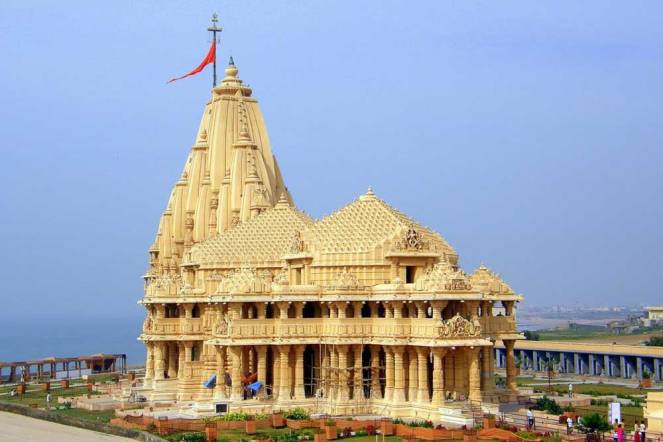
 

img_0799
Bhootarajaru

PC: Sridhar Sharma

Check other related links: