chaithra maasa · FESTIVALS · MADHWA · ugadhi

Yugadhi/Ugadhi

What is Yugadhi?

Adi means beginning. Yuga+Adi (Yugadi) means starting of the yuga.
Kali Yuga started on Chaitra Shuddha Pratama.

It is the very first festival in chaithra maasa(Chaithra suddha pratama). It is the New year for us. It is a day to celebrate / welcome new year with family and friends with Hari dhyana

How to  celebrate(in common)?

  1. Put Kemmannu – Rangoli in front of the house
  2. Do alankara for door with mango leaves thorana
  3. Abhyanga (oil bath) sloka to chant while doing enne sashthra for oil bath
  4. Saligrama Puja
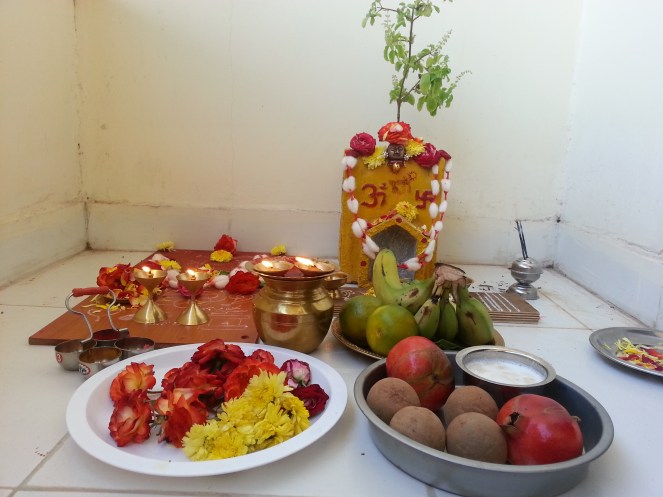
  5. Thulasi Puja
  6.  Panchanga Puja and Panchanga Sravana
  7.  Naivedya of the mixture of neem tender leaves (or flower) with (Bella) jaggery and taking this mixture
  8. Naivedya of Maasa Dharma items:- Paanaka, Buttermilk, Kosambari etc
  9. wearing new clothes(Optional,if possible )
  10. Namaskara to parents, elders
  11. Give Tamboola Dakshina to Veda – Brahmanas
  12. Have Food(Habbada adige) with family and relatives
  13. Darshan of the Lord in temple in the evening.

NEEM TENDER LEAVES (or FLOWER) with JAGGERY (Bella)

In a small vessel, take a handful of with neem flower, tender neem leaves and a little bit of jaggery, Mix them well with a silver uddarani or spoon or hand and keep it ready for naivedya.

Sloka to chant while consuming Bevu bella :

ಶತಾಯುರ್ವಜ್ರದೇಹಾಯ ಸರ್ವಸಂಪತ್ಕರಾಯ ಚ |
ಸರ್ವಾರಿಷ್ಟವಿನಾಶಾಯ ನಿಂಬಕದಳಭಕ್ಷಣಮ್ |

shataayurvajradEhaaya sarvasampatkaraaya cha |
sarvaariShTavinaashaaya nimbakadaLabhakShaNam |

Meaning:

With the bevu-bella, Our body will be healthy and strong as a Diamond and it is sarvaarista naashaka.  It raises our health.

Another significance of bevu bella is related like Our life is made up of Sorrows and happiness. It shows the different facets of life: Sweet and bitter experiences in life.

Panchanga sravana:

It is auspicious to know about the life span of Chaturmukha Brahma Deva and also know the Thithi, Vaara, Nakshatra, Yoga and Karana everyday

LIFE SPAN OF CHATURMUKHA BRAHMA DEVA

This is a little complex math. But once you understand manvantara, kalpa etc it is easy to understand what is one day in Chathurmukha brahma cycle?

Swasti Sri, Chaturmukha Brahma Deva was born from the Naabhi Kamala of Maha Vishnu and has 100 years of life span.
He has completed the first 50 years. Now the first day of the 51st year is running
Krita Yuga + Treta Yuga + Dwapara Yuga + Kali Yuga = one Maha Yuga
71 Maha Yugas = one Manvantara
14 Manvantaras = one Kalpa(This is the day time for Brahma Deva)
Similarly one night is equal to another 14 Manvantaras (one Kalpa).
So, 28 Manvantaras (two Kalpas) constitue a single day
Like this 360 days =  one year for Brahma Deva
And like that, Life span of Chathurmukha brahma is  years

In the first day morning, in Swetha Varaha Kalpla, 6 Manvantaras are completed. In the 7th (Vai-vas-vatha) Manvantara, 27 Maha Yugas are completed. In the 28th Maha Yuga, Krita, Treta, Dwapara Yugas have goen. In 4 lakhs 32 thousand years of Kali Yuga, 5,000 years are also completed. We are now at the beginning of the first quarter of Kali Yuga (Kali Yuge Prathama Pade – in sanskrit).


  • On Yugadi day, Panchanga Sravana either in the morning or evening.
  • If Panchanga is not available, do pooja to this book and then read out the contents of the first few pages to everyone in the house.
  • Keep the Panchanga in a Peeta. Arisina, Kumkuma to Panchanga.
  • Do Dhyaana of Navagraha Devata, antargata Mukhya Praana, antargata Sri Lakshmi Narasimha, Dhyaana of your Kula Deva Swami, Aavaahana, Mantrakshata, Pushpa Samarpana, Mangalarathi to Panchanga.

Why Panchanga sravana

At the beginning of the year, if we get advance information on the likely events in that whole year, it would be helpful to prepare ourselves to adhere to those austerities. In this way, Panchanga Sravana helps us to get peace and prosperity in life.

Panchanga Sravana is Mangala-kara for everyone. It removes the ill-effects of bad dreams, brings Punya of Ganga Snana, yields the Punya of Go-daana, increase the life span, beget of good, Satwik Children and wealtH

In case, if you are not able to make it up for panchanga sravana in the temple, atleast try to read first few pages of panchanga @ home itself


FESTIVALS · holi · MADHWA · Phalguna maasa

Holi(2/Mar/18)

It is celebrated on the Phalguna maasa pournami every year.  It is popularly called as “Kaamana habba”.

It is the day on which Mano niyamaka Rudra Devaru burnt Manmatha.

Once Manoniyamaka Rudradevaru was deep in meditation, became indifferent to love and thus all procreation stopped. All the devataas approached Kama (deity of love), who fired an arrow of love, at Shiva.   Shiva with his meditation disturbed opened his third eye and burnt down Kaama into ashes. Rati, Kaamas’s wife performed severe penance. Shiva promised her that Kaama would return to her and resume the spread of love and procreation.  However He would be formless

On the eve of Holi, huge bonfires are lit with logs of wood, dried cow dung, ghee, honey and the new crops brought from the fields.

It is also in our tradition to prepare Habbada adige/Saanacha sampaka(Marathi) and Enjoy the feast with beloved family members

For small kids less than 5 Years of age, during Holi time they are adorned with different (garlands) made out of edible items such as Puffed rice Maala, Sugar candy Maala, Chocolate maala, biscuit maala etc. This is believed to be a custom for ‘Peeda Parihara’.

  • Put the new dress for the kids
  • Invite friends/relatives
  • Make the kid sit on a plank (Paat) or chair facing East
  • Put the maalas one by one
  • At the end do Aarthi


Dasara Padagalu on Holi:

ತ್ರಾಹಿ ತ್ರಾಹಿ ಎನ್ನಿರೊ ತ್ರೈಲೋಕ್ಯದೊಡಿಯಗೆ
ತ್ರಾಹಿ ತ್ರಾಹಿ ಎನ್ನಿರೊ ತಾರಕ ಬ್ರಹ್ಮಗೆ ಧ್ರುವ
ಕಾಮ ಕ್ರೋಧ ಸುಟ್ಟು ಹೋಳಿಯಾಡುವ ಬನ್ನಿರೊ
ಪ್ರೇಮ ಪ್ರೀತಿಯಿಂದ ಕುಣಿದಾಡುವ ಬನ್ನಿರೊ ||1||

ಭೇದವಳಿದು ಸಾಧು ಜನರ ಕೂಡಿಕೊಂಬ ಬನ್ನಿರೊ
ಮದ ಮತ್ಸರವ ಬೂದಿ ಮಾಡಿಚೆಲ್ಲುವ ಬನ್ನಿರೊ ||2||

ಏಕರಂಗವಾಗಿ ಓಕುಳ್ಯಾಡವ ಬನ್ನಿರೊ
ಜೀಕಳಿಯ ಮಾಡಿ ಮಾಯ ಮೋಹ ಎಸುವ ಬನ್ನಿರೊ ||3||

ಎಲ್ಲರೊಳಗಿಹ ನಮ್ಮ ಪುಲ್ಲನಾಭ ಚಲುವನೊ
ಬಲ್ಲ ಮಹಿಮನಿಗೆ ನೆಲೆಯ ನೋಡಿ ಒಲಿವನೊ ||4||

ಹೋಳಿಯಾಡಿದನು ನೋಡಿ ಇಳಿಯೊಳಗ ಮಹಿಪತಿಯು
ಕಳೆದು ಕಲ್ಪನೆ ಕೋಟಿಲಿಂದ ಗೆದ್ದ ನೋಡಿರೊ ||5||

trAhi trAhi enniro trailOkyadoDiyage
trAhi trAhi enniro tAraka brahmage Dhruva

kAma krOdha suTTu hOLiyADuva banniro
prEma prItiyinda kuNidADuva banniro ||1||

BEdavaLidu sAdhu janara kUDikoMba banniro
mada matsarava bUdi mADicelluva banniro ||2||

EkaraMgavAgi OkuLyADava banniro
jIkaLiya mADi mAya mOha esuva banniro ||3||

ellaroLagiha namma pullanABa caluvano
balla mahimanige neleya nODi olivano ||4||

hOLiyADidanu nODi iLiyoLaga mahipatiyu
kaLedu kalpane kOTilinda gedda nODiro ||5||


ದುಮ್ಮ ಬಸವಂತನ ಹಬ್ಬಾ |
ದುಮ್ಮ ದುಮ್ಮೆನ್ನಿ ದುಮ್ಮ ಸಾಲವೆನ್ನಿ ||pa||

ನರಜನ್ಮ ಫಾಲ್ಗುಣ ಪೌರ್ಣಿಮೆ ಬಂದಿದೆ | ಮರಿಯ
ಬ್ಯಾಡಿ ತನು ಧನ ಮನದೀ |
ಹರಿದಾಸ ರಾಹವರೆಲ್ಲರು ಹೋಳಿಯ | ಪರಮಾನಂದದ
ಲ್ಯಾಡುವ ಬನ್ನಿರಣ್ಣಾ ||1||

ಝಮ್ಮನೆ ವಿವೇಕ ಕುಂಡವನೇ ಮಾಡಿ |
ಸಮ್ಯ ಜ್ಞಾನಾಗ್ನಿಯ ಪ್ರಜ್ವಲದಿಂದಾ |
ಹಮ್ಮೆಂಬ ಕಾಮನ ಹೋಳಿಯದಹಿಸಿ |
ಒಮ್ಮನದಿ ನಲಿದಾಡಿರಣ್ಣಾ ||2||

ಹರಿನಾಮ ಕುಂಕುಮ ಸಾರಿ ಚಲ್ಯಾಡುತ |
ಧರಿಸುತ ಹೃದಯ ಶಿರಸದಲಿ |
ಕರದಲಿ ವಿಚಾರ ಬೆತ್ತ ಹೊಯ್ದಾಡುತ |
ಹರುಷದಿಂದಲಿ ಕುಣಿದಾಡಿರಣ್ಣಾ ||3||

ಗುರುರಾಯಾ ಸಹಕಾರಿ ತಾನಾಗಿ ನಮಗಿನ್ನು |
ಪರಿ ಪರಿ ಸಾಧನ ದೋರಿಸುತಾ |
ಕರುಣದಿ ಆಡಿಸುತಿಲ್ಲಿ ನಿಂದಿರಲು |
ದುರಿತಭಯಕ ಅಂಜ ಬ್ಯಾಡಿರಣ್ಣಾ ||4||

ಮೊದಲ ಸಂಚಿತ ಬೂದಿಯ ಚಲ್ಲಿ ಪರಮಾ | ರ್ಥದ
ಗಂಗಿಯೊಳು ಮಿಂದು ಶುಚಿಯಾಗಿ |
ಸದಮಲ ಮಹಿಪತಿ-ನಂದನ ಪ್ರಭು ಪದ |
ಪದುಮಾಶ್ರಯದಿಂದ ಗತಿಪಡಿರಣ್ಣಾ ||5||
dumma basavantana habbA |
dumma dummenni dumma sAlavenni ||pa||

narajanma PAlguNa paurNime bandide | mariya
byADi tanu dhana manadI |
haridAsa rAhavarellaru hOLiya | paramAnaMdada
lyADuva banniraNNA ||1||

Jammane vivEka kunDavanE mADi |
samya j~jAnAgniya prajvaladindA |
hammeMba kAmana hOLiyadahisi |
ommanadi nalidADiraNNA ||2||

harinAma kuMkuma sAri calyADuta |
dharisuta hRudaya Sirasadali |
karadali vicAra betta hoydADuta |
haruShadindali kuNidADiraNNA ||3||

gururAyA sahakAri tAnAgi namaginnu |
pari pari sAdhana dOrisutA |
karuNadi ADisutilli nindiralu |
duritaBayaka anja byADiraNNA ||4||

modala sancita bUdiya calli paramA | rthada
gangiyoLu mindu SuciyAgi |
sadamala mahipati-nandana praBu pada |
padumASrayadinda gatipaDiraNNA ||5||


ದ್ವಂದ್ವವೆ ವಸಂತದ ಹಬ್ಬ
ದ್ವಂದ್ವವೆ ಇಹಪರದಲ್ಲಿ ಹಬ್ಬ ||pa||

ದ್ವಂದ್ವಾಮೃತ ಕ್ಷೇಮ ಅಭಯ ವಸಂತ
ದ್ವಂದ್ವ ಜೀವೇಶರ ತಿಳಿದವ ಶಾಂತ
ದ್ವಂದ್ವದ ನಡೆನುಡಿ ಬಲ್ಲವ ಸಂತ
ದ್ವಂದ್ವವರಿಯದನ ಗತಿಯೆ ವಸಂತ ||1||

ದ್ವಂದ್ವ ಶೀತೋಷ್ಣ ಸಮಾನವ ಕಂಡು
ದ್ವಂದ್ವ ನಿಂದಾಸ್ತುತಿ ಸರಿಯಿಟ್ಟುಕೊಂಡು
ದ್ವಂದ್ವವ ಮಾನವ ಹಿಡಿದರೆ ಭಂಡು
ದ್ವಂದ್ವ ಪಕ್ಷಿಗಳ ಬಗೆಯ ಕೇಳಿಕೊಂಡು ||2||

ಫಾಲ್ಗುಣ ಪೌರ್ಣಿಮೆ ಬಂದಿತಿಳೆಗೆ
ಬಾಲಕರೆಲ್ಲ ನೆರೆವುದೊಂದು ಘÀಳಿಗೆ
ಹೋಳಿಯನಾಡುವ ಸಂಭ್ರಮದೊಳಗೆ
ಕಾಳಗ ಬೇಡಿರೊ ನಿಮ್ಮ ನಿಮ್ಮೊಳಗೆ ||3||

ಅಜ್ಞೈಕ್ಯ ಪ್ರತಿಪದ ಹಿಂದಾದರಿಂದ
ಸುಜ್ಞಾನ ದ್ವಿತಿಯಕ್ಕೆ ತೋರುವ ಚಂದ್ರ
ಒಗ್ಗೂಡಿ ಗೆಳೆಯರೊಮ್ಮತದಿಂದ
ಲಗ್ಗೆಕಾರರು ಮುಂದೆ ನಡೆವುದೆ ಚಂದ||4||

ಭಕ್ತೆಂಬೊ ಪುರದಲ್ಲಿ ಒಂಬತ್ತು ಬೀದಿ ವಿ
ರಕ್ತಿ ರಂಹಸ ಬ್ರಹ್ಮದ್ಹಾದಿಯ ಐದಿ
ವ್ಯಕ್ತವಾಗುವ ವಸ್ತು ಓದಿಕೆ ಓದಿ
ರಿಕ್ತದ ನುಡಿಗಳು ತಮಸಿನ ಹಾದಿ||5||

ದಿನಪತಿ ಅಡಗಿರೆ ಮಲಗದೆ ಎದ್ದು
ಮನೆಯವರನು ಎಚ್ಚರಿಸಬ್ಯಾಡಿ ಸದ್ದು
ನೆನೆವ ವಿಷಯಗೋಡೆ ಏರುತ್ತ ಬಿದ್ದು
ಮನೆ ಮನೋವಾರ್ತೆಯ ಕುರುಳನೆ ಕದ್ದು||6||

ಹಾರುವರ ಕೇರಿಯ ಹೊಗಬ್ಯಾಡಿ ಕೇಳಿ
ಬೇರೂರವರ ಬಿಟ್ಟು ಬಿಡಿ ದೂರದಲ್ಲಿ
ದೂರುವರೊಡನಾಟ ದುರ್ದೆಶೆಫಲವು ವಸ್ತು
ದೋರುವ ಮನೆಯೇವೆ ಸರಸ ವೆಗ್ಗಳವು||7||

ಧೂಳಿ ನೀರುರಿಗಾಳಿ ಬಯಲೊಳಗಾಡಿ
ಮ್ಯಾಲೆ ಮೂರುರಿಯೊಳು ಮತಿಗುಂದಬ್ಯಾಡಿ
ಹಾಳು ತುರುಕರ ಕೇರಿಯೊಳು ನಿಷ್ಫಲವು
ಜಾಲಗಾರರ ಕೇರಿ ಹೊಕ್ಕರೆ ಫಲವು ||8||

ಹಿಂಚಾದ ಹಿರಿಯರ ಮಾತಲೆ ನಡೆದು
ವಂಚಕ ಮೂವರ ಸಂಗವ ಕಡಿದು
ಮಿಂಚುವ ಮಾನ್ಯರ ಪ್ರೀತಿಯ ಪಡೆದು
ಸಂಚಿತ ಪ್ರಾರಬ್ಧಾಗಾಮಿಯ ಒಡೆದು ||9||

ಮುಚ್ಚಿದ ಕದವೆರಡನು ಮುರಿಹೊಯ್ದು
ಇಚ್ಛೆ ಮೂರೆಂಬ ನಾಯಿಗಳ ಜಿಹ್ವೆ ಕೊಯ್ದು
ಬೆಚ್ಚದೆ ಮನೆ ಮೆಲ್ಲನೆ ಹೊಗಿರಣ್ಣ
ಸಚ್ಚಿದ ಗೋರಸ ಸೂರ್ಯಾಡಿರಣ್ಣ ||10||

ಏಕಾಧಿಪತಿಯಾಜ್ಞ ಅಭಯವು ಬೇಕು
ನಾಕು ಝಾವಿನ ರಾತ್ರಿ ನಲವಿರಬೇಕು
ಪೋಕ ಕಳ್ಳಾರ್ವರ ಮೆಟ್ಟ್ಯಾಳಬೇಕು
ಭೂಕಾಂತಗೆ ಸೇವೆಯೊಪ್ಪಿಸಬೇಕು ||11||

ರಮಣನೊಲ್ಲದ ಆರ್ವರ ಸಂಗವಿಡಿದು
ರಮಿಸುವ ಬುದ್ಧಿಜಾರಿಯ ಗಟ್ಟಿವಿಡಿದು
ಅಮಿತ ವೈರಾಗ್ಯಹಗ್ಗದಿ ಕೈಯ ಕಟ್ಟಿ ಶ್ರೀ
ರಮಣನಂಘ್ರಿಗೆ ಒಪ್ಪಿಸಲು ಕಾರ್ಯ ಗಟ್ಟಿ||12||

ಎಲ್ಲೆಲ್ಲ್ಯಜ್ಞಾನಾಹಿ ವಿಷಯ ತೇಳುಗಳು
ಎಲ್ಲೆಲ್ಲಿ ನಿರ್ಜಲಸೃತಿಯ ಬಾವಿಗಳು
ಎಲ್ಲೆಲ್ಲಿ ನಿರಯ ಕಮ್ಮರಿ ಮಿಟ್ಟೆಗಳು
ಎಲ್ಲ ತಪ್ಪಿಸಿ ಜ್ಞಾನ  ಬೆಳದಿಂಗಳೊಳು||13||

ವ್ಯಾಳ್ಯವರಿತು ತತ್ವಸಂಧಿಯ ಒಲಿದು
ಸೂಳಿ ಮದೆಂಟರ ಕೈಸೆರೆವಿಡಿದು
ಕಾಲಾಖ್ಯ ತಳವಾರನಾಳಿಗೆ ಕೊಟ್ಟು
ಮ್ಯಾಳದ ಗೆಳೆಯರು ಸಂತೋಷಪಟ್ಟು||14||

ಎಂಬತ್ತು ನಾಲ್ಕು ಲಕ್ಷಾಗಾರ ಹೊಗುತ
ಡೊಂಬಿಯಿಲ್ಲದೆ ಬಂದ ಬನ್ನವಬಡುತ
ಕುಂಭಿಣಿಸುರ ಕುಲ ಭೂಮಿಗೆ ಬಂದು
ದಂಭ ಮಾಡದಲೆ ಕುರುಳ ಒಯ್ಯಿರೆಂದು ||15||

ರಾಗ ಮತ್ಸರಗೂಡಿದರ ಕುರುಳನೊಟ್ಟಿ
ಭೂಗಗನ ಹೊಗುವ ಕಾಮವ ಕಟ್ಟಿ
ಯೋಗವಾಗಿರುವ ಹುಬ್ಬಿನ ಕ್ಷೇತ್ರದಲಿ
ಮ್ಯಾಗ ವಿಜ್ಞಾನ ಗ್ನಿ ಹಾಕಬೇಕಲ್ಲಿ ||16||

ಲೋಭ ಹೋಳಿಕೆಯ ಹೋಳಿಗೆ ತುಪ್ಪ ಸವಿದು
ಲಾಭಕ್ಕೆ ಕುಣಿಯಲು ವೇತ್ರರು ಹೊಯ್ದು
ಶೋಭನ ರಸ ಬೊಬ್ಬೆಯ ಸಾಧು ಹಿಂಡು
ತ್ರಿಭುವನ ಪತಿ ಕಾಮನಯ್ಯನ ದಂಡು||17||

ಸ್ವರ್ಧುನಿ ಜನಕನ ಗುಣಗಣಕೀರ್ತಿ
ಊಧ್ರ್ವಸ್ವರದಿ ಹಾಡಿ ಹೊಗಳುವ ಅರ್ಥಿ
ನಿರ್ಧೂಮ ಜ್ವಾಲೆಯ ಬೆಳಗಲಿ ಸುತ್ತಿ
ದುರ್ದೇಹಿಗಳ ಕಿವಿಧಾರೆಯ ಕಿತ್ತಿ ||18||

ಅವಿದ್ಯ ಕಾಮ್ಯಕರ್ಮದ ಹೋಳಿ ಸುಟ್ಟು
ಹ್ಯಾವಿನ ಮೈಯ ಬೂದಿಯ ಮಾಡಿಬಿಟ್ಟು
ಕೋವಿದರ ಚಾತುರ್ಯಕೆ ಒಡಂಬಟ್ಟು ಚಿ
ದ್ಭಾವ ಮಂದಿರದ ಬ್ರಹ್ಮಕೆ ಲಕ್ಷ್ಯವಿಟ್ಟು ||19||

ಹಂಗಿಲೆ ಬೆಳೆದ ವೃಕ್ಷದ ಮೂಲ ಮುರಿದೂ
ಧ್ರ್ವಾಂಗಕ್ಕೆ ಸುತ್ತುವ ಜಾಣರ ಬಿರಿದು
ರಂಗು ಮುತ್ತಿನ ಮೂಗುತಿ ಹೆಣ್ಣವಿಡಿದು
ಶೃಂಗಾರ ಚೇಷ್ಟೆಯ ಮಾಡಿರೊ ಜಡಿದು ||20||

ಬೆಳಗಿನ ಝಾವದಿ ಬೂದಿ ಚಲ್ಲ್ಯಾಡಿ
ಗೆಳೆಯರು ನೆರೆವುದೊಂದೆ ತಾಣ ನೋಡಿ
ಜಲಜಾಕ್ಷನುದ್ಯಮದಂಗಡಿಯಲ್ಲಿ
ನಲಿವ ಸ್ವಾನಂದದೂಟವ ಬೇಡಿಕೊಳ್ಳಿ ||21||

ತಿರುತಿರುಗಿ ಬಂದು ದಣಿದು ನೀವಿಂದು
ಹರಿಯ ಮೈ ಬೆವರಿನ ಹೊಳೆಯಲ್ಲಿ ಮಿಂದು
ಥರ ಥರದ್ಹದಿನಾರು ವರ್ಣಗಳಿಂದ
ತರುಣ ತರಣಿಯಂತೆ ಹೊಳೆವುದು ಚಂದ ||22||

ಆನಂದಮಯ ವಾಸುದೇವನ ಕಂಡು
ಆನಂದಪುರದಿ ಭಕ್ತಿಯ ನೆರೆಗೊಂಡು
ಆನಂದ ತೀರ್ಥಗುರು ಕೃಪೆಯಿಂದ
ಸ್ವಾನಂದದೋಕುಳಿಯಾಡುವ ಚಂದ ||23||

ಈ ವಿಧ ಅಧ್ಯಾತ್ಮ ಹೋಳಿಯ ಭೇದ
ಭಾವುಕ ಜನರಿಗೆ ಪರಮಾಹ್ಲಾದ
ದೇವ ಋಷಿಕುಲದೈವ ಮುಕುಂದ
ಕಾವನು ಕರುಣಾಬ್ಧಿ ಕೇಳಿ ಗೋವಿಂದ||24||

ವೇದನ ತಂದ ಹಯಾಸ್ಯನ ಹೋಳಿ
ಭೂಧರ ಧರಿಸಿದಮರ ಕಾರ್ಯ ಕೇಳಿ
ಮೇದಿನ ತರಲಡ್ಡಾದವನೊಮ್ಮೆ ಹೋಳಿ ಪ್ರ
ಹ್ಲಾದನಿಷ್ಠೆಗೆ ಹರಿ ಉದಿಸಿದ ಕೇಳಿ ||25||

ನಾನೆಂಬೊ ದಾನವೇಂದ್ರನ ಮದ ಹೋಳಿ
ಹೀನರಿಗಾಗಿ ಕೊಡಲಿ ಹೊತ್ತ ಕೇಳಿ
ಜಾನಕಿ ತಂದ ದಶಾಸ್ಯನ ಹೋಳಿ
ಮಾನಿನಿಯರಾಳ್ದ ವಿಡಂಬನ ಕೇಳಿ ||26||

ಸನ್ಮಾರ್ಗ ಬಿಟ್ಟ ಖಳರ ಮತಿ ಹೋಳಿ
ಉನ್ಮತ್ತ ಕಲಿಯನರಸಿ ಕೊಂದ ಕೇಳಿ
ಚಿನ್ಮಯಮೂರ್ತಿ ಭೂಭಾರವ ಹೋಳಿ
ಜನ್ಮಿಸಿಬಹುದೆಲ್ಲ ಮೋಹನ ಕೇಳಿ ||27||

ಅನಂತದುರಿತರಾಶಿಗಳನ್ನು ಹೋಳಿ
ಆನಂದ ಸುಖವೀವ ನೆನೆದರೆ ಕೇಳಿ
ಅನಂತ ಅನವದ್ಯಗುಣ ಪರಿಪೂರ್ಣ
ಅನಂತಾದ್ಭುತ ಕರ್ಮ ದೀನ ದಯಾರ್ಣ||28||

ಈ ಪರಿ ವಿಜ್ಞಾನ ವಸಂತದಾಟ
ಚೌಪದಿ ರತ್ನಮಾಲಿಕೆ ಮಾಡಿ ಪಾಠ
ಶ್ರೀಪ್ರಸನ್ವೆಂಕಟ ಕಿಟಿರೂಪಿ ಕೃಷ್ಣ
ತಾ ಪರಿಪಾಲಿಪ ಪುರುಷವರಿಷ್ಠ ||29||

dvandvave vasantada habba
dvandvave ihaparadalli habba ||pa||

dvandvAmRuta kShEma aBaya vasanta
dvandva jIvESara tiLidava SAnta
dvandvada naDenuDi ballava santa
dvandvavariyadana gatiye vasanta ||1||

dvandva SItOShNa samAnava kanDu
dvandva nindAstuti sariyiTTukonDu
dvandvava mAnava hiDidare BanDu
dvandva pakShigaLa bageya kELikonDu ||2||

PAlguNa paurNime banditiLege
bAlakarella nerevudondu GaÀLige
hOLiyanADuva saMBramadoLage
kALaga bEDiro nimma nimmoLage ||3||

aj~jaikya pratipada hindAdarinda
suj~jAna dvitiyakke tOruva chandra
oggUDi geLeyarommatadiMda
laggekAraru munde naDevude chanda||4||

BakteMbo puradalli oMbattu bIdi vi
rakti raMhasa brahmad~hAdiya aidi
vyaktavAguva vastu Odike Odi
riktada nuDigaLu tamasina hAdi||5||

dinapati aDagire malagade eddu
maneyavaranu eccarisabyADi saddu
neneva viShayagODe Erutta biddu
mane manOvArteya kuruLane kaddu||6||

hAruvara kEriya hogabyADi kELi
bErUravara biTTu biDi dUradalli
dUruvaroDanATa durdeSePalavu vastu
dOruva maneyEve sarasa veggaLavu||7||

dhULi nIrurigALi bayaloLagADi
myAle mUruriyoLu matiguMdabyADi
hALu turukara kEriyoLu niShPalavu
jAlagArara kEri hokkare Palavu ||8||

hincAda hiriyara mAtale naDedu
vancaka mUvara sangava kaDidu
mincuva mAnyara prItiya paDedu
sancita prArabdhAgAmiya oDedu ||9||

muccida kadaveraDanu murihoydu
icCe mUreMba nAyigaLa jihve koydu
beccade mane mellane hogiraNNa
saccida gOrasa sUryADiraNNa ||10||

EkAdhipatiyAj~ja aBayavu bEku
nAku JAvina rAtri nalavirabEku
pOka kaLLArvara meTTyALabEku
BUkAntage sEveyoppisabEku ||11||

ramaNanollada Arvara sangaviDidu
ramisuva buddhijAriya gaTTiviDidu
amita vairAgyahaggadi kaiya kaTTi SrI
ramaNananGrige oppisalu kArya gaTTi||12||

ellellyaj~jAnAhi viShaya tELugaLu
ellelli nirjalasRutiya bAvigaLu
ellelli niraya kammari miTTegaLu
ella tappisi jnana beLadingaLoLu||13||

vyALyavaritu tatvasandhiya olidu
sULi madenTara kaisereviDidu
kAlAKya taLavAranALige koTTu
myALada geLeyaru santOShapaTTu||14||

eMbattu nAlku lakShAgAra hoguta
DoMbiyillade banda bannavabaDuta
kuMBiNisura kula BUmige bandu
daMBa mADadale kuruLa oyyirendu ||15||

rAga matsaragUDidara kuruLanoTTi
BUgagana hoguva kAmava kaTTi
yOgavAgiruva hubbina kShEtradali
myAga vignani hAkabEkalli ||16||

lOBa hOLikeya hOLige tuppa savidu
lABakke kuNiyalu vEtraru hoydu
SOBana rasa bobbeya sAdhu hiMDu
triBuvana pati kAmanayyana daMDu||17||

svardhuni janakana guNagaNakIrti
Udhrvasvaradi hADi hogaLuva arthi
nirdhUma jvAleya beLagali sutti
durdEhigaLa kividhAreya kitti ||18||

avidya kAmyakarmada hOLi suTTu
hyAvina maiya bUdiya mADibiTTu
kOvidara cAturyake oDaMbaTTu ci
dBAva mandirada brahmake lakShyaviTTu ||19||

hangile beLeda vRukShada mUla muridU
dhrvAngakke suttuva jANara biridu
rangu muttina mUguti heNNaviDidu
SRungAra cEShTeya mADiro jaDidu ||20||

beLagina JAvadi bUdi callyADi
geLeyaru nerevudonde tANa nODi
jalajAkShanudyamadangaDiyalli
naliva svAnandadUTava bEDikoLLi ||21||

tirutirugi bandu daNidu nIvindu
hariya mai bevarina hoLeyalli mindu
thara tharad~hadinAru varNagaLinda
taruNa taraNiyante hoLevudu chanda ||22||

Anandamaya vAsudEvana kanDu
Anandapuradi Baktiya neregonDu
Ananda tIrthaguru kRupeyinda
svAnandadOkuLiyADuva chanda ||23||

I vidha adhyAtma hOLiya BEda
BAvuka janarige paramAhlAda
dEva RuShikuladaiva mukunda
kAvanu karuNAbdhi kELi gOvinda||24||

vEdana tanda hayAsyana hOLi
BUdhara dharisidamara kArya kELi
mEdina taralaDDAdavanomme hOLi pra
hlAdaniShThege hari udisida kELi ||25||

nAneMbo dAnavEndrana mada hOLi
hInarigAgi koDali hotta kELi
jAnaki tanda daSAsyana hOLi
mAniniyarALda viDaMbana kELi ||26||

sanmArga biTTa KaLara mati hOLi
unmatta kaliyanarasi konda kELi
cinmayamUrti BUBArava hOLi
janmisibahudella mOhana kELi ||27||

anantaduritarASigaLannu hOLi
Ananda suKavIva nenedare kELi
ananta anavadyaguNa paripUrNa
anantAdButa karma dIna dayArNa||28||

I pari vij~jAna vasantadATa
caupadi ratnamAlike mADi pATha
SrIprasanvenkaTa kiTirUpi kRuShNa
tA paripAlipa puruShavariShTha ||29||

FESTIVALS · MADHWA · magha maasa · ratha sapthami · Surya

Ratha Sapthami

When is Ratha saptami?

Ratha saptami falls on Magha maasa Shukla paksha saptami.

What is the Significance of Ratha saptami?

It symbollically represents Surya (Sun)  turning his Ratha (Chariot) which is drawn by seven horses towards the northern hemisphere, in a north east direction

It signifies the change in the weather and marks the beginning of Spring season.

Ratha saptami, also a festival to thank Lord Surya for the good harvest

Things Required:

  • Arka, Ekka  or Erukku leaves (For bath)
  • Turmeric and Kumkum
  • Wooden plank(for drawing ratha)
  • Groceries : Toor Dal  , Tamarind , Jaggery , Red chilli
  • Vegetables: Pumpkin, sugarcane, bean etc
  • Flowers for the pooja
  • Fruits for neivedhya
  • Diyaas

How to perform pooja?

Bath 

  1. Take arunodhaya snaana (4.30 am to before sunrise)
  2. While taking snana , Men should have 7 ekka leaves(2 on left shoulder, 2 on right shoulder,3  on head) , For women 7 leaves (4 on left shoulder, 3 on right shoulder). Place little turmeric , kumkum and rice on this ekka leaves arrangement. For men who do tila tarpana, You have to replace haldi kumkum with( Black til/sesame)
  3. Keep the ekka leaves ready before night itself. It is hard to pluck the leaves in the dark morning on the festival day
  4. Chant the sloka while taking bath

Snana Mantra:

ಸ್ನಾನ ಮಂತ್ರ
ಯದ್ಯಜ್ಜನ್ಮಕೃತಂ ಪಾಪಂ ಮಯಾ ಸಪ್ತಸು ಜನ್ಮಸು |
ತನ್ಮೇ ರೋಗಂ ಚ ಶೋಕಂ ಚ ಮಾಕರೀ ಹಂತು ಸಪ್ತಮೀ ||

ಏತಜ್ಜನ್ಮಕೃತಂ ಪಾಪಂ ಯಚ್ಚ ಜನ್ಮಾಂತರಾರ್ಜಿತಂ |
ಮನೋವಾಕ್ಕಾಯಜಂ ಯಚ್ಚ ಜ್ಞಾತಾಜ್ಞಾತಂ ಚ ಯತ್ಪುನ: ||

ಇತಿ ಸಪ್ತವಿಧಂ ಪಾಪಂ ಸ್ನಾನಾನ್ಮೇ ಸಪ್ತ ಸಪ್ತಕೇ |
ಸಪ್ತವ್ಯಾಧಿಸಮಾಯುಕ್ತಂ ಹರ ಮಾಕರಿ ಸಪ್ತಮಿ ||

Yadhyajjanma kritham paapam maya sapthasu janmasu
Thanme rogancha sokancha maakari hanthu sapthami||

Yetattjanmakritham paapam yachha janmaantharaarjitham
Mano-vaakkayajam yachha gnathagnathancha yathpunaha||

Ithi sapthavidham paapam snaanaanme saptha sapthake
Sapthavyaadhi-samaayuktham hara maakari Saptham||

Surya Arghya Mantra

ಸಪ್ತಸಪ್ತಿವಹಪ್ರೀತ ಸಪ್ತಲೋಕಪ್ರದೀಪನ |
ಸಪ್ತಮೀ ಸಹಿತೋ ದೇವ ಗೃಹಾಣಾರ್ಘ್ಯಂ ದಿವಾಕರ ||

Saptha sapthi vaha preetha sapthaloka pradeepana
Sapthami-sahitho deva gruhanaarghyam Diwaakara

Surya pooja:

After snana, Do sandhyavadhana and saaligrama pooja

Women normally draw a Ratha(Chariot) on a wooden plank. This ratha should have only one wheel and In center of Ratha, Draw Surya Narayana.

Place this plank in front of Tulasi vrindavana and do the pooja of surya narayana. Put haldi , kumkum, Gajavasthra and start doing pooja

Draw rectangles and  split into small boxes for filling with pulses on one side and draw same type boxes on another side to fill with vegetables

Do sankalpa of performing Surya narayana pooja and perform shodoshapachara pooja

20140206_07513920140206_075458

surya Ashtothra sathanamavali:

ಓಂ ಅರುಣಾಯ ನಮಃ  |
ಓಂ ಶರಣ್ಯಾಯ ನಮಃ  |
ಓಂ ಕರುಣಾರಸಸಿಂಧವೇ ನಮಃ  |
ಓಂ ಅಸಮಾನಬಲಾಯ ನಮಃ  |
ಓಂ ಆರ್ತರಕ್ಷಣಾಯ ನಮಃ |
ಓಂ ಆದಿತ್ಯಾಯ ನಮಃ
ಓಂ ಆದಿಭೂತಾಯ ನಮಃ  |
ಓಂ ಅಖಿಲಾಗಮವೇದಿನೇ ನಮಃ  |
ಓಂ ಅಚ್ಯುತಾಯ ನಮಃ  |
ಓಂ ಅಖಿಲಜ್ಞಾಯ ನಮಃ  || ೧೦ ||

ಓಂ ಅನಂತಾಯ ನಮಃ  |
ಓಂ ಇನಾಯ ನಮಃ  |
ಓಂ ವಿಶ್ವರೂಪಾಯ ನಮಃ  |
ಓಂ ಇಜ್ಯಾಯ ನಮಃ |
ಓಂ ಇಂದ್ರಾಯ ನಮಃ |
ಓಂ ಭಾನವೇ ನಮಃ |
ಓಂ ಇಂದಿರಾಮಂದಿರಾಪ್ತಾಯ ನಮಃ |
ಓಂ ವಂದನೀಯಾಯ ನಮಃ |
ಓಂ ಈಶಾಯ ನಮಃ |
ಓಂ ಸುಪ್ರಸನ್ನಾಯ ನಮಃ || ೨೦ ||

ಓಂ ಸುಶೀಲಾಯ ನಮಃ |
ಓಂ ಸುವರ್ಚಸೇ ನಮಃ |
ಓಂ ವಸುಪ್ರದಾಯ ನಮಃ |
ಓಂ ವಸವೇ ನಮಃ |
ಓಂ ವಾಸುದೇವಾಯ ನಮಃ |
ಓಂ ಉಜ್ವಲಾಯ ನಮಃ |
ಓಂ ಉಗ್ರರೂಪಾಯ ನಮಃ |
ಓಂ ಊರ್ಧ್ವಗಾಯ ನಮಃ |
ಓಂ ವಿವಸ್ವತೇ ನಮಃ |
ಓಂ ಉದ್ಯತ್ಕಿರಣಜಾಲಾಯ ನಮಃ || ೩೦ ||

ಓಂ ಹೃಷಿಕೇಶಾಯ ನಮಃ |
ಓಂ ಊರ್ಜಸ್ವಲಾಯ ನಮಃ |
ಓಂ ವೀರಾಯ ನಮಃ |
ಓಂ ನಿರ್ಜರಾಯ ನಮಃ |
ಓಂ ಜಯಾಯ ನಮಃ |
ಓಂ ಊರುದ್ವಯಾಭಾವರೂಪಯುಕ್ತಸಾರಥಯೇ ನಮಃ |
ಓಂ ಋಷಿವಂದ್ಯಾಯ ನಮಃ |
ಓಂ ರುಗ್ಫ್ರಂತೇ ನಮಃ |
ಓಂ ಋಕ್ಷಚಕ್ರಾಯ ನಮಃ  |
ಓಂ ಋಜುಸ್ವಭಾವಚಿತ್ತಾಯ ನಮಃ || ೪೦ ||

ಓಂ ನಿತ್ಯಸ್ತುತಾಯ ನಮಃ |
ಓಂ ಋಕಾರ ಮಾತೃಕಾವರ್ಣರೂಪಾಯ ನಮಃ |
ಓಂ ಉಜ್ಜಲತೇಜಸೇ ನಮಃ |
ಓಂ ಋಕ್ಷಾಧಿನಾಥಮಿತ್ರಾಯ ನಮಃ |
ಓಂ ಪುಷ್ಕರಾಕ್ಷಾಯ ನಮಃ |
ಓಂ ಲುಪ್ತದಂತಾಯ ನಮಃ |
ಓಂ ಶಾಂತಾಯ ನಮಃ |
ಓಂ ಕಾಂತಿದಾಯ ನಮಃ |
ಓಂ ಘನಾಯ ನಮಃ  |
ಓಂ ಕನತ್ಕನಕಭೂಷಾಯ ನಮಃ || ೫೦ ||

ಓಂ ಖದ್ಯೋತಾಯ ನಮಃ |
ಓಂ ಲೂನಿತಾಖಿಲದೈತ್ಯಾಯ ನಮಃ |
ಓಂ ಸತ್ಯಾನಂದಸ್ವರೂಪಿಣೇ ನಮಃ |
ಓಂ ಅಪವರ್ಗಪ್ರದಾಯ ನಮಃ |
ಓಂ ಆರ್ತಶರಣ್ಯಾಯ ನಮಃ |
ಓಂ ಏಕಾಕಿನೇ ನಮಃ |
ಓಂ ಭಗವತೇ ನಮಃ |
ಓಂ ಸೃಷ್ಟಿಸ್ಥಿತ್ಯಂತಕಾರಿಣೇ ನಮಃ |
ಓಂ ಗುಣಾತ್ಮನೇ ನಮಃ   |
ಓಂ ಘೃಣಿಭೃತೇ ನಮಃ || ೬೦ ||

ಓಂ ಬೃಹತೇ ನಮಃ |
ಓಂ ಬ್ರಹ್ಮಣೇ ನಮಃ |
ಓಂ ಐಶ್ವರ್ಯದಾಯ ನಮಃ |
ಓಂ ಶರ್ವಾಯ ನಮಃ |
ಓಂ ಹರಿದಶ್ವಾಯ ನಮಃ |
ಓಂ ಶೌರಯೇ ನಮಃ |
ಓಂ ದಶದಿಕ್‌ ಸಂಪ್ರಕಾಶಾಯ ನಮಃ |
ಓಂ ಭಕ್ತವಶ್ಯಾಯ ನಮಃ |
ಓಂ ಓಜಸ್ಕರಾಯ ನಮಃ    |
ಓಂ ಜಯಿನೇ ನಮಃ   || ೭೦ ||

ಓಂ ಜಗದಾನಂದಹೇತವೇ ನಮಃ |
ಓಂ ಜನ್ಮಮೃತ್ಯುಜರಾವ್ಯಾಧಿ ವರ್ಜಿತಾಯ  ನಮಃ |
ಓಂ ಔನ್ನತ್ಯಪದಸಂಚಾರರಥಸ್ಥಾಯ ನಮಃ |
ಓಂ ಅಸುರಾರಯೇ ನಮಃ |
ಓಂ ಕಮನೀಯಕರಾಯ ನಮಃ |
ಓಂ ಅಬ್ಜವಲ್ಲಭಾಯ ನಮಃ |
ಓಂ ಅಂತರ್ಬಹಿಃ ಪ್ರಕಾಶಾಯ ನಮಃ |
ಓಂ ಅಚಿಂತ್ಯಾಯ ನಮಃ |
ಓಂ ಆತ್ಮರೂಪಿಣೇ ನಮಃ   |
ಓಂ ಅಚ್ಯುತಾಯ ನಮಃ   || ೮೦ ||

ಓಂ ಅಮರೇಶಾಯ ನಮಃ  |
ಓಂ ಪರಸ್ಮೈಜೋತಿಷೇ ನಮಃ |
ಓಂ ಅಹಸ್ಕರಾಯ ನಮಃ |
ಓಂ ರವಯೇ ನಮಃ |
ಓಂ ಹರಯೇ ನಮಃ |
ಓಂ ಪರಮಾತ್ಮನೇ ನಮಃ |
ಓಂ ತರುಣಾಯ ನಮಃ |
ಓಂ ವರೇಣ್ಯಾಯ ನಮಃ |
ಓಂ ಗ್ರಹಾಣಾಂಪತಯೇ ನಮಃ   |
ಓಂ ಭಾಸ್ಕರಾಯ ನಮಃ  || ೯೦ ||

ಓಂ ಆದಿಮಧ್ಯಾಂತರಹಿತಾಯ ನಮಃ |
ಓಂ ಸೌಖ್ಯಪ್ರದಾಯ ನಮಃ |
ಓಂ ಸಕಲ ಜಗತಾಂಪತಯೇ ನಮಃ |
ಓಂ ಸೂರ್ಯಾಯ ನಮಃ |
ಓಂ ಕವಯೇ ನಮಃ  |
ಓಂ ನಾರಾಯಣಾಯ ನಮಃ |
ಓಂ ಪರೇಶಾಯ ನಮಃ |
ಓಂ ತೇಜೋರೂಪಾಯ ನಮಃ |
ಓಂ ಶ್ರೀಂ ಹಿರಣ್ಯಗರ್ಭಾಯ ನಮಃ  |
ಓಂ ಹ್ರೀಂ ಸಂಪತ್ಕರಾಯ ನಮಃ || ೧೦೦||

ಓಂ ಐಂ ಇಷ್ಟಾರ್ಥದಾಯ ನಮಃ |
ಓಂ ಸುಪ್ರಸನ್ನಾಯ ನಮಃ |
ಓಂ ಶ್ರೀಮತೇ ನಮಃ |
ಓಂ ಶ್ರೇಯಸೇ ನಮಃ |
ಓಂ ಭಕ್ತಕೋಟಿಸೌಖ್ಯಪ್ರದಾಯಿನೇ ನಮಃ |
ಓಂ ನಿಖಿಲಾಗಮವೇದ್ಯಾಯ ನಮಃ |
ಓಂ ನಿತ್ಯಾನಂದಾಯ ನಮಃ   |
ಓಂ ಶ್ರೀ ಸೂರ್ಯನಾರಾಯಣ ಸ್ವಾಮಿನೇ ನಮಃ || ೧೦೮ ||

Om arunaaya namah
Om sharanyaaya namah
Om karunaarasasindhave namah
Om asamaanabhalaaya namah
Om aartaraksakaaya namah
Om aadityaaya namah
Om aadibhutaaya namah
Om akhilaagamavedine namah
Om acyutaaya namah
Om akhilagnaaya namah
Om anantaaya namah
Om inaaya namah
Om visvarupaaya na mah
Om ijyaya namah
Om indraaya namah
Om bhaanave Namah
Om indriraamandiraaptaaya namah
Om vandaniiyaaya namah
Om iishaya namah
Om suprasannaaya namah
Om sushilaaya namah
Om suvarchase namah
Om vasupradaaya namah
Om vasave namah
Om vaasudevaaya namah
Om ujjvalaaya namah
Om ugrarupaaya namah
Om urdhvagaaya namah
Om vivasvate namah
Om udjhatkiranaajalaaya namah
Om hrishiikeshaaya namah
Om urjasvalaaya namah
Om viiraaya namah
Om nirjaraaya namah
Om jayaaya namah
Om uurudhvayavinirmukthayanijasaarataye namah
Om rushivanjaaya namah
Om rugdhantre namah
Om rushichakracharaaya namah
Om rujussubhaavachittaaya namah
Om nityastutyaaya namah
Om rukaaramatrikaavarnaroopaaya namah
Om ujjvalateyjase namah
Om rikshaadhanathimitraaya namah
Om rushkaraakshaaya namah
Om luptadantaaya namah
Om shaantaaya namah
Om kaantidaaya namah
Om dhanaaya namah
Om kanatkanaka bhushanaaya namah
Om khajyotaaya namah
Om lunitaakhiladaityaya namah
Om nityaanandasvarupine namah
Om apavargapradaaya namah
Om aartasharanyaaya namah
Om ekaakine namah
Om bhagavate namah
Om srishtisthinjyantakaarine namah
Om gunaatmane namah
Om dhrinibhrite namah
Om brihate namah
Om brahmmane namah
Om aishvaryadaaya namah
Om sharvaaya namah
Om haridashvaaya namah
Om shauraye namah
Om dashadiksamprakashaaya namah
Om bhaktavashyaaya namah
Om ojaskaraaya namah
Om jayine namah
Om jagadaanandahetave namah
Om janmamrtyujaravyaadhivarjitaaya namah
Om ucchassthaanasamaaruudaradhastaaya namah
Om asuraaraye namah
Om kamaniiyakagaaya namah
Om abjjavallabhaaya namah
Om antarbahih prakaashaaya namah
Om acintyaya namah
Om aatmarupine namah
Om achhyutaaya namah
Om amareshaaya namah
Om parasmai jyotishe namah
Om ahaskaraaya namah
Om ravaye namah
Om haraye namah
Om paramaatmane namah
Om tarunaaya namah
Om varenyaaya namah
Om grahanaam pataye namah
Om bhaaskaraaya namah
Om aadimadhyantarahitaaya namah
Om saukhyapradaaya namah
Om sakalajagataam pataye namah
Om suryaaya namah
Om kavaye namah
Om naarayanaaya namah
Om pareshaaya namah
Om tejorupaaya namah
Om shrim hiranyagarbhaaya namah
Om hrim sampatkaraaya namah
Om aim ishtarthadaaya namah
Om am suprasannaaya namah
Om shrimate namah
Om shreyase namah
Om bhaktakutisaukhyapradaayine namah
Om diiptamurtaye namah
Om nikhilaagamavedhyaaya namah
Om nityaanandaaya namah
Om shri suryanarayana swamine namah

Chant : Surya Dwadasa nama sloka

Neivedhya:

A special kheer is made out of milk, sugar and banana and will be offered as neivedhya to Surya.

Dasara pada on surya Ratha:

ಸೂರ್ಯ | ನಾರಾಯಣ ರಥ
ಸೂರ್ಯ ||pa||

ಸೂರ್ಯ ರಥವನು
ಭಾರಿ ವಸನಾಭರಣ ತೊಡುತಲಿ
ಮೂರುಲೋಕವ ಬೆಳಗು ಮಾಡುತ
ಭಾರಿ ತಮವನು ಛೇದಿಸುತ್ತ ||a.pa||

ಸಪ್ತ ಹಯೆಗಳ್ ಕಟ್ಟುತ | ಚಕ್ರೇಕ ರಥಕೆ
ಸಪ್ತ ಋಷಿಗಳ್ ಪೊಗಳುತ | ಅರುಣ ಸಾರಥ್ಯ
ಸಪ್ತ ಜಿಹ್ವನ ತೆರದಿ ತೋರುತ
ಸಪ್ತ ಶರಧಿಯ ದಾಟಿ ಸಾರುತ
ಸಪ್ತಗಿರಿ ಮೇರು ಸುತ್ತುತಾ ರಥ
ಶುಭ ದಿವಸದಲ್ಲಿ ||1||

ವಾಲಖಿಲ್ಯರು ಎದುರಲಿ | ಅರವತ್ತು ಸಾವಿರ
ಓಲಗ ತೊಡುತಲಲ್ಲೀ | ಹಿಂದು ಮುಂದಿನಲಿ
ಗಾಲಿದಬ್ಬುವ ರಕ್ಕಸೊಬ್ಬನು
ವ್ಯಾಳನೊಬ್ಬನು ರಜ್ಜರೂಪಕೆ
ಮೇಲೆ ಯಕ್ಷಕಿನ್ನರರು ಸುತ್ತಲು
ಕರ್ಮ ಸಾಕ್ಷಿಯು ||2||

ಉತ್ತರಾಯಣ ಮಾಘದಿ | ಸ್ನಾನವಗೈದು
ಉತ್ತಮರಘ್ರ್ಯ ಕರದಿ | ಪಿಡಿಯುತ್ತ ಭರದಿ
ಉತ್ತಮ ಗಂಗಾದಿ ತೀರ್ಥದಿ
ಉದಿಸಿ ಬರುವಗೆ ಕೊಡುವ ಕತದಿ
ಚಿತ್ತ ನಿರ್ಮಲದಿಂದ ಕಾದಿರೆ
ಹತ್ತಿ ಛಾಯೆಯೆ ಸಹಿತ ರಥದಿ ||3||

ಜಗಚಕ್ಷುವೆನಿಸಿದನೂ | ಧರ್ಮಜಗೆ ವಲಿದು
ಮಿಗೆ ಅಕ್ಷಪ್ರದನಾದನೂ | ಸವಿತೃ ನಾಮಕನೂ
ಬಗೆ ಬಗೆಯ ಜೀವರುಗಳಯುವ
ತೆಗೆದು ಸೆಳೆಯುತ ದಿನದಿನದಲಿ
ನಿಗಮಗೋಚರ ನಾಜ್ಞೆಧಾರಕ
ಸುಗುಣರಿಗೆ ಸುಜ್ಞಾನ ವೀಯುತ ||4||

ಕಮಲ | ಗದೆಯ ಧರಿಸಿ
ಕಿಂಕರಾದ್ಯರ ನುತಿಗಳ | ಕೇಳುತ್ತ ಬಹಳ
ಶಂಖ ಚಕ್ರಾಂಕಿತನು ಶಿರಿಸಹ
ಶಂಕಿಸದೆ ತನ್ನ ಹೃದಯದಲ್ಲಿರೆ
ಬಿಂಕ ಗೋಪಾಲಕೃಷ್ಣವಿಠಲಗೆ
ಕಿಂಕರನು ತಾನೆಂದು  ಪೊಗಳುತ ||5||

Surya | narayana ratha
Surya ||pa||

Surya rathavanu
Bari vasanabarana todutali
Murulokava belagu maduta
Bari tamavanu cedisutta ||a.pa||

Sapta hayegal kattuta | cakreka rathake
Sapta rushigal pogaluta | aruna sarathya
Sapta jihvana teradi toruta
Sapta Saradhiya dati saruta
Saptagiri meru suttuta ratha
Suba divasadalli ||1||

Valakilyaru edurali | aravattu savira
Olaga todutalalli | himdu mundinali
Galidabbuva rakkasobbanu
Vyalanobbanu rajjarupake
Mele yakshakinnararu suttalu
Karma sakshiyu ||2||

Uttarayana magadi | snanavagaidu
Uttamaragrya karadi | pidiyutta Baradi
Uttama gangaadi tirthadi
Udisi baruvage koduva katadi
Citta nirmaladinda kadire
Hatti cayeye sahita rathadi ||3||

Jagacakshuvenisidanu | dharmajage validu
Mige akshapradanadanu | savitru namakanu
Bage bageya jivarugalayuva
Tegedu seleyuta dinadinadali
Nigamagocara naj~jedharaka
Sugunarige suj~jana viyuta ||4||

Kamala | gadeya dharisi
Kimkaradyara nutigala | kelutta bahala
Sanka chakrankitanu Sirisaha
Sankisade tanna hrudayadallire
Binka gopalakrushnavithalage
Kimkaranu tanendu pogaluta ||5||

Sarva Pitru Tarpana

On Rathasaptami day, Tila Tarpana will be given for ancestors

Types of Dana: Tila dana , Kooshmanda dana

FESTIVALS · MADHWA · pushya maasa · sankraanthi · uttarayana punyakala

Sankraanthi

What is Sankraanthi?

Sankraanthi is the starting season of Harvesting

Trees, plants and the nature are exposed to the rainy season, fall(Autumn), biting cold  and the  freezing temparature that normally exists in  the DakshiNaayana.

The  UththaraayaNa  welcomes the spring season. The weather, the season, the harvest, the good health that man enjoys, the grains that is produced from so many yields after hard work  etc  are all the characteristics of  the  UththaraayaNa.  That is why it is named  as  “PuNyakaala”.

DakshNaayana is called PitrugaLa kaala and UttaraayaNa as DevathegaLa kaala.

“Ayana” means Movement. Path. The sun who was leaning towards dakshiNa will start  changing his path towards UthThara. He rises up and up making the day more and night less.

It is the harvest festival when farmers worship the sun as well as their cattle by way of thanks giving for the harvest

In Tamilnadu, this festival goes by the name “Pongal”. In Andhra it is being celebrated as ” Pedda Panduga” and In North it is celebrated as “ Kanoo Habba”

The celebrating style differs from state to state

Tham Sooryam Jagath Karthaaram
Mahaateja Pradeepanam
MahapaapaharamDevam
thamSooryam PraNamaamyaham!!

It is also the day on which Soorya enters Makara Raashi leaving the Dhanur Rashi which is called Sankraanthi.

Significance:

NiRNaya Sindhu says like this:

Thasyaam krishNa Thilai Snaanam
Kaaryam chodvarthanam ShuBhai
Thilaa Deyaashcha VipreBhyO
Sarva DevOththaraayaNe
Thila ThailEna Deepaashcha
Deyaa Devagrihe ShuBhaah||

VishNu Dharma says:

UttarEtyayanE vipraa
VasradaanaM mahaaphalaM
Tila poorNa manaDwaahaM
DattwaarOgyaH pramuchyatE ||

From the above quotes it is clear that on this festival,  one should take bath with black sesame seed (Ellu), Ellu should be given as Dana. At temples one should lit Deepam with Sesame oil.

If one  performs  Daana- Dharma  on the UththaraayaNa puNyakaala day,   the saying is  that Soorya Bhagawaan  would protect  always us for many Janmaas.   On this day importance is given to  Thila dhaana, thila Homa, Thila BhakShaNa

How to celebrate?

In general, Tamilnadu and Karnataka celebrates this festival for  2 to 3 days

Day 1 : Bhogi

The houses are cleane up and newly painted(If possible). Unwanted things are disposed and burnt.

The celebration further enhances with Preparing habbadha adige and sharing the joy with family and friends.

Kari Yeriyodu

It is a special ritual to be performed on the Bhogi evening.
Children aged 5 and below in the house are dressed up in ornaments made of Kusuri Kalu (a white colored candy) and are made to sit in the wooden plank.

A mixture of puffed rice, Silver/Gold items, sugarcane pieces, coins  are mixed and gradually poured over their head  (this mixture is also called ‘Bhogi Pandlu’).

At the end Araathi is performed and it is important to perform this event for the little ones to protect from evil forces

Day 2: Sankranthi

The puja is performed when the Sun enters Makara Rashi. Usually it is performed after sunrise.

Neivedhya

  • A mixture of Yellu bella (Sesame Seeds, Jaggery, Groundnuts, Fried Gram and Coconut)
  • Sakkare Achchu
  • Sugarcane
  • Banana
  • Coconut
  • Kusuri Kalu/Sesame Seeds coated with sugar
  • Sakkare Pongal

Yellu Beerodu

Girls(Kids and Teenagers)wear new clothes  in the evening and  visit friends, family and relatives with a Sankranthi Yellu bella in a plate, and exchange the same with other families. This ritual is called ‘Yellu Beerodu’.

Ingredients of Yellu bella: ‘Yellu’ (white sesame seeds) mixed with roasted groundnuts, cut dry coconut & Jaggery.  The plate also contains Sakkare Achchu with a piece of sugarcane.

Dhana to be given by Newly married women

Newly married woman gives bananas, coconut, sugar cane piece, red berries, betel leaves, betel nuts, dhakshina, arshina kumkuma for a period of 5 years to other married women (‘muthaidhe’) from the first year of her marriage, with an increase in the number of bananas in multiples of five, every year.

Bhagini Hasta bhojana · FESTIVALS · MADHWA

Bhagini Hasta Bhojana/Bhai dooj

This is the next important occasion that falls after Diwali and Bali padya

This festival marks the love between sisters and brothers, and is celebrated to strengthen the bond of care and affection between the two.

In simple words, This is the actual Raksha bandhan day for us.

 It is a day of food-sharing, gift-giving and reaching out to the innermost depths of the heart. Brothers and sisters indulge themselves on this day by giving each other gifts.

Yama dwitiya.

On this day, River Yamuna invited her brother Yama and offered him cloths and food. In this significance, the samething is followed amongst us. In North India, this festival is known as Bhai-duj.

This day sister’s pray for long life of brothers and invite them to their houses and offer all meal and sweet preparations

If younger sister is serving the food to her brother, she has to chant following mantra:

braatastava anujaataaham bhumskwa bhakshamidam shubham

preetaye  yamaraajasya yumunaaya! visheshataha ~!!

If elder sister is serving then chant
Bhaatastava  agrajaataaham BHUMSKWA bhakshamidam SHUBHAM

Preetaye  Yamaraajasya Yumunaaya! Visheshataha ~!!

Bhagini Tritiya

Simillar to the above event, brother’s should offer gifts(sweets, clothes, gold, silver) to their sisters.

ashwija maasa · deepavali · FESTIVALS · MADHWA · naraka chathurdashi

Deepavali/Naraka Chathurdashi

Deepavali is one of the most celebrated and the most grand festival by Hindus across the globe. Festival mood starts with buying new dress, preparation of snacks and sweets, ganga snana, crackers, early morning oil bath everything

People asking each other “Ganga snana ayuitta?” on Diwali morning is a common greeting on this special day

Jala-poorna-trayo-dashi (neeru-thumbu-vahabba):

  • The vessel/Pathra used for heating the water is decorated with sunna and kunkuma.
  • Mango leaves along with a piece of turmeric tied around the neck of the vessel.
  • Fill the vessel with water
  • Do Ganga pooja

Gange cha yamune chaiva godaavari saraswati |
Narmade sindu kaaveri jalesmin sannidhim kuru | 

  • The house is decorated with Deepa everywhere; inside, outside of the house
  • Deepavali (Deepa + Aavali). Aavali means row of Deepas, pleasantly one after the other.
  • Deepa kept outside the house is called ‘Aakaasa-Deepa’. This invites Mangala Devatas inside our house.
  • Prepare the festival food and Enjoy the dinner with family after doing neivedhya to Lord sri hari.
  • Before going to bed, clean the Puja room with wet cloth and decorate with rangoli. Place the items needed for the pooja next day. Keep new clothes on one side, On the other side, oil, etc. tamboola, arisina, kumkuma, fruits, flowers, etc. can be kept.

ARATI TO THE LORD:

  • Wake up early in the morning
  • after completing morning duties, lit Devara Deepa.
  • The Yajamana in the house, changing his vastra, brings a little of hot water from the bathroom and keeps it for Puja.
  • This simple Puja begins with Aachamana, and then Archana on Puja Box.
  • Then Offer the neivedhya
  • Do Mangalarathi.(We used to lit crackers outside at the same time to Mark the death of  Narakasura)
  • Ladies perform Kumkuma Arati.
  •  The hot water kept in Puja is then added to the water in the bathroom.

ARATI TO THE FAMILY MEMBERS

  • All the members in the house sit on a mat.
  • Grandmother/mother or elder person in the family applies kumkuma to each of the family members and gives tamboola.
  • Singing (Arati) song, two of them perform Arati (used earlier for the Lord). It is a symbol of ‘mangalakara’

ENNE SHASTRA

sloka to chant while doing enne sashthra for oil bath

  • The ladies, singing aashirvada songs, gently apply oil on the heads of each member thrice using a flower.
  • Dharma Shastra specifically proclaims this as ‘Naaree-krita-neerajana’.
  • After this, everyone returns back the tamboola and go for oil bath.
  • This oil bath (or Abh-yanga in hot water) is “Ganga-Snana”. It is completed before sun-rise.

On Deepavali day, Ganga Devi is present in water everywhere for 2 hours before sun-rise. The Snana within that period is “GangaSnana”, even if it is bucket-water in the bathroom

Sloka to chant while doing ganga snana on deepavali

RECEIVING THE NEW VASTRA

  • The elderly Yajamana in the house, takes bath first.
  • After Gopi-chandana Naama, he does Namaskara to the Lord and takes his new Vastra kept already in the Puja room. He wears the new vastra and offers Namaskara again and sits there.
  • Then the other members in the family, after their oil bath, come one by one and sits in front of the Lord
  • The Yajamana applies kumkuma to the new vastra. Placing it in a plate, along with Tamboola, he chants Ashirvada Mantra and offers it individually to each one in the family, with his blessings

GANGA WATER PROKSHANA

  • If  Ganga water is available in a can, etc., take a small quantity in a sliver cup/vessel.
  • Using a Pushpa, sprinkle the water to all the members in the family either before or after wearing new vastra.

YAMA TARPANA

Dharma Shastra says:- Give Yama Tarpana immediately after Deepavali Abhyanga Snana (oil bath). But in our Sampradaya, some adheres to this. Others give this Tarpana after Puja.

Even though it is called “Tarpana”, actually it is Arghya to Yama Devata.

Significance:

  •  Yama Tarpana is not like Pitru Tarpana; but Arghya, because Yama is a Devata (not our Pitru). Therefore we offer this as Arghya. No palahara niyama at night on this day
  •  Yama resides in the South. For this reason we offer this Arghya facing South.

Sloka:

Yamaaya dharmaraajaaya
Mruthuyve Chaantha Kaaya cha|
Vaivaswathaaya Kaalaaya Chitraaya
Chitra guptaaya Vai namah||

Yamam tharpayami
Mruthyum tharpayami
Vaivaswatham tharpayami
Sarvabhoothakshyam tharpayami
Dhadhnam tharpayami
Parameshtinam tharpayami
Chitram tharpayami
Dharmaraajam tharpayami
Amthakam tharpayami
Kaalam tharpayami
Oudhumbaram tharpayami
Neelam tharpayami
Vrikodharam tharpayami
Chitraguptam tharpayami

FESTIVALS · MADHWA · navrathri

Important days in Navrathri

MOOLA NAKSHATRA DEEPA

Moola Nakshatra day during Navaratri is very auspicious and important. Those who keep Akhanda Dipa for three days, begin this Deepa from Moola Nakshatra Day(The day we do saraswathy avaahana)

DURGA-ASHTAMI

Maha Lakshmi is known by three names;- Shree, Bhoo and Durga.

“Edakke bhoomi balakke sreeyu edhurinalli durga devi”

the Mother Devi stands in three Roopas to serve Sri Narayana on His three sides. On His right, She stands as Shree Devi. On His left, She is Bhoo Devi and in His front, She stands serving Durga

Puja with devotion on this day, immensely pleases Jagan Maata. The devotee will be relieved of all his worries in life

MANGALA-ASHTAMI 

If the day is combined with Ashtami in the forenoon, Navami in the afternoon and if that day also happens to be a Tuesday (Mangala-Vaara), such a rare combination is said to be very auspicious*. Such a day is known as “MANGALAASHTAMI”

MAHA-ASHTAMI

If Ashtami combines with Saptami and Moola-Nakshatra, such an Ashtami is hailed as Maha-Ashtami

MAHA NAVAMI / AYUDHA PUJA

If Navami day is partially Ashtami and partially Navami and if that day combines with Moola Nakshatra, during Navaratri, such a day is “Maha Navami

Shastras proclaim with all emphasis that Puja on this day is Punyakara, Pavitra, wealthgiving, and yields all the comforts in life.


ananta chathurdasi · ananta vrata · ashtothram · FESTIVALS · MADHWA

Ananta Padmanabha Ashtothra namavali

1. OM shriimad anantaya namah
2. OM krishnaya namah
3. OM achyutaya namah
4. OM purushaya namah
5. OM anantaya namah
6. OM sakshine namah
7. OM yogaya namah
8. OM gyanaya namah
9. OM gyanapriyaya namah
10. OM padmanabhaya namah
11. OM purushottamaya namah
12. OM prabhave namah
13. OM iishvaraya namah
14. OM adhokshajaya namah
15. OM pavitraya namah
16. OM mangalaya namah
17. OM shriigarbhaya namah
18. OM prajapataye namah
19. OM trivikramaya namah
20. OM siddhaya namah
21. OM ravanachedanaya namah
22. OM mahaviiraya namah
23. OM shriivatsalaya namah
24. OM dharmaya namah
25. OM shrishtikartre namah
26. OM santushtaya namah
27. OM varahaya namah
28. OM narayanaya namah
29. OM puurnaya namah
30. OM aushadhaya namah
31. OM shashvataya namah
32. OM shriipataye namah
33. OM vibhave namah
34. OM jyeshthaya namah
35. OM shreshtaya namah
36. OM vikramine namah
37. OM dhanvine namah
38. OM medhaya namah
39. OM adhiishaya namah
40. OM kratave namah
41. OM kalaya namah
42. OM vatsalaya namah
43. OM vishwaya namah
44. OM paratraye namah
45. OM rudraya namah
46. OM brahmane namah
47. OM amritaya namah
48. OM vedangaya namah
49. OM chaturatmane namah
50. OM bhoktre namah
51. OM suchaye namah
52. OM achanchalaya namah
53. OM indraya namah
54. OM haraye namah
55. OM svargaya namah
56. OM anantamuurtaye namah
57. OM medhaya namah
58. OM vedyaya namah
59. OM darpagne namah
60. OM mayaya namah
61. OM mohaya namah
62. OM suranandaya namah
63. OM sagaraya namah
64. OM tapase namah
65. OM sinhaya namah
66. OM mrigaya namah
67. OM lokapalakaya namah
68. OM sthitaya namah
69. OM aushadhaya namah
70. OM dikpalakaya namah
71. OM dhanurdharaya namah
72. OM ambujaya namah
73. OM vakyaya namah
74. OM gurave namah
75. OM shobhanaya namah
76. OM varashreshtaya namah
77. OM sanvritaya namah
78. OM sampradaya namah
79. OM vahnaye namah
80. OM vayuve namah
81. OM shikharaya namah
82. OM anekaya namah
83. OM anartanaya namah
84. OM shriipadaya namah
85. OM guhyaya namah
86. OM ananta udaraya namah
87. OM ananta thridayaya namah
88. OM kamalaya namah
89. OM darpagne namah
90. OM anaatahastaya namah
91. OM anantabahave namah
92. OM anantamukhaya namah
93. OM anantajihvaya namah
94. OM Ananta daunshtraya namah
95. OM shriipadaya namah
96. OM shrotraya namah
97. OM ananta chakshase namah
98. OM ananta shirase namah
99. OM mukutaya namah
100. OM ambaraya namah
101. OM abharanaya namah
102. OM ayudhaya namah
103. OM hriivallabhaya namah
104. OM guptaya namah
105. OM pushkaraya namah
106. OM dhridaya namah
107. OM swarnanabhaya namah
108. OM anekamuurtaye namah

OM shrii Ananta padmanabhaya namah
||Iti ashtothra satha namavali samarpayaami||

adhika maasa · chathur maasa · DEVOTIONAL · everyday · FESTIVALS · MADHWA · POOJA

Madhwa Festivals and Months

This is my 200th post 🙂 As a special milestone, I am blogging a handy calendar or checklist for the important festivals in every month paksha wise and some important concepts in Madhwa calendar including chaathur Maasa and Adhika Maasa

Pitru paksha begins

Month/Maasa Maasa niyamaka Paksha Thithi Festival/event
Chaitra Padmini – Vishnu Shukla Pratipat Ugadi
Tritiya Shri matsya jayanthi
Navami Rama Navami
Purnima Hanuman Jayanti
Vaishaka snana begins
Krishna Chathurdashi Shri varaha jayanthi
Vaishaka Kamalalaya – Madhusudhana Shukla Tritiya Akshaya Trutiya
Shri parasurama jayanthi
Chaturdashi Narasimha Jayanti
Dasami Srinivasa kalyana
Trayodashi Veda Vyasa Jayanti
Pournima Shri kurma Jayanthi
Vaishaka snana ends
Jyeshta Ramaa – Trivikrama Shukla Dashami Bhageerathi Jayathi
Pournami Vata savithri vrata
Ashaada Vrushakapi – vamana Shukla Ekadashi Chathur masa beginning
Amavasya Deepa sthamba pooja
Shravana* Dhanya  – Sridhara Shukla Chaturthi Naga Chathurthi
Panchami Naga Panchami
Sukravara(Friday) Varalakshmi vrata
Shravana Nakshathra Rig veda upakarma
Pournami Yajur veda upakarma
Hayagreeve jayanthi
Krishna Ashtami Krishna Jayanthi
Bhadrapada Vruddhi – Hrishiskesha Shukla Dhvithiya Shri varaha and Dhanvanthri jayanthi
Tritiya Swarna gowri vrata
Chathurthi Ganesha chathurthi
Panchami Rishi Panchami
Dwadasi Vamana jayanthi
Chathurdashi Ananta chathurdashi
Krishna Prathima
Amavasya Mahalaya Amavasya
Ashwija Yagna – Padmanabha Shukla Prathama Navrathri begins
Saptami Saraswathy Pooja begins
Ashtami Durgashtami
Navami Ayudha Pooja
Dashami Madhva jayanthi/Vijaya dasami
Pournima Karthika snana begins
Krishna Chathurdashi Naraka chathurdashi
Amavasya Deepavali/Laxmi Pooja
Karthika Indira – Damodhara Shukla Pratipat Bali padyami
Dvadashi Tulasi vivaha
Pournima Karthiga snana ends
Dhathri Havana
Margashira Shri – Kesahva Shukla Shasti Subramanya Shashti
Ekadashi Geetha Jayanthi
Ashtami Bhima jayanthi
Dhanur Sankarshana     Laxmi Narayana Pooja
Pousha Laxmi Narayana Shukla Pournami Magha snana begins
Maagha Kamala – Madhava Shukla Sapthami Ratha sapthami
Ashtami Bheesmastami
Navami Madhva Navami
Pournima Magha snana ends
Phalguna Padma – Govinda Shukla Pournami Holi

*On Every Tuesday of Shravana Maasa, Married ladies for the first five years after wedding should do  Mangala Gowri Pooja
Chathur Maasya:

 These four months are said to be pleasing to Lord Sri Maha Vishnu when He enters into Yoga Nidra (Divine slumber) on Aashada Sukla Ekadasi day called Deva Sayani or Hari Sayani Ekadasi.and He gets up from Yoga Nidra on Kartheeka Sukla Dwadasi day called Uttana Dwadasi.

  1. SHAKA VRATHA – Ashada Shudda Ekadashi to Shravana Shudda Dashami
  2. DADHI VRATHA -Shravana Shudda Ekadashi to Bhadrapada Shudda Dashami
  3. KSHEERA VRATHA – Bhadrapada Shudda Ekadashi to Ashwayuja Shudda Dashami
  4. DVIDALA VRATHA – Ashwayuja Shudda Ekadashi to Karthika Shudda Dashami

Dakshinayana and Uttarayana:

  • Uttarayana starts on Makara Sankramana Day, usually January 14 or 15th and Dakshinayana starts usually on July 15th or 16th.
  • Starting from Makara (Capricorn) up to Mithuna (Gemini), the travel of Sun is called as Uttarayana and starting from Karkataka (Cancer) up to Dhanus (Sagittarius) it is known as Dakshinayana.
  • It is believed and said that Uttarayana represents Devathas and Dakshinayana represents Pithrus.
  • It is also said that Uttarayana is the day time and Dakshinayana is the night time for devathas.That is one human year is equal to one day for devathas

Adhika Maasa:

Adhika Masa is the thirteenth month in a Calender year followed by Lunar Calender,i.e., Chandramana reethya.

The concept of adding one extra month after every 33 months is known as Adhika Masa.

Maasa Niyamaka: Purushotthama

Mannenethina Amavasya


FESTIVALS · MADHWA · maradha baghina · POOJA

MARADHA BHAGINA & UDI THUMBODHU

MARADHA BHAGINA

For any festival Gowri habba, varalakshmi habba or any dhana , maradha baghina is a tradition followed in Madhwa families. Giving maradha bagina completes most of the vratas/festivals. Arrange all the things needed for bhagina in a day advance and keep it separately.

Things needed:

  • 2 Moras
  • turmeric and kumkum for decorating moras
  • Items to keep inside moras
    • Rice about
    • tur dal
    • chana dal, mung dal , urad dal
    • Dry chilly
    • dhania/coriander seeds
    • a table spoon each of jeera, pepper, methi, and mustard
    • rava/maida
    • tamarind
    • jaggery
    • oil and ghee
    • milk and dahi
    • any two vegetables
    • Haldhi kumkum,
    • bichole karugamani
    • coconut
    • Gejje vastra
    • Bangles
    • Small Mirror, Comb
    • blouse or a saree
    • blouse piece.
images
source: Google Image
  • When this is given to a suhasini(mutthaidharu) it should contain all the ingredients enough for two people atleast to cook and eat for one day.
  • If living abroad and cannot get the moras , buy a big plastic box with lid and use it

Procedure:

Place a mat facing East in front of god for muthaide to sit.
Do avahana of Goddess Gowri/Laxmi by putting manthrakshate on muttaide.
Put Turmeric on muttaide’s feet and then wash it with warm water. Give Kumkum and Gandha, to muttaide
Apply oil on muttaide’s head and comb it. Give her flowers, kajal to wear & then show her mirror
Light deepa in front of muttaide and give Pan leaves, Dakshine, Coconut, Fruits and Clothes/Blouse Piece
Hold your saree seragu/Pallu and muttaide’s will hold her seragu/Pallu so that the top of the mora is covered, then swing the mora 3 times (by saying below lines) to do daana.
Once done, uncover the mora and show to muttaide the items kept inside the mora.

while giving bhagina, the giver says “MUTHAIDHI MUTHAIDHI MORADHA BHAGINA THOGO”.
The receiver must say “SAVITRI SAVTHRI MARADHA BHAGANA KODU”

Repeat this three times.

Mantra to say while giving baagina:
ರಾಮಪತ್ನಿ ಮಹಾಭಾಗೇ ಪುಣ್ಯ ಮೂರ್ತಿ ನಿರಾಮಯೇ |
ಮಯಾದತ್ತಾನಿ ಶೂರ್ಪಾಣಿ ತ್ವಯಾ ಸ್ವೀಕೃತಾ ಜಾನಕಿ ||

Raama patni mahaabhaagE puNya moorty niraamaye |
Mayaa dattaani shoorpaaNi twayaa sweekrutaa Jaanaki ||

Mantra to say while taking Bhagina:
ರಾಮ ಪತ್ನಿ ಮಹಾಭಾಗೇ ಪುಣ್ಯಮೂರ್ತಿ ನಿರಾಮಯೇ |
ತ್ವಯಾ ದತ್ತಾನಿ ಶೂರ್ಪಾಣಿ ಮಯಾ ಸ್ವೀಕೃತಾ ಜಾನಕಿ ||

Raama Pathni Mahabhaage puNya moorty niraamaye|
Twayaa dattaani shoorpaaNi mayaa sweekrutaa Jaanaki ||

  • After this do namaskara and seek the muthaidhi’s blessing.

UDI THUMBODHU:

  • Items needed: Rice , 2 haldi sticks, supari, and coconut.
  • The suhasini should accept this in her saree pallu.
  • The giver should put rice coconut and supari five times
  •  the suhasini will put a little rice back three times.